Dumbbell Straight Arm Twisting Sit-Up
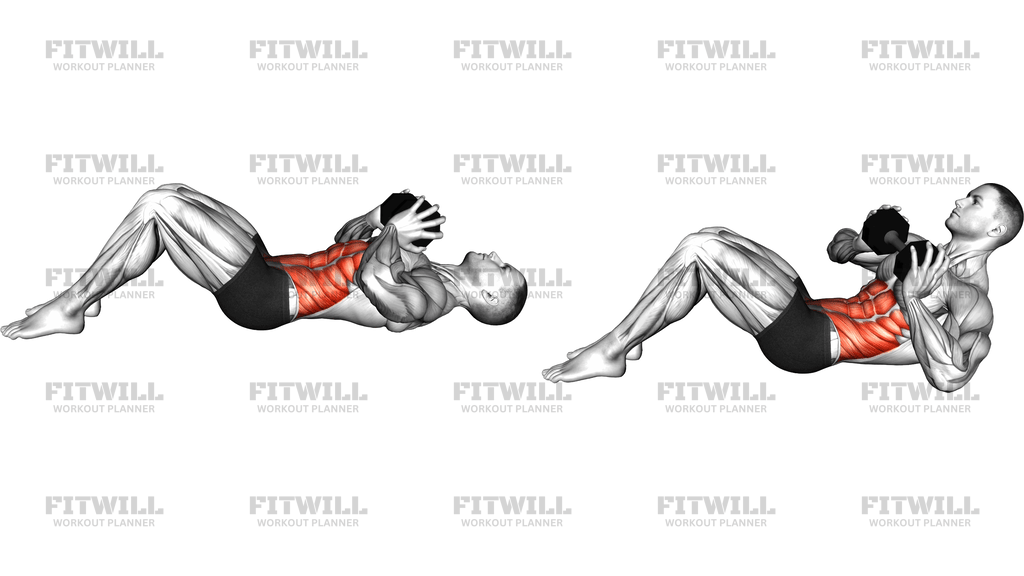
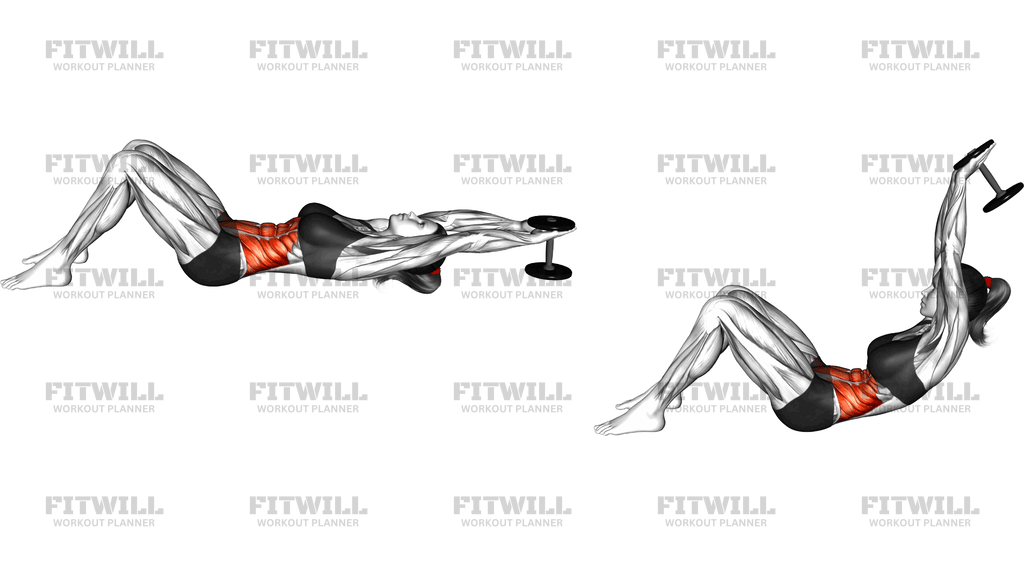
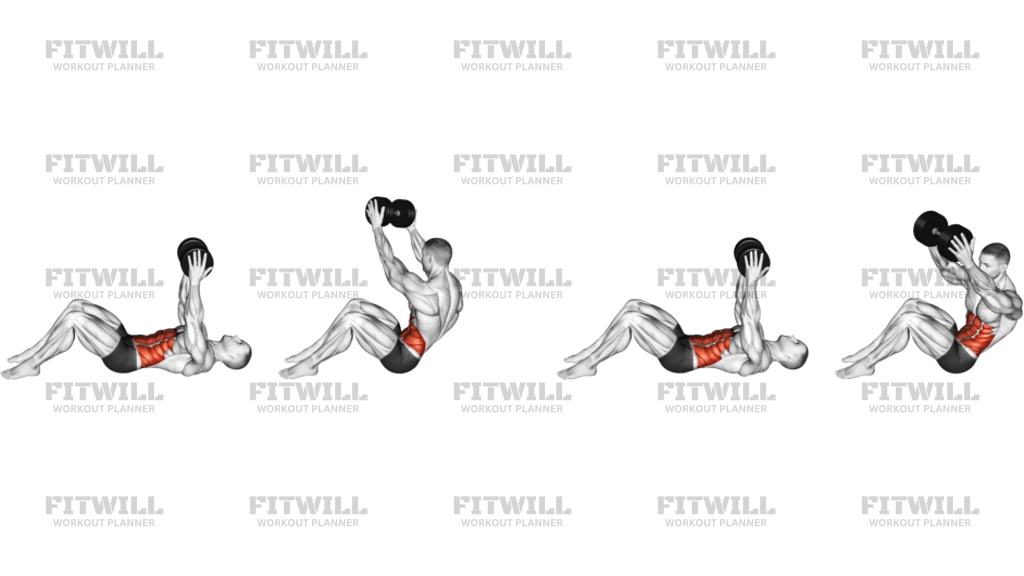
Dumbbell Straight Arm Twisting Sit-Up is a floor-based core exercise that combines a classic sit-up with trunk rotation while the arms stay long around a single dumbbell. The movement is meant to challenge the rectus abdominis, obliques, and deep abdominal stabilizers while the hip flexors help finish the sit-up. It is useful when you want a more demanding abdominal drill than a standard sit-up, but the extra load also makes control much more important.
The straight-arm position creates a longer lever, so small changes in body position matter. If the dumbbell drifts, the elbows bend, or the torso twists late, the movement turns into a momentum drill instead of a core exercise. A good rep starts with the dumbbell held over the chest, then the rib cage curls up and rotates together so the weight travels toward one hip. The hips should stay quiet while the torso does the work.
Because this is a rotational sit-up, the best repetitions feel deliberate and even on both sides. The descent should be slow enough that the lower back stays organized against the floor until the next rep begins. If the neck, hip flexors, or lower back take over, the load is too heavy or the range is too large. Light resistance is usually enough to make the exercise effective.
Use Dumbbell Straight Arm Twisting Sit-Up in a core block, athletic conditioning session, or accessory circuit when you want a loaded trunk-flexion pattern with rotation. It can be appropriate for beginners if the dumbbell is very light or removed at first, but the priority is always clean torso movement, stable hips, and pain-free range. The goal is not to throw the weight from side to side; it is to sit up, rotate, and lower with control on every rep.
[ Workout Log & Planner ]
Put your next workout in Fitwill
Keep your plan and training log ready when you are.


Instructions
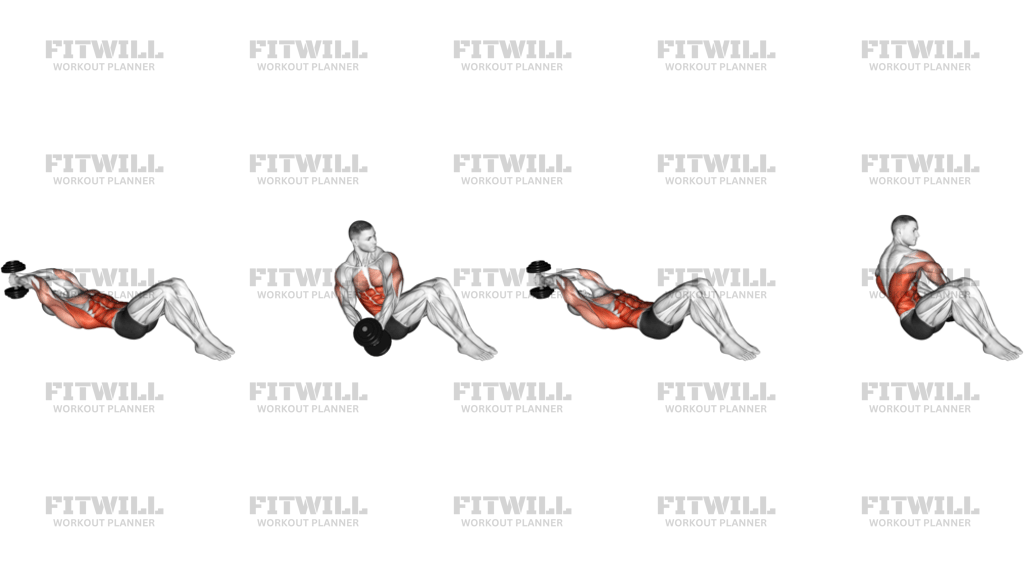
- Lie on your back on a mat with your knees bent and your feet flat on the floor.
- Hold one dumbbell with both hands and keep your arms straight so the weight starts above your chest.
- Set your shoulders down, tuck your chin slightly, and brace your abs before the first rep.
- Curl your rib cage toward your thighs to begin the sit-up instead of pulling with your neck.
- As you rise, rotate your torso and guide the dumbbell toward the outside of your right hip.
- Pause briefly at the top while keeping the arms long and the hips as still as possible.
- Lower your torso back to the floor under control until your shoulder blades touch down.
- On the next rep, rotate to the left side and alternate sides for the planned number of repetitions.
Tips & Tricks
- Keep the dumbbell stacked over your chest at the start; letting it drift behind your head makes the lever much harder to control.
- Rotate from your ribs and shoulders, not by swinging the weight with bent elbows.
- If your feet lift or your knees sway side to side, the dumbbell is too heavy for a strict sit-up.
- A brief pause at the top makes each twist cleaner and helps keep both sides even.
- Keep your neck long and relaxed; the chest should lead the rep, not the chin.
- Use a lighter load than you would for a regular sit-up because the straight-arm position increases difficulty fast.
- Let the lowering phase be slow enough that your lower back stays in contact with the floor until you reset.
- Stop the set when the twist turns into a jerky swing or your hips start opening off the floor.
Frequently Asked Questions
What muscle does Dumbbell Straight Arm Twisting Sit Up target most?
It primarily targets the rectus abdominis, with the obliques and deeper core muscles helping control the twist.
Can beginners perform this exercise?
Yes, but beginners should start with a very light dumbbell or no load at all until they can sit up and rotate without swinging.
Where should the dumbbell travel during the twist?
It should move as your torso rotates, usually toward the outside of one hip rather than straight up and down.
Should my arms stay straight the whole time?
Yes, the arms should stay long or nearly long so the core does the work instead of the shoulders and biceps.
What is the most common mistake with this sit-up?
People often use momentum, bend the elbows, or twist only at the shoulders instead of moving the whole trunk.
Can I alternate sides every rep?
Yes, alternating right and left reps is the standard way to keep the twist balanced.
What can I use instead of a dumbbell?
A light weight plate, medicine ball, or even bodyweight can work if you need to reduce the load.
What should I do if my lower back feels strained?
Shorten the range, lighten the load, and stop if the strain turns into sharp pain or the back starts arching off the floor.