Single Leg Vertical Jump
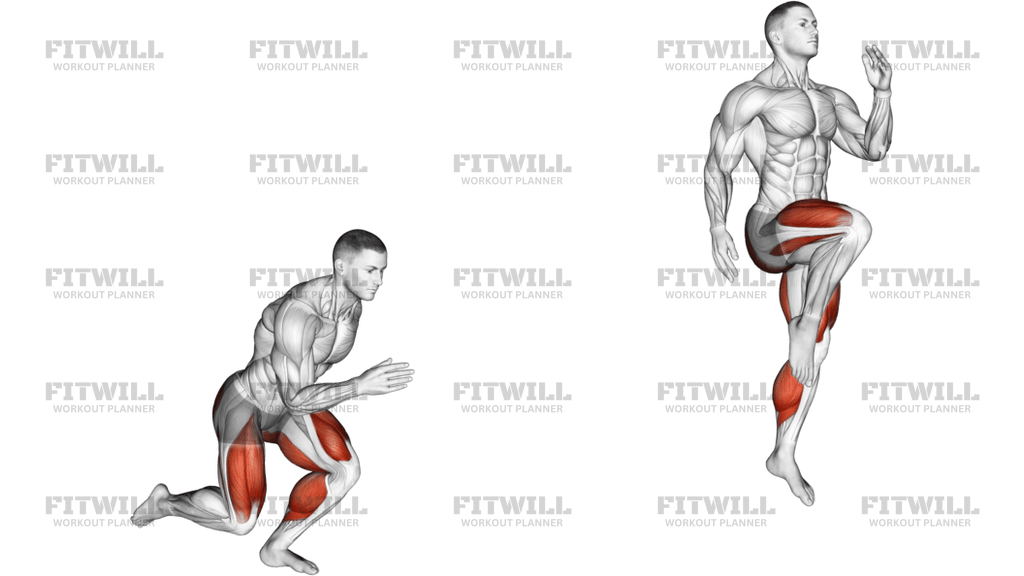
Single Leg Vertical Jump is a bodyweight plyometric drill that builds unilateral power, balance, and landing control. It trains the ability to load one leg, explode upward, and stabilize the same side on the way down, which makes it useful for field sports, sprint work, and any program that needs single-leg force production.
The setup matters because the jump starts with the quality of the load, not the height of the finish. Begin in a low athletic position on one leg with the torso slightly inclined, the working foot planted firmly, and the free knee ready to drive. If the stance is too narrow or too upright, you lose force; if the torso collapses, the knee and hip have to absorb more than they should.
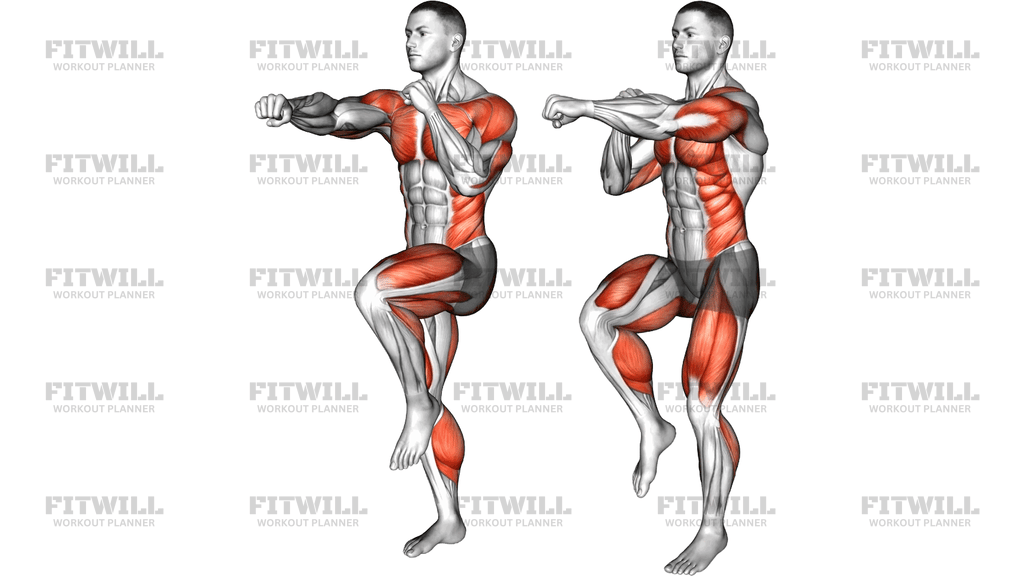
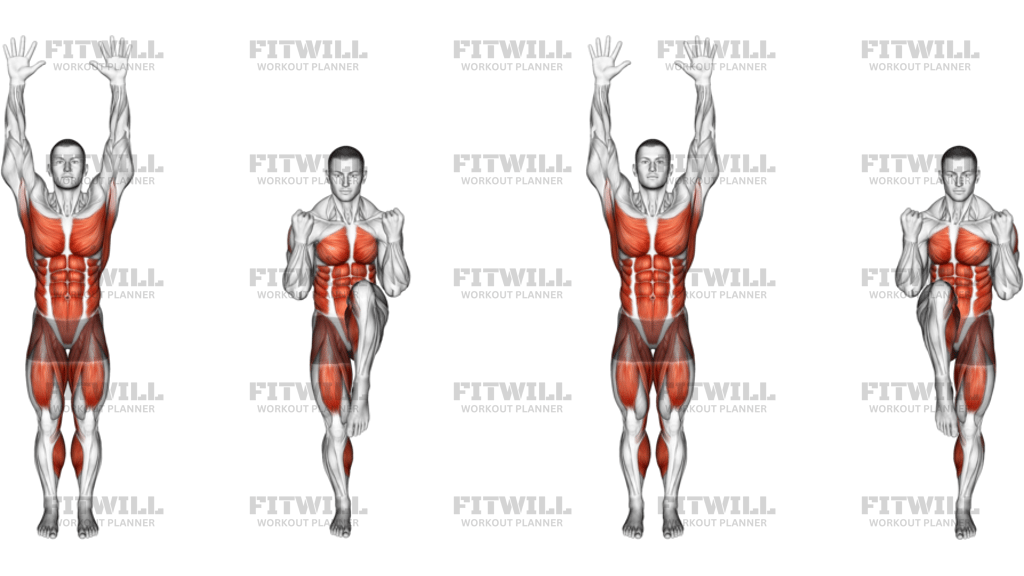
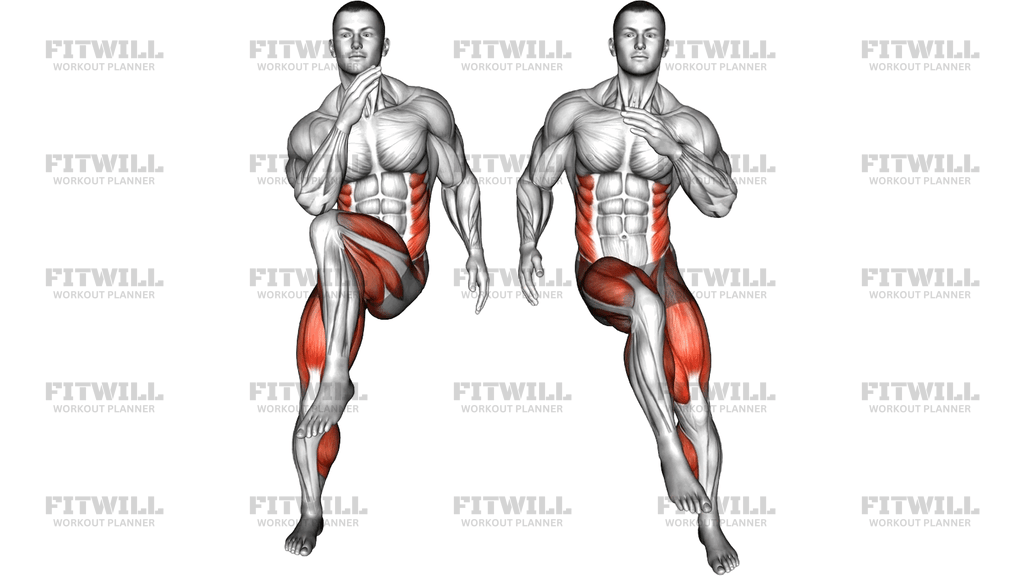
The movement should feel like a quick dip and an explosive jump straight up. Drive through the whole planted foot, extend the ankle, knee, and hip together, and swing the arms to help create upward speed. At the top, bring the opposite knee up with control rather than letting the body twist or pitch forward. The goal is a clean vertical line with the pelvis and ribs stacked as much as possible.
Landing is part of the exercise, not an afterthought. Come back to the floor softly on the same leg, let the knee track over the toes, and absorb the impact through the hip, knee, and ankle. Hold the landing long enough to regain balance before the next rep. If the landing gets loud, shaky, or stiff, the plyometric dose is too high for the current set.
Use Single Leg Vertical Jump when you want a low-volume power exercise, a dynamic warm-up drill, or a progression toward more advanced unilateral jumping work. It is not a high-rep conditioning movement; quality matters more than speed. Beginners can practice the same pattern with a smaller jump, a brief pause at the bottom, or light hand support until they can stick the landing reliably.
[ Workout Log & Planner ]
Put your next workout in Fitwill
Keep your plan and training log ready when you are.


Instructions
- Stand on one leg in a low athletic position with a slight forward hinge, the planted foot flat and the free knee bent and ready to drive.
- Brace your midsection and keep your chest over the working leg so the load stays centered before you jump.
- Lower a little deeper with a quick countermovement, then immediately reverse direction without pausing at the bottom.
- Drive forcefully through the whole planted foot as you extend the ankle, knee, and hip together.
- Swing the arms upward to help you rise straight up, not forward.
- Bring the opposite knee up as you leave the floor, keeping the pelvis level and the torso tall.
- Land softly on the same leg with the knee tracking over the toes and the hips absorbing the impact.
- Freeze the landing, regain balance, then reset before the next repetition.
Tips & Tricks
- Think about jumping through the whole foot. If the heel lifts too early, the takeoff usually turns into a calf-only push.
- Keep the knee of the planted leg pointing in line with the toes so the landing stays stable and the hip does not collapse inward.
- Use your arms aggressively on the way up; a lazy arm swing usually turns the jump into a small hop.
- Stay vertical through the torso. If you fold at the waist, the jump becomes more of a forward lunge than a pure vertical drive.
- Stick the landing silently. A loud landing is a sign that you are not absorbing force well enough.
- Start with low volume. This movement is about power output, so a few crisp reps beat a long, tired set.
- If balance breaks down, shorten the jump height before you try to add speed or reps.
- Reset fully between reps so each jump starts from a stable single-leg position instead of a wobble.
Frequently Asked Questions
What does the Single Leg Vertical Jump train most?
It builds single-leg power, balance, ankle stiffness, and landing control, with the glutes, quads, hamstrings, and calves doing most of the work.
Do I jump from a full squat?
No. Use a short countermovement from a low athletic single-leg stance so you can explode upward without sinking so deep that you lose speed.
How should my arms move on this jump?
Swing the arms forcefully upward as you drive off the floor. The arm action helps you rise straight up and keeps the movement athletic rather than static.
What should the landing look like?
Land softly on the same leg, let the knee track over the toes, and hold the position long enough to prove you can control the force before resetting.
What is the most common mistake?
Twisting the torso or letting the knee cave inward on takeoff or landing. That usually means the jump is too high or the athlete is not ready for the load.
Can beginners use this exercise?
Yes, but they should keep the jump small and focus on balance, knee control, and quiet landings before trying to increase height.
How many reps should I do?
Use low reps with full recovery. Plyometric jumps work best when each rep is crisp, so stop the set once height or landing quality drops.
Can I substitute a two-leg jump instead?
Yes. A two-leg vertical jump is a good regression if the single-leg version is too unstable or if you need to build basic landing mechanics first.