Stepdown Squat
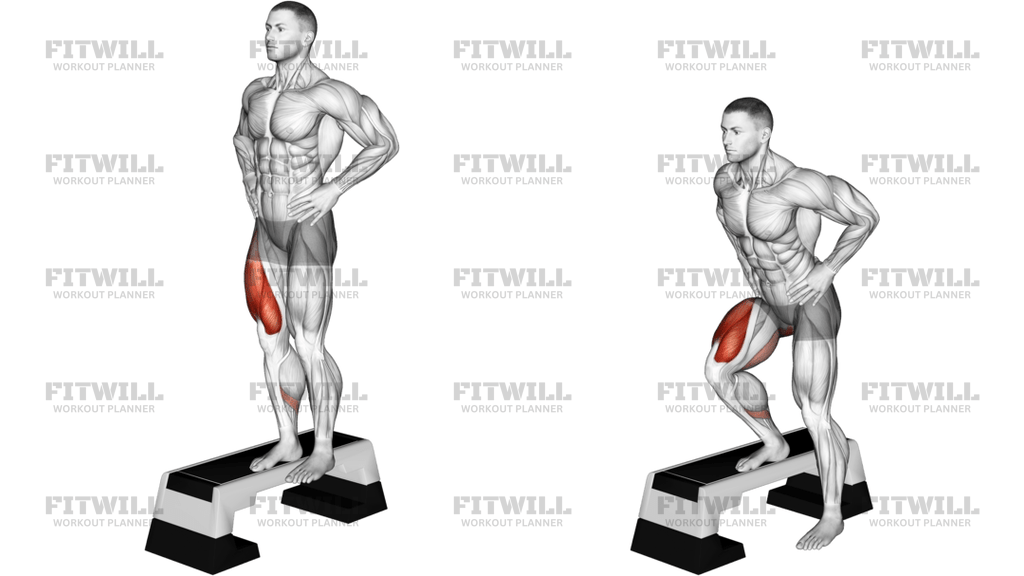
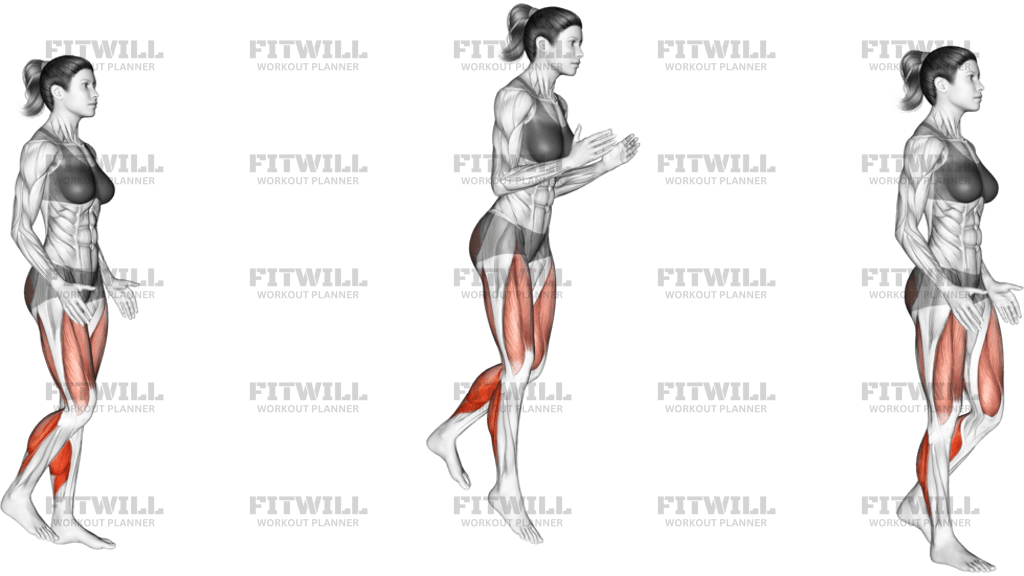
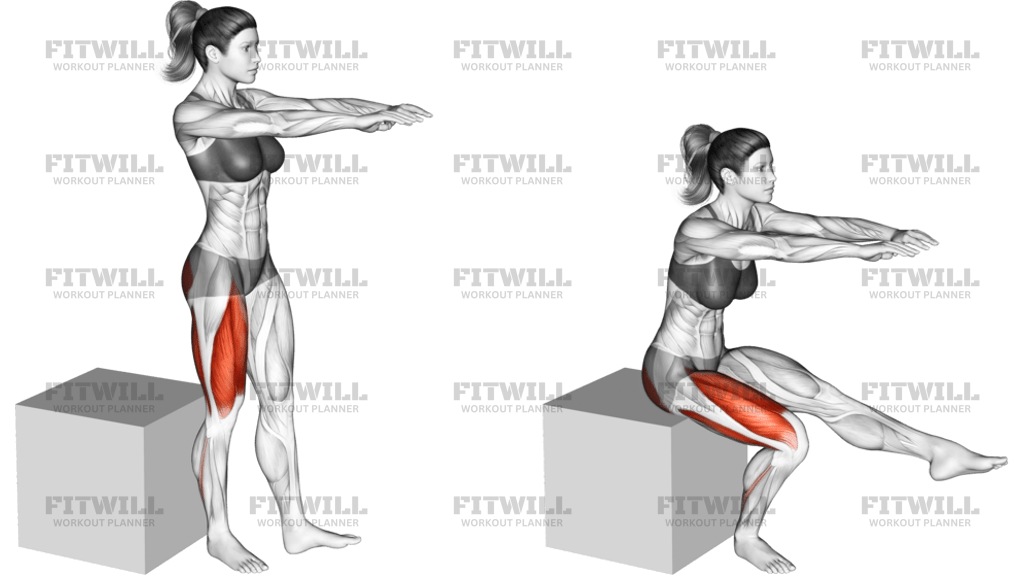
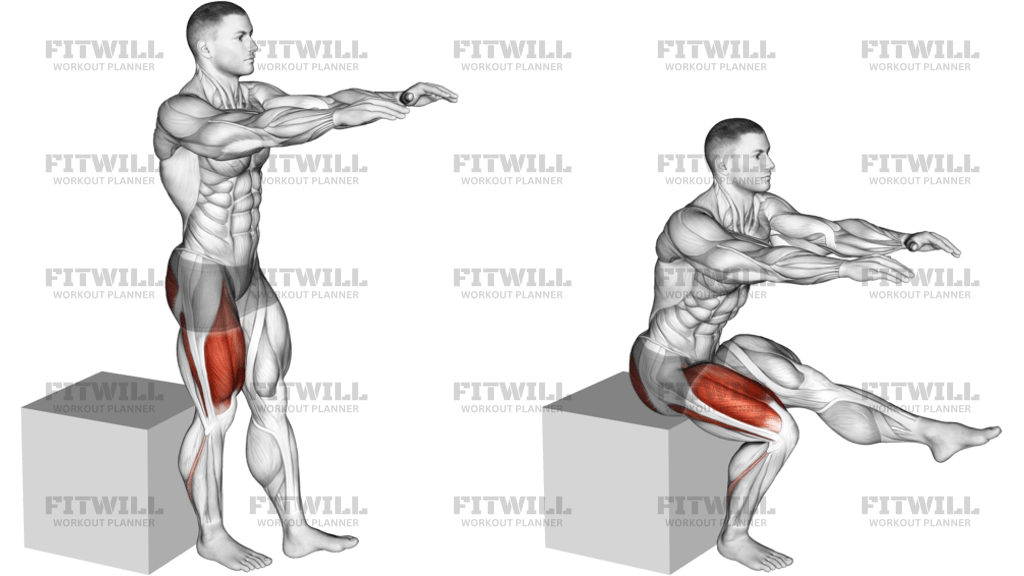
Stepdown Squat is a bodyweight lower-body exercise built around a slow, controlled descent from a raised step or platform. It asks one leg to manage the lowering phase while the other leg reaches toward the floor, so the movement is less about bouncing and more about owning the knee, hip, and ankle positions from top to bottom.
The exercise is especially useful for developing thigh strength, balance, and single-leg control. Because you are lowering from a step rather than squatting from the floor, the stance leg has to absorb body weight while the pelvis stays level and the knee tracks cleanly over the foot. That makes Stepdown Squat a practical choice for warm-ups, accessory work, and athletes who need better control on stairs, landings, or single-leg positions.
Setup matters here. Stand on a step or box with one foot planted firmly on the working side and the other leg free to descend. Keep your chest tall, ribs stacked over your pelvis, and your hands on your hips or out for balance if needed. The working foot should stay fully grounded on the platform so the arch, heel, and forefoot share the load instead of collapsing inward.
On each repetition, lower yourself by bending the working knee and hip in a controlled way until the free foot lightly reaches toward the floor. Keep the descent smooth and let the standing leg do the work rather than dropping off the edge. Press through the full foot on the platform to return to the top, finishing with the hip and knee fully extended before starting the next rep.
A clean Stepdown Squat should feel deliberate, not rushed. The best reps keep the pelvis level, the knee aligned with the toes, and the torso steady while the free leg moves down and back up. If the step is too high, the knee caves inward, or you need a hard push from the trailing leg, reduce the box height and shorten the range until the movement stays controlled.
This exercise is often used to build single-leg strength without external load, to prepare for lunges and split squats, or to reinforce knee control in rehab-style training. It works well when you want the thighs and hips to do the job without a lot of spinal loading, and it can be progressed by increasing step height, slowing the lowering phase, or adding a light dumbbell only after bodyweight reps are stable.
[ Workout Log & Planner ]
Put your next workout in Fitwill
Keep your plan and training log ready when you are.


Instructions
- Stand on a step or box with one foot flat on the platform and the other foot free to move, keeping most of your weight on the working leg.
- Set your feet so the whole working foot is planted, your toes point forward, and your knees track in the same direction as your second toe.
- Place your hands on your hips or hold them out for balance, then stack your ribs over your pelvis and keep your chest tall.
- Brace lightly and begin lowering by bending the working knee and hip, letting the free leg travel down toward the floor without jumping.
- Keep the standing heel down and the arch active as you descend so the knee does not cave inward.
- Lower until the free foot lightly taps or reaches toward the floor, then pause briefly without relaxing the working leg.
- Press through the full foot on the platform to stand back up, finishing with the hip and knee extended before the next rep.
- Breathe in on the way down and exhale as you drive back to the top, then reset your balance before repeating.
Tips & Tricks
- Use a step height that lets you keep the pelvis level; if the box is too high, the hip on the free-leg side will drop.
- Think about sitting back slightly as you descend so the knee can bend without shooting far past the toes.
- Keep the working foot tripod-heavy: big toe, little toe, and heel should all stay loaded on the platform.
- A light fingertip touch on a wall or rack is fine if balance is the limiting factor, but avoid pushing off it.
- Let the free leg hover or tap the floor lightly; do not kick it forward and steal work from the stance leg.
- Slow the lowering phase to about two to four seconds if you want more control and better thigh tension.
- If your knee collapses inward, shorten the range and focus on tracking it over the middle toes.
- Stop the set when you start bouncing off the bottom, because that usually means the working leg is no longer controlling the descent.
Frequently Asked Questions
What muscles does Stepdown Squat work most?
It mainly targets the thighs, especially the quadriceps, with the glutes and calf helping stabilize the standing leg.
How high should the step be for Stepdown Squat?
Use a low step first, around ankle to mid-shin height, so you can lower under control without the pelvis twisting or the knee caving in.
Should my free foot touch the floor on every rep?
A light tap is fine if it helps you control the bottom position, but do not let the trailing leg push you back up.
Why does my knee drift inward during Stepdown Squat?
That usually means the step is too high, the foot arch is collapsing, or you are dropping too fast. Shorten the range and keep pressure through the big toe and heel.
Is Stepdown Squat good for beginners?
Yes, as long as the step is low and the movement is slow. Beginners should focus on balance, foot placement, and a clean knee track before adding volume or height.
Can I hold weights with Stepdown Squat?
Yes, but only after bodyweight reps are steady. A light dumbbell in one hand or two small dumbbells can add load without changing the footwork too much.
How is Stepdown Squat different from a regular squat?
A regular squat is usually a two-leg movement from the floor, while Stepdown Squat challenges one leg to control the lowering and standing phases from a raised platform.
What should I do if I feel it in my lower back?
Reduce the step height, keep your ribs stacked over your pelvis, and avoid leaning forward so far that the trunk has to compensate for the leg work.