Neck Side Stretch
Neck Side Stretch is a gentle standing mobility drill that lengthens the muscles along one side of the neck. It is most useful when the neck feels stiff after desk work, long drives, pressing sessions, or any day when the upper traps and side neck feel crowded and overworked.
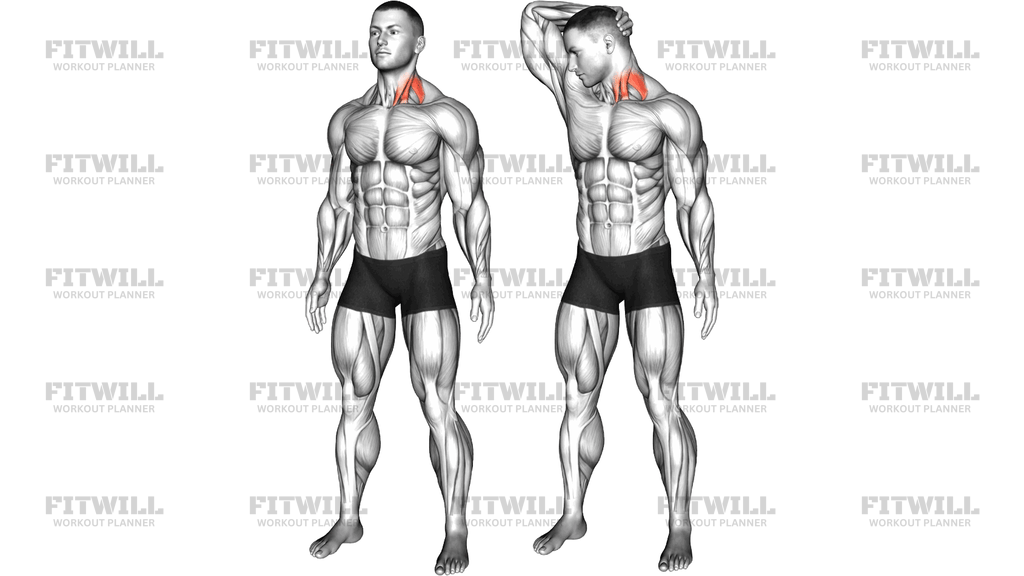
The stretch mainly targets the upper trapezius, levator scapulae, and the smaller side-neck muscles that help control side-to-side motion. Because the cervical spine is sensitive, the goal is not to force a huge range; the best reps feel smooth, quiet, and easy to breathe through while the shoulders stay relaxed.
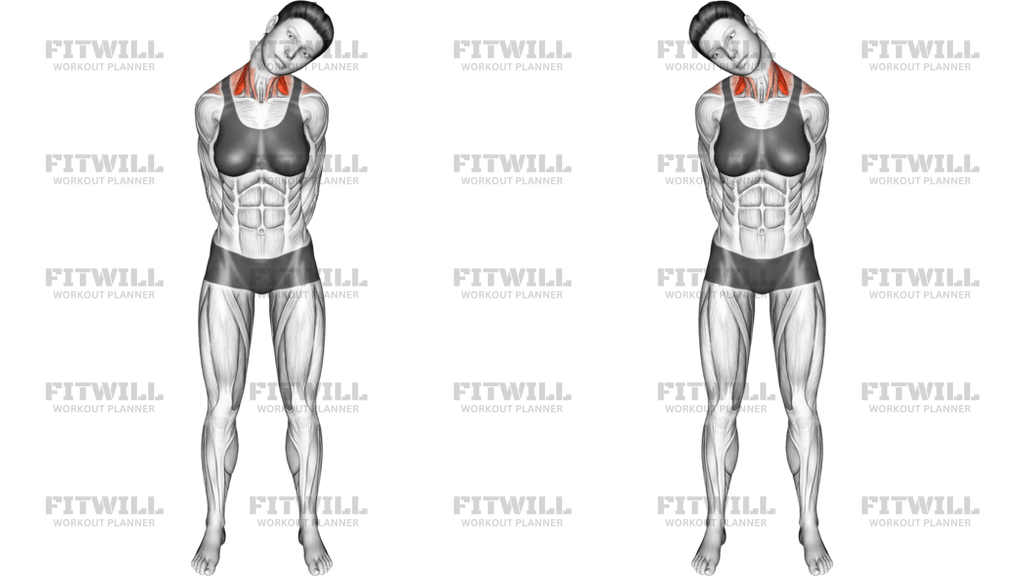
Stand tall with your feet planted and your ribs stacked over your hips, then tip one ear toward the same shoulder until you feel a lengthening sensation along the opposite side of the neck. Keep your nose facing forward, your chin level, and your chest quiet so the motion comes from the neck instead of from twisting through the torso.
A good Neck Side Stretch stays mild and controlled. If you want a slightly stronger stretch, let the arm on the stretched side hang long or reach toward the floor so the shoulder does not ride upward, but never yank the head into position. The sensation should be a clean stretch, not a pinch, compression, or pulling pain.
Use Neck Side Stretch in a warm-up, cool-down, or recovery block when you want to restore motion after heavy pressing, pulling, or a long day in one posture. It is also useful between upper-body sets when the neck starts to feel braced or tense. If you feel sharp pain, tingling, or headache-like pressure, stop and come back to center before switching sides.
When you use Neck Side Stretch as a reset between sets, keep the hold brief and return to neutral before the next lift so you do not carry a deep stretch into pressing or pulling work. The goal is to reduce stiffness, not to chase maximal range, so a smaller and repeatable position usually gives the best result. If one side feels blocked, spend a little more time on the easier side first and let the tighter side open gradually over a few calm breaths instead of forcing both sides to match immediately.
Fitwill
Log Workouts, Track Progress & Build Strength.
Achieve more with Fitwill: explore over 9600 exercises with images and videos, access built-in and custom workouts, perfect for both gym and home sessions, and see real results.
Start your journey. Download today!




Instructions
- Stand tall on the floor with your feet about hip-width apart and your arms relaxed at your sides.
- Stack your ribs over your hips, soften your knees, and draw your chin slightly back so the back of your neck feels long.
- Keep your gaze forward and your shoulders level before you begin the side bend.
- Tip your right ear toward your right shoulder until you feel a stretch along the left side of your neck.
- Keep your chest facing forward and avoid turning your nose toward the floor or ceiling.
- Let both shoulders stay down, especially the shoulder on the side you are stretching, so the neck does the work.
- Hold the end position for a slow breath or two without bouncing or forcing deeper than a mild stretch.
- Return your head to center with control, reset your posture, and repeat to the other side for the same amount of time.
Tips & Tricks
- Keep the movement in the neck only; if your torso leans, shorten the range and reset taller.
- A small side bend is enough for most people, and chasing the shoulder often turns the stretch into compression.
- If one side is much tighter, pause there for an extra breath instead of pulling harder.
- Keep the nose pointed straight ahead so the stretch stays in side flexion rather than neck rotation.
- Let the stretching-side shoulder stay heavy; shrugging it up usually means the upper trap is guarding.
- Exhale slowly as you settle into the end range so the neck can relax instead of bracing against the stretch.
- Use this after bench press, overhead pressing, or long computer sessions when the side of the neck feels crowded.
- Stop short of tingling, sharp pain, or pressure that feels like it is building into the head.
Frequently Asked Questions
What muscles does Neck Side Stretch target most?
It mainly lengthens the upper trapezius, levator scapulae, and the smaller side-neck muscles that help tilt the head.
Is Neck Side Stretch better standing or seated?
Standing works well if you can keep your torso still, but seated is useful if you tend to sway or shrug as soon as you start the stretch.
How far should I tilt my head in Neck Side Stretch?
Only far enough to feel a mild stretch along the opposite side of the neck. If you have to crank the shoulder up or twist the head to get there, the range is too big.
Can I use my hand to help Neck Side Stretch?
Yes, but only with a light touch. A gentle assist is fine; pulling hard on the head usually creates compression instead of a clean stretch.
Why does my shoulder want to lift during Neck Side Stretch?
That usually means the upper trap is guarding. Keep the stretching-side shoulder heavy and make the side bend smaller until the shoulder stays relaxed.
Can beginners do Neck Side Stretch safely?
Yes, it is beginner-friendly when the range stays small and the motion is slow. The key is a calm stretch, not forcing the neck farther.
When should I use Neck Side Stretch?
It fits well after pressing, at the end of an upper-body workout, or after long periods of sitting when the neck feels stiff and compressed.
What should I avoid during Neck Side Stretch?
Avoid rolling the head backward, yanking into the stretch, or pushing through tingling or sharp pain. Those are signs to back off and reset.