Bodyweight Overhead Squat
Bodyweight Overhead Squat is a bodyweight squat variation performed with the arms fixed overhead. It demands more than leg strength: the squat has to stay balanced while the shoulders, upper back, trunk, hips, and ankles work together to keep the body stacked. That makes it useful both as a lower-body strength drill and as a mobility-and-control test for the whole kinetic chain.
The overhead position changes the exercise in a useful way. When the arms stay locked out near the ears, the torso has to remain upright and the ribcage has to stay controlled while the hips travel down between the heels. Quads do a lot of the work on the way up, but the glutes, adductors, calves, core, and shoulder stabilizers all contribute to keeping the squat clean. If any of those links break down, the movement usually shows it quickly through forward collapse, heel lift, or drifting arms.
The setup matters because this squat rewards precision. Feet should be planted, toes slightly turned out, and pressure spread across the whole foot. The arms should reach straight overhead before the first rep so the shoulders are already active and the chest is not flared up to fake the position. A good rep starts from a tall, braced stance and then descends under control with the knees tracking in line with the toes and the torso staying as vertical as mobility allows.
At the bottom, the goal is not to force depth at any cost. Only descend as far as you can while keeping the heels down, the arms overhead, and the spine under control. If the chest caves, the low back arches hard, or the heels pop up, the rep is too deep for your current mobility or load choice. A clean overhead squat should look deliberate on the way down and just as organized on the way up.
This movement is commonly used in warm-ups, technique work, mobility-focused training, and accessory lower-body sessions. It is often better as a light, high-quality drill than as a heavy fatigue movement. Beginners can use it, but they should expect to reduce depth or regress the position if ankle, hip, or shoulder mobility is limited. The safest and most productive version is the one that keeps the barless overhead position stable from the first rep to the last.
[ Workout Log & Planner ]
Put your next workout in Fitwill
Keep your plan and training log ready when you are.


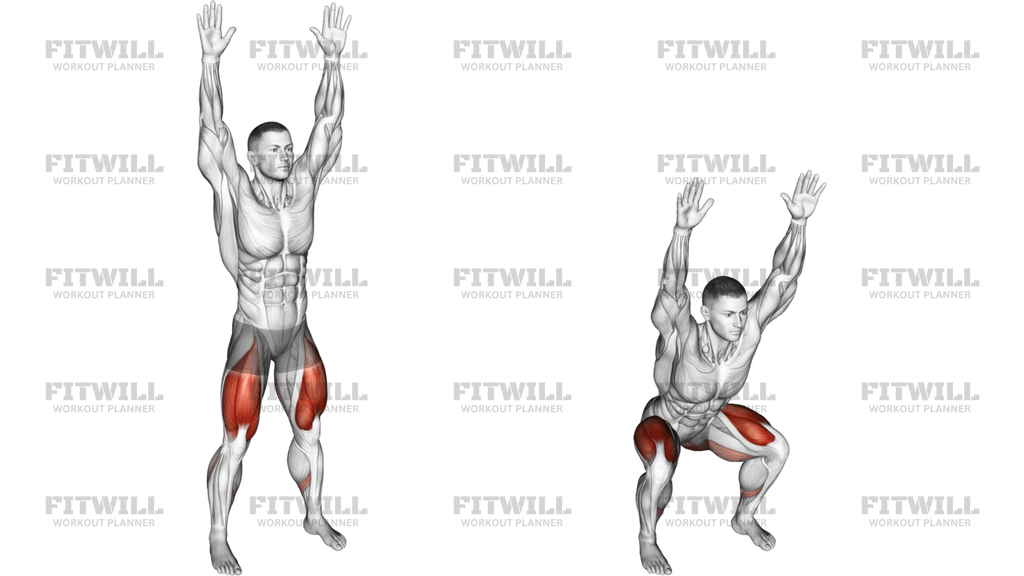
Instructions
- Stand with your feet about shoulder-width apart, toes slightly turned out, and your arms fully extended overhead with your biceps close to your ears.
- Keep your ribs down, brace your abs, and set your weight evenly across the whole foot before you start descending.
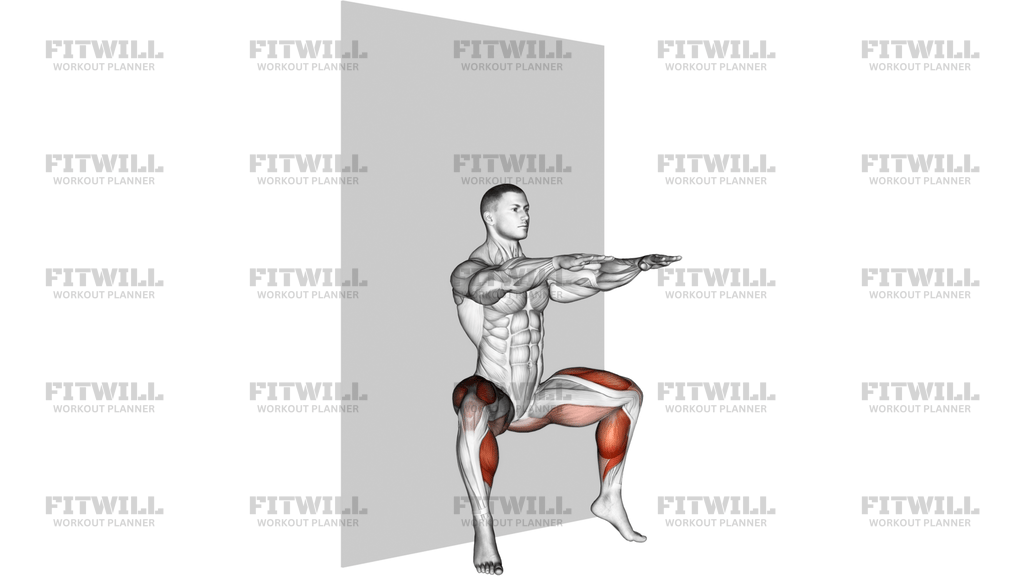
- Sit your hips straight down between your heels while letting your knees track in line with your toes.
- Keep your chest tall and your arms stacked over your shoulders as you lower into the squat.
- Descend only as far as you can without your heels lifting, your low back arching, or your arms falling forward.
- Pause briefly at the bottom only if you can hold the position without losing balance or tension.
- Drive through your midfoot and heels to stand back up, letting your hips and knees extend together.
- Keep reaching overhead on the way up so the torso stays tall and the shoulders stay active.
- Reset fully at the top, breathe, and repeat for the planned number of reps.
Tips & Tricks
- Think about sitting straight down between your heels instead of folding at the waist.
- Keep the elbows locked and the shoulders actively reaching upward so the overhead position stays stable.
- If the arms drift forward, shorten the squat depth before you try to add more reps.
- A slight toe-out angle usually makes it easier to keep the knees tracking cleanly over the feet.
- Keep pressure spread through the big toe, little toe, and heel so you do not rock onto the toes.
- Use a slower descent to expose control problems in the ankles, hips, or upper back.
- Do not chase depth if your heels lift or your chest collapses; that usually turns the rep into a compensation drill.
- If the overhead position feels unstable, reduce range or work on shoulder mobility before pushing volume.
- Stop the set when the squat turns into a forward lean or the arms can no longer stay in line with the torso.
Frequently Asked Questions
What muscles does a Bodyweight Overhead Squat work most?
It strongly hits the quads and glutes, while the core, adductors, calves, upper back, and shoulders help keep the overhead position stable.
Why are the arms held overhead in this squat?
The overhead reach makes the squat more demanding on posture, shoulder mobility, and trunk control. It also exposes balance issues that a regular squat might hide.
Can beginners do the overhead squat safely?
Yes, but many beginners need a reduced depth or a regressed version first. If the shoulders or ankles limit the position, work on mobility before trying to force full range.
How deep should I squat in this exercise?
Only go as deep as you can while keeping the heels down, the chest controlled, and the arms overhead. Depth is useful only if the position stays clean.
What if my heels lift off the floor?
That usually means the squat is deeper than your ankle mobility or balance can support right now. Shorten the range and keep the feet fully grounded.
What if my arms fall forward during the squat?
That usually shows a shoulder, thoracic spine, or core-control limit. Reduce depth, keep reaching tall, and avoid forcing the bottom position.
Is this more of a strength drill or a mobility drill?
It can be both, but the overhead position makes it especially useful for mobility, stability, and technical control with light bodyweight loading.
Can I substitute a goblet squat if this feels too hard?
Yes. A goblet squat is a good regression because it keeps the squat pattern while removing the overhead balance and shoulder-demand component.