Runners Stretch
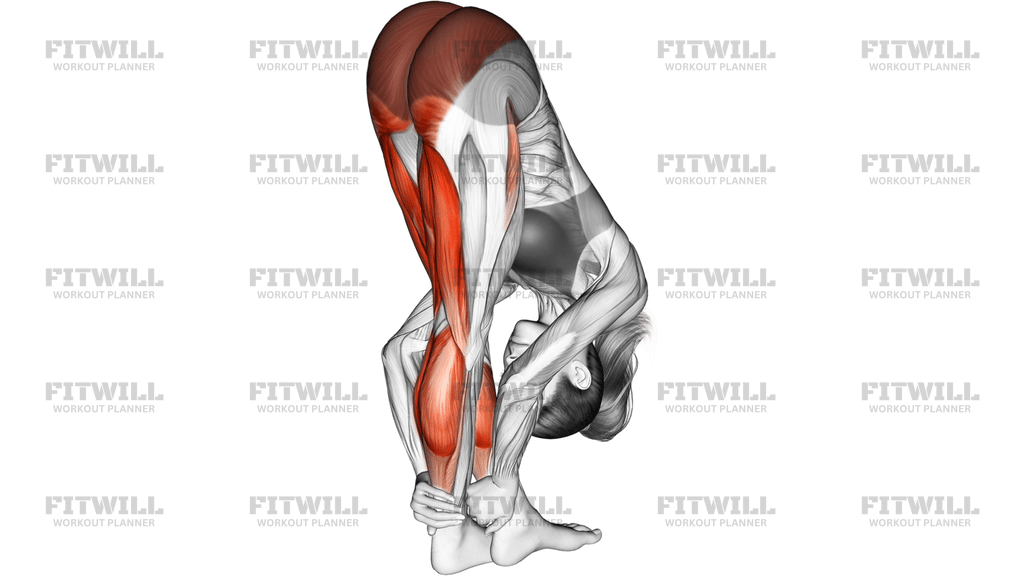
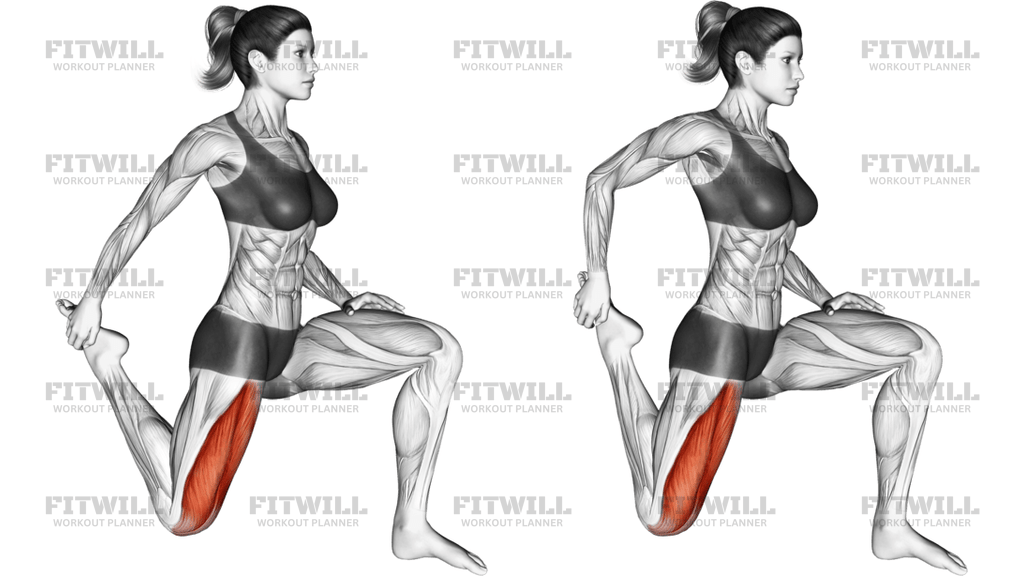
Runners Stretch is a standing hamstring and calf stretch done with body weight and an exercise mat or floor support. The exercise starts from a split stance with one leg extended and the torso hinging toward the long leg, which makes the setup more important than a bigger reach. When the front leg stays long and the hips stay square, the stretch lands where it should instead of dumping into the lower back.
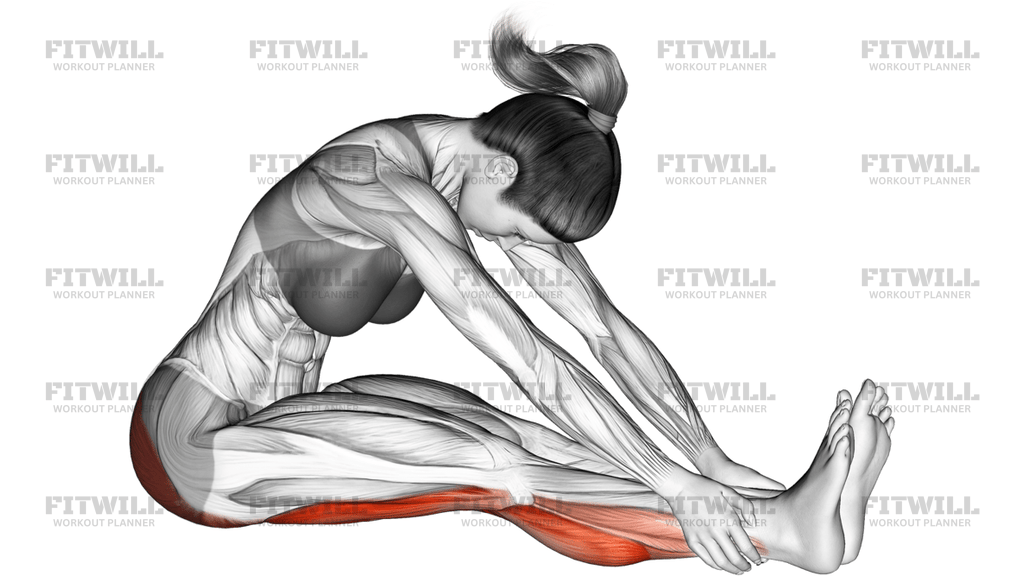
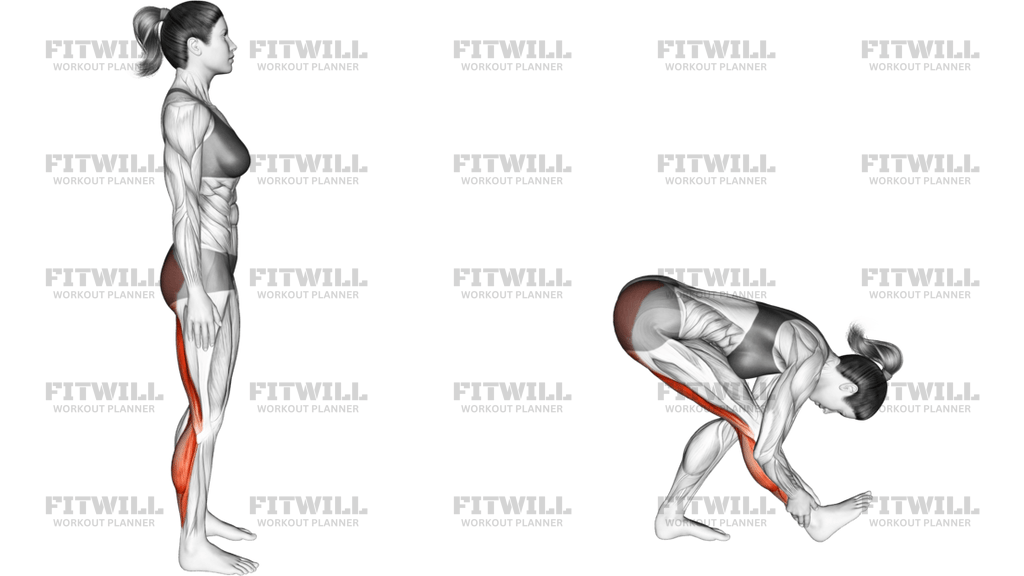
This movement is useful for runners, lifters, and anyone who spends a lot of time seated because it emphasizes the back of the thigh, the calf, and the tissues around the hip line. In the image, the athlete folds forward over a straight leg while keeping the other leg available for balance. That position creates a clear stretch along the hamstrings and lower calf without needing speed or force.
The goal is not to touch the toes at all costs. The goal is to hinge from the hips, keep the spine long, and let the torso move until the stretch is strong but still controlled. A small bend in the supporting knee is fine if it helps you keep balance and avoid rounding through the lumbar spine. Hold the end position with steady breathing so the body can relax into the range instead of fighting it.
Use Runners Stretch in warmups, cooldowns, recovery sessions, or after lower-body training when you want to restore length through the posterior chain. It is usually beginner-friendly because the load is just your body weight, but it still rewards careful positioning. If the stretch turns into a back bend, a bouncing reach, or a painful pull behind the knee, shorten the range and reset the hinge before continuing.
[ Workout Log & Planner ]
Put your next workout in Fitwill
Keep your plan and training log ready when you are.


Instructions
- Stand in a split stance with one heel planted and that leg straight in front of you.
- Keep the front toes pulled up so the stretch stays on the back of the leg.
- Hinge at the hips and reach your torso forward over the extended leg.
- Keep the hips square instead of twisting open toward the side.
- Let the back knee soften slightly if that helps you balance and stay controlled.
- Reach toward the shin, ankle, or foot without rounding hard through the lower back.
- Pause in the stretched position and breathe out slowly to let the hamstrings release.
- Come back up with control, then switch sides and repeat with the same setup.
Tips & Tricks
- Keep most of the reach in the hips; if your upper back collapses, the hamstring stretch gets weaker and the low back takes over.
- Pull the toes of the extended leg back toward you to bias the hamstring and calf instead of the foot.
- If your fingertips stop well above the foot, that is fine as long as the hinge and leg position stay honest.
- A slight bend in the standing or support knee is acceptable, but straightening both knees hard can make the stretch feel pinchy.
- Use a long exhale at the bottom to reduce tension through the hamstrings and glutes.
- Do not bounce into the end range; settle into the stretch and let it open gradually.
- If the stretch appears mainly behind the knee, back off a little and keep the hips moving forward over the thigh.
- For balance, keep your weight centered over the mid-foot instead of drifting all the way onto the toes.
Frequently Asked Questions
What does Runners Stretch target most?
It mainly targets the hamstrings, with a strong stretch through the calf and the back line of the leg.
Do I need to reach the foot for this stretch to work?
No. Reaching toward the shin or ankle is enough if your hips stay square and the front leg stays long.
Why should the toes of the extended leg stay pulled up?
Dorsiflexing the ankle keeps the stretch on the hamstring and calf instead of letting the foot point and slacken the back of the leg.
Can I bend the support knee a little?
Yes. A small bend can help you balance and keep the hinge at the hips instead of rounding through the low back.
Should this feel like a lower-back stretch too?
A little movement in the low back is normal, but the main sensation should stay in the back of the thigh and calf.
Is Runners Stretch better before or after a run?
It can be used before a run in a lighter, shorter hold, or after training for a deeper cooldown stretch.
What is a common mistake with this stretch?
The usual mistake is rounding down to the floor and chasing the toes instead of hinging from the hips.
How do I make the stretch more intense without forcing it?
Keep the front leg straighter, hinge a little farther at the hips, and hold the end range with calm breathing.