Dumbbell Twisted Fly
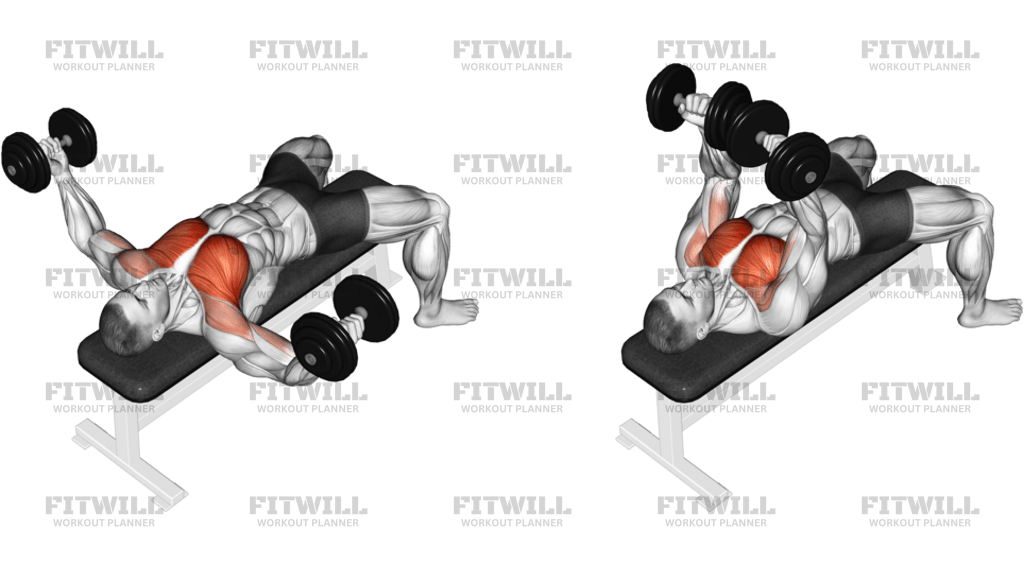
Dumbbell Twisted Fly is a flat-bench chest isolation exercise that combines a wide fly arc with a small wrist rotation as the dumbbells come together above the chest. The movement is built to load the pecs through horizontal adduction while still asking the shoulders, forearms, and upper back to keep the path smooth and controlled. It is not a pressing exercise, so the load should stay light enough that the shoulder position and elbow angle remain consistent.
The bench setup matters because the exercise depends on a stable torso. Lie with your head, upper back, and hips supported on the bench, feet planted, and the shoulder blades gently set back and down. That position gives the chest a better line of pull and keeps the front of the shoulders from taking over as soon as the dumbbells move out to the sides. If your rib cage flares or your shoulders roll forward, the twist at the top gets sloppy very quickly.
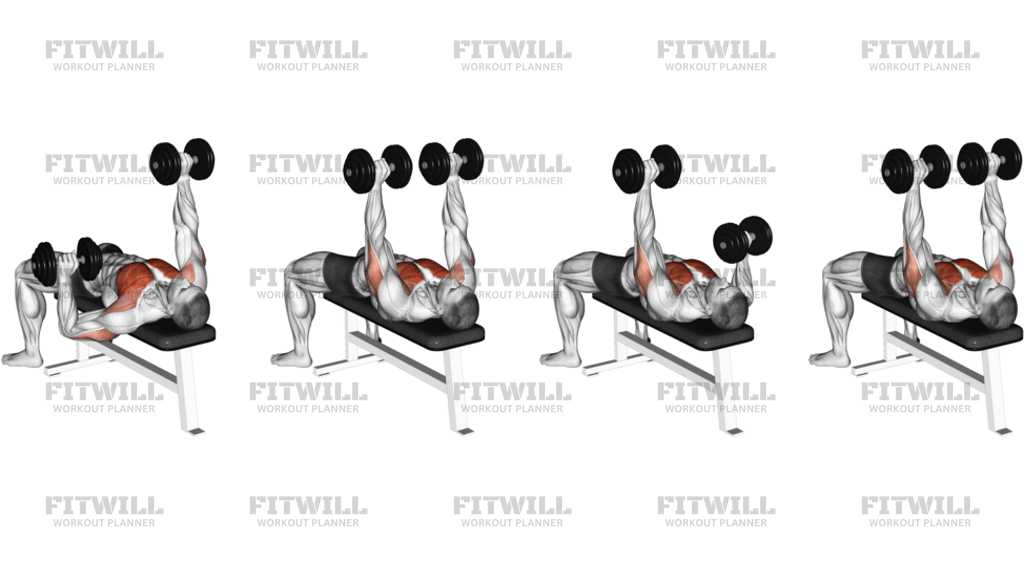
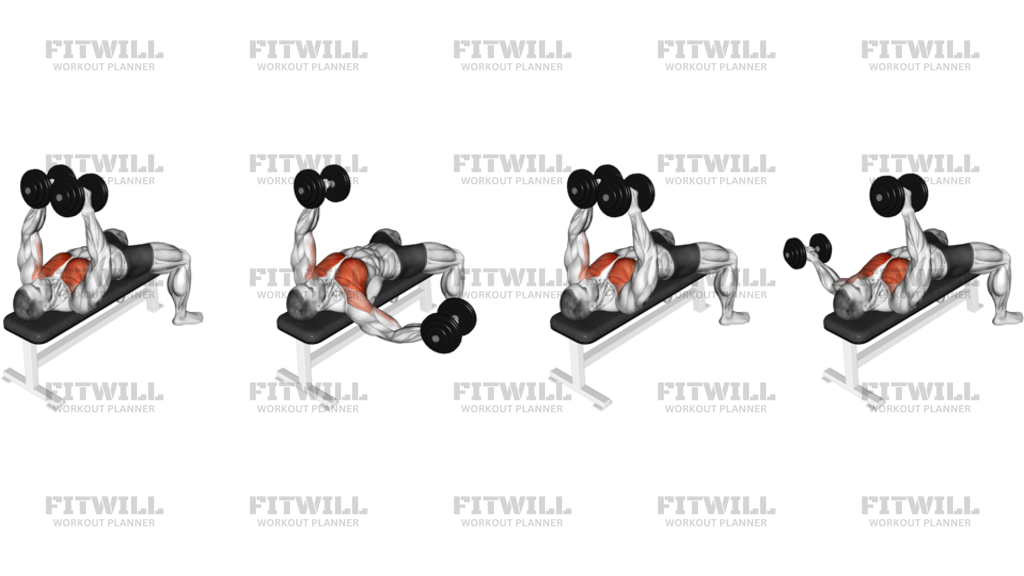
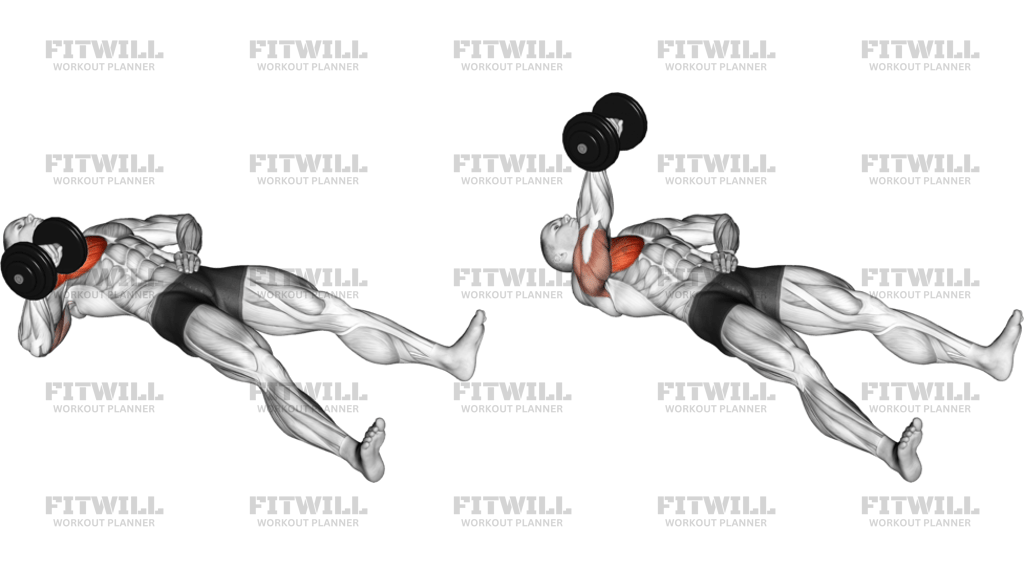
The working path should feel like a controlled hug rather than a straight lift. Lower the dumbbells in a wide semicircle until you feel a deep chest stretch without losing shoulder control, then sweep them back up along the same arc. As the weights approach the top, rotate the forearms so the dumbbells finish in the twisted position shown in the image, directly over the mid-chest, without banging together or turning the rep into a dumbbell press.
Because the movement includes both a fly arc and a wrist rotation, the best reps are usually slower than people expect. A clean lowering phase, a brief pause in the stretched position, and a smooth return keep tension on the pecs instead of letting momentum, grip, or shoulder irritation decide the rep. Keep the elbows softly bent, breathe steadily, and stop the set before the shoulders start drifting forward or the wrists start doing the work.
Use Dumbbell Twisted Fly as accessory chest work, as part of a bodybuilding block, or as a lighter movement when you want a chest stimulus without heavy pressing. It is useful for lifters who can already control a standard fly and want a more deliberate top-position squeeze. Begin with very moderate load, own the range of motion, and only increase resistance if the shoulder position stays quiet from the first rep to the last.
[ Workout Log & Planner ]
Put your next workout in Fitwill
Keep your plan and training log ready when you are.


Instructions
- Lie lengthwise on a flat bench with your head, upper back, and hips supported, feet planted firmly on the floor, and a dumbbell in each hand held above mid-chest.
- Set your shoulder blades gently back and down against the bench, keep your chest lifted without flaring the ribs, and keep a soft bend in both elbows.
- Start with the dumbbells stacked over the chest and your wrists neutral so the handles stay steady before the first rep begins.
- Lower both arms in a wide semicircle until the dumbbells reach a deep chest stretch and your upper arms are roughly in line with the bench.
- Keep the elbow bend almost fixed as you lower so the movement stays a fly and not a press.
- Sweep the dumbbells back up along the same arc, then rotate the forearms as the weights rise so the dumbbells finish in the twisted top position over the chest.
- Pause briefly at the top without clanking the weights together or shrugging the shoulders toward your ears.
- Reverse the path under control, breathing in on the descent and exhaling as you bring the dumbbells back over the chest.
- When the set ends, guide the dumbbells back to your thighs and sit up before standing.
Tips & Tricks
- Choose a light load first; this variation exposes shoulder drift and wrist collapse faster than a normal fly.
- Keep the elbow angle soft and nearly fixed so the repetition does not turn into a dumbbell press.
- Think about hugging a barrel at chest height rather than lifting the hands straight up.
- Lower only until you feel the pecs stretch; if the front of the shoulder pinches, cut the range short.
- Rotate the forearms smoothly on the way up instead of snapping the dumbbells into the finish position.
- Keep the shoulder blades set on the bench so the chest stays open and the neck stays relaxed.
- Use a slower lowering phase than lifting phase to keep the dumbbells under control through the wide arc.
- Stop the set when the dumbbells start drifting behind the line of the shoulders or the wrists start wobbling.
- If the twist makes the grip fade too early, reduce the load before you shorten the range.
Frequently Asked Questions
What does Dumbbell Twisted Fly train most?
It mainly trains the chest, especially through the wide fly arc and the squeeze at the top. The front delts and upper-arm stabilizers help control the path.
How is this different from a regular dumbbell fly?
The twisted version adds forearm rotation as the dumbbells come together over the chest. That changes the top position and makes the finish feel more deliberate.
Do I need to use a flat bench?
Yes, this version is shown on a flat bench. The flat setup gives a stable base and keeps the fly path consistent from rep to rep.
How low should the dumbbells go?
Lower until you feel a chest stretch while the shoulders still stay packed on the bench. If the shoulders roll forward or pinch, the range is too deep.
Should my elbows stay bent the whole time?
Yes. Keep a soft bend that stays almost the same through the rep so the movement remains a fly instead of becoming a press.
Is this good for beginners?
Yes, but only with very light dumbbells and a shorter range at first. Beginners should learn the bench position and shoulder control before adding load.
What is the most common mistake?
Letting the shoulders come off the bench or swinging the weights into the top finish are the biggest issues. Both reduce chest tension and make the rep less safe.
What should I do if the twist bothers my wrists?
Use less weight and rotate more slowly so the wrists do not have to fight the dumbbells. If the wrist still feels irritated, a standard fly may be a better choice.