Cable Standing Alternate Low Fly
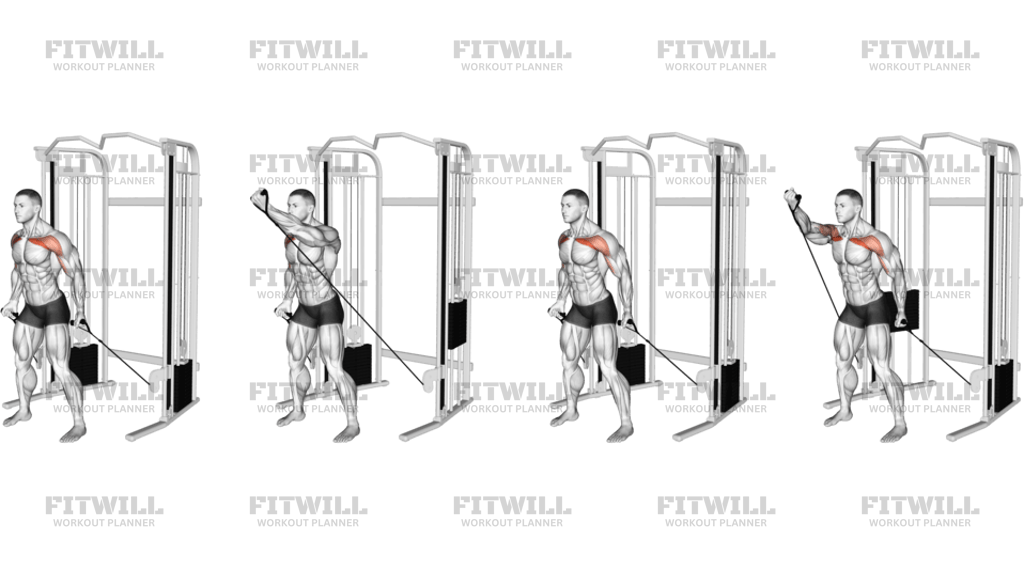
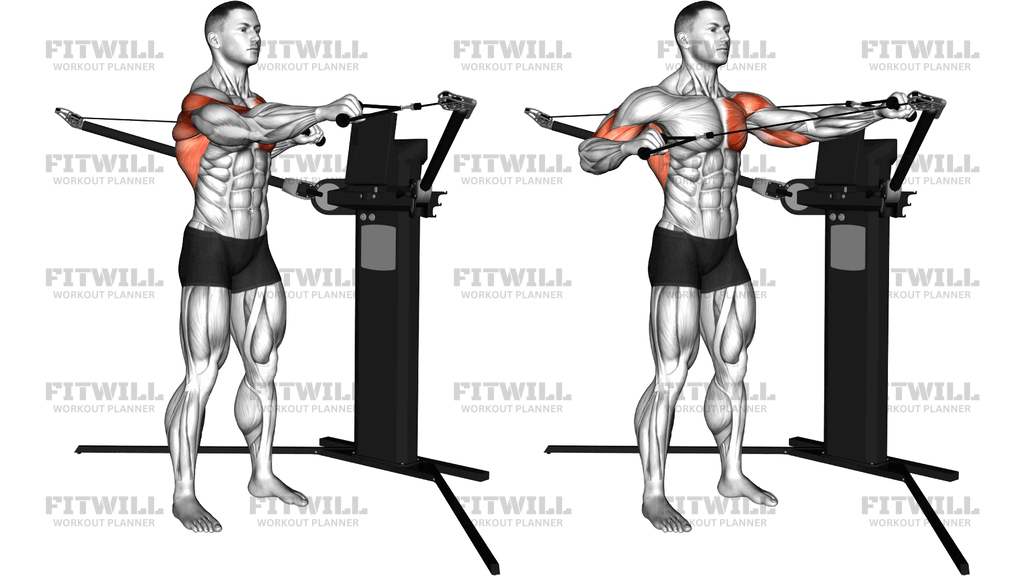
Cable Standing Alternate Low Fly is a standing cable chest exercise that uses a low pulley path to keep constant tension on the pecs through the upward sweep. Each arm works one at a time, so the exercise feels controlled and deliberate rather than explosive, and the alternating pattern makes it easy to notice when the torso starts twisting or the shoulders start taking over.
The movement primarily trains the chest, with help from the front shoulders, arms, and core muscles that keep the rib cage and pelvis stacked while the cable pulls upward and inward. Because the resistance starts low and changes as the handle rises, the setup matters a lot. If you stand too upright, lean back, or let the shoulder roll forward, the load shifts away from the chest and the rep turns into a shruggy front-shoulder movement.
Set the pulleys low, hold a handle in each hand, and take a staggered stance that gives you room to stay balanced. Start with the hands low and slightly out from the hips, elbows softly bent, and the chest open without flaring the ribs. From there, sweep one hand up and across the body in a smooth arc toward the opposite upper chest or shoulder line, then return it under control before switching sides.
The best reps feel smooth, quiet, and repeatable. Keep the neck relaxed, keep both shoulders down, and let the chest finish the arc instead of trying to whip the handle through the top. A brief squeeze at the top is useful, but the real value of Cable Standing Alternate Low Fly comes from maintaining tension through the full path and resisting the urge to turn it into a press.
Use this exercise as accessory chest work after heavier presses, or as a higher-rep finisher when you want strict tension with less joint stress than a free-weight fly. It is also useful when you want to clean up control side to side, because the alternating pattern makes compensation obvious. Keep the load modest, shorten the range if the low back arches, and reset the stance before adding weight.
Fitwill
Log Workouts, Track Progress & Build Strength.
Achieve more with Fitwill: explore over 9600 exercises with images and videos, access built-in and custom workouts, perfect for both gym and home sessions, and see real results.
Start your journey. Download today!




Instructions
- Set both cable pulleys to the lowest position and attach a handle to each side.
- Stand between the stacks in a staggered stance and hold a handle in each hand.
- Step forward just enough to keep light tension on the cables with both arms low, slightly out from the hips, and elbows softly bent.
- Pull your shoulders down, brace your midsection, and keep your torso tall without leaning back into the cables.
- Drive one hand up and across your body in a smooth arc toward the opposite upper chest or shoulder line.
- Keep the elbow angle nearly fixed so the rep stays a fly instead of turning into a press.
- Squeeze briefly at the top, then lower that hand back to the low start position under control.
- Repeat the same arc with the other arm, alternating sides for the planned reps, then return both handles to the start and step out carefully.
Tips & Tricks
- Keep a small bend in the elbow and hold it there; straightening the arm shifts the effort away from the chest.
- Finish the hand in front of the upper chest or opposite shoulder, not overhead where the shoulder starts to shrug.
- A staggered stance usually keeps the alternating cable path steadier than standing with both feet even.
- Use a lighter load than you would for a regular cable fly, because the alternating pattern adds balance demands.
- Let the nonworking hand stay quiet at the bottom instead of drifting forward between reps.
- Exhale as the handle travels up and across, then inhale on the controlled return to the low start.
- If the cable rubs your thigh or hip, take a slightly longer step forward before starting the set.
- If your lower back arches, shorten the reach and keep the ribs stacked over the pelvis.
Frequently Asked Questions
What muscles does Cable Standing Alternate Low Fly work?
It primarily works the chest, especially the pectoralis major, with the front shoulders and core helping to control the alternating path.
Is Cable Standing Alternate Low Fly good for beginners?
Yes, if you keep the load light and the arc small. The alternating pattern makes cheating obvious, which helps beginners learn control quickly.
Should I hold one handle or two?
Use a handle in each hand and alternate one arm at a time while keeping light tension on both cables.
How high should my hand come up?
Finish the sweep in front of the upper chest or opposite shoulder, not way overhead. If the shoulder starts shrugging, stop slightly lower.
Why does my torso twist during the rep?
The stack is probably too heavy or your stance is too narrow. Step into a staggered stance and reduce the load until the torso stays square.
Can I substitute this for dumbbell flys?
Yes. The cable version keeps tension through the whole arc and is often easier to control than dumbbells at the bottom and top positions.
What is the most common mistake?
Letting the elbow bend and straighten like a press or using body sway to finish the rep. Keep the elbow angle steady and let the chest drive the handle.
How should I breathe?
Exhale as the arm sweeps up and across, then inhale as the handle returns to the low start.