Kettlebell Step-Up
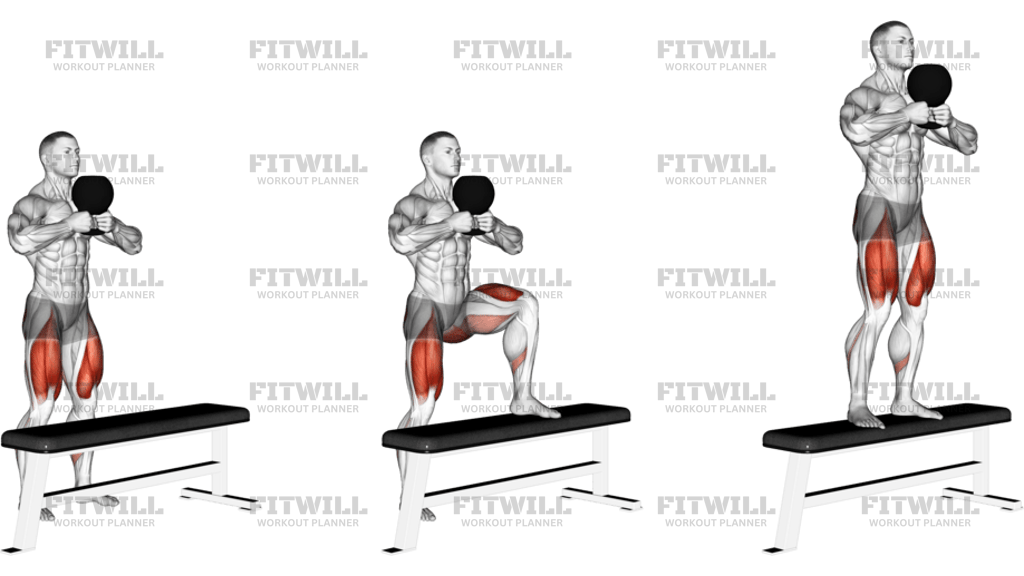
The Kettlebell Step-Up is a lower-body strength exercise built around climbing onto a bench or box while holding a kettlebell in a goblet position. It places the most demand on the thighs, with the glutes, hips, and trunk working hard to keep the body level and the working leg in control. Because the load sits in front of the chest, the torso has to stay organized instead of twisting or drifting toward the stepping leg.
This movement is useful when you want single-leg strength without the balance demands of a lunge or split squat. Each rep asks one leg to support most of the body weight as you drive up, then control the descent on the way back down. That makes it a practical choice for athletes, general strength training, and anyone trying to build better stair-climbing or uphill strength.
The setup matters more here than with many bilateral leg exercises. The bench height should let you plant the whole foot on top without forcing the knee to cave inward or the lower back to round. Hold the kettlebell tight against the chest, keep the ribs stacked over the pelvis, and place the working foot firmly on the box before you push. If the bench is too high, the movement quickly turns into a hip hike and a bounce off the trailing leg.
A good repetition starts by loading the front leg, then driving through the midfoot and heel to stand tall on the bench. Finish with the hips fully extended and the pelvis level, not by leaning forward or kicking off the floor leg. Lower yourself with the same control, keeping the stepping foot planted until you are ready to return to the floor. The goal is a smooth step, not a jump.
Use this exercise as accessory leg work, in unilateral lower-body sessions, or as part of a conditioning block when you want controlled volume and a clear strength stimulus. It is beginner-friendly if the box height and kettlebell load are kept conservative, but it still rewards careful technique. Clean step-ups should feel powerful through the front leg, steady through the trunk, and quiet through the descent.
[ Workout Log & Planner ]
Put your next workout in Fitwill
Keep your plan and training log ready when you are.


Instructions
- Stand facing a bench or box and hold the kettlebell in a goblet grip at chest height with your elbows tucked in.
- Place one whole foot flat on the bench so the heel and forefoot are secure, then keep the other foot on the floor behind you.
- Brace your trunk, keep your chest tall, and lightly lean your torso forward over the working leg.
- Drive through the front foot to step up until your standing leg is straight and your hips are level.
- Bring the trailing leg up under control so you finish tall without bouncing off the floor leg.
- Pause briefly at the top, keeping the kettlebell close and your shoulders square.
- Step back down with the same working leg, lowering slowly until the opposite foot reaches the floor.
- Reset your stance before the next rep and repeat for the planned number of repetitions.
Tips & Tricks
- Choose a bench height that lets your front knee track comfortably instead of forcing the hip to fold too deeply.
- Keep the whole front foot planted; pushing through the toes alone usually makes the knee wobble and the heel lift.
- Use the back leg only as a balance aid on the way down. If it is launching you upward, the working leg is not doing the job.
- Hold the kettlebell tight to the sternum so it does not pull your shoulders forward or make you round your upper back.
- Let the shin of the stepping leg travel naturally, but keep the knee in line with the middle toes instead of collapsing inward.
- Stand all the way up at the top before you step back down; partial lockouts usually turn the rep into a half-rep and reduce hip work.
- Lower under control for at least as long as the drive up. A rushed descent makes the box feel unstable and cuts the thigh stimulus.
- If your torso starts twisting toward the stepping leg, reduce the load before adding more reps.
Frequently Asked Questions
What muscle does Kettlebell Step-Up target most?
It primarily trains the thighs, especially the quadriceps of the stepping leg, with strong help from the glutes and core.
Can beginners perform this exercise?
Yes. Beginners usually do best with a low bench and a light kettlebell until they can step up without pushing off the floor leg.
Should I hold the kettlebell at my chest or by my side?
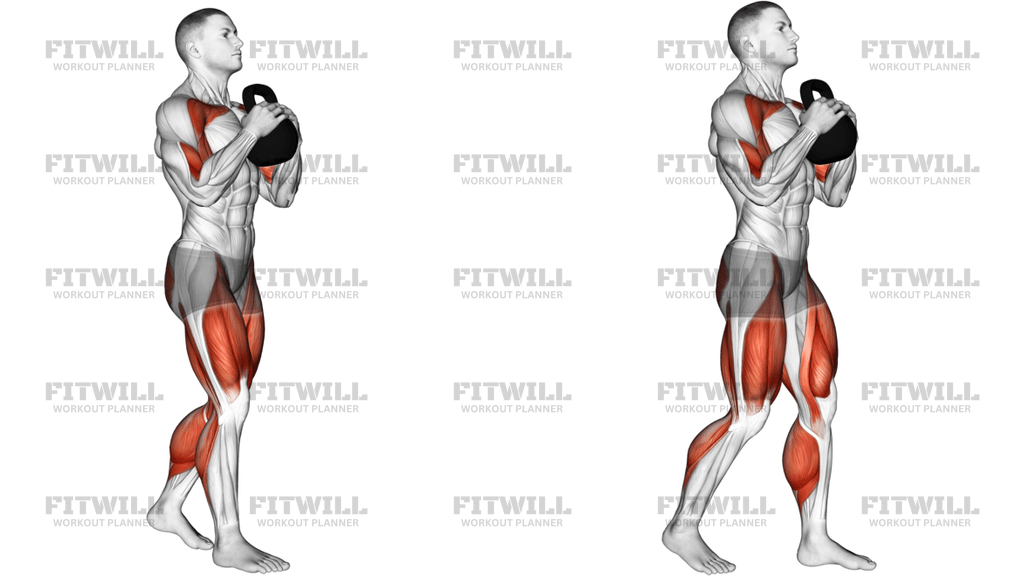
The image shows a goblet hold at chest height, which keeps the load centered and makes it easier to stay upright.
What is the biggest mistake on a step-up?
The most common problem is pushing off the floor leg too much instead of driving through the foot that is on the bench.
How high should the bench be?
A good starting height is around knee level or lower. If the box is so high that your pelvis tips or you have to hop, it is too tall.
Do I need to bring the other knee up at the top?
You can finish tall with the trailing leg lifted or lightly meet the box, as long as you do not bounce off it to complete the rep.
What should I feel working during the rep?
You should feel the front thigh and glute doing most of the work, with the core keeping the torso from tipping or rotating.
How do I make the exercise harder without just adding weight?
Slow the descent, use a slightly higher box only if form stays clean, or add a pause at the top before stepping down.