Cable Donkey Kickback
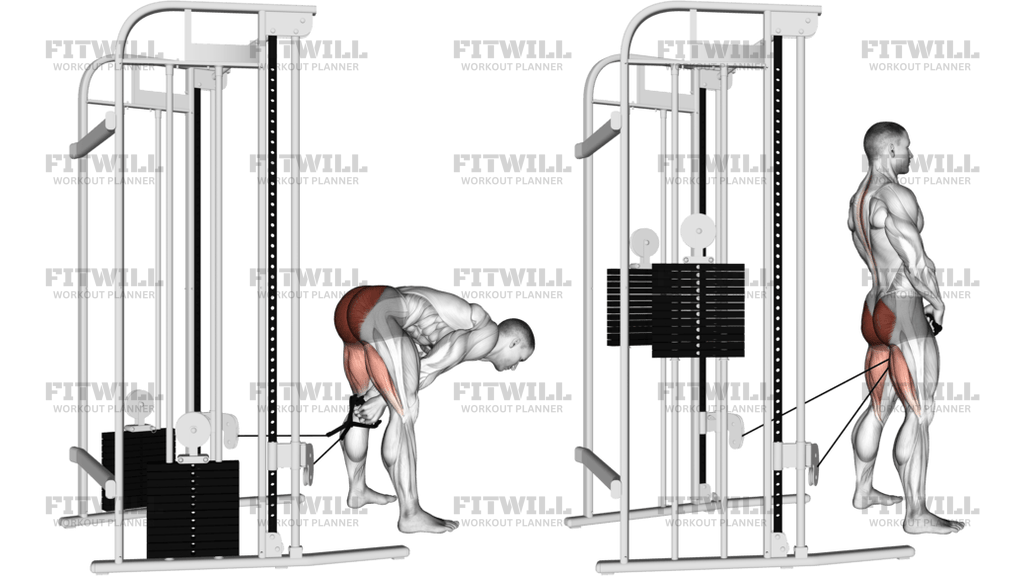
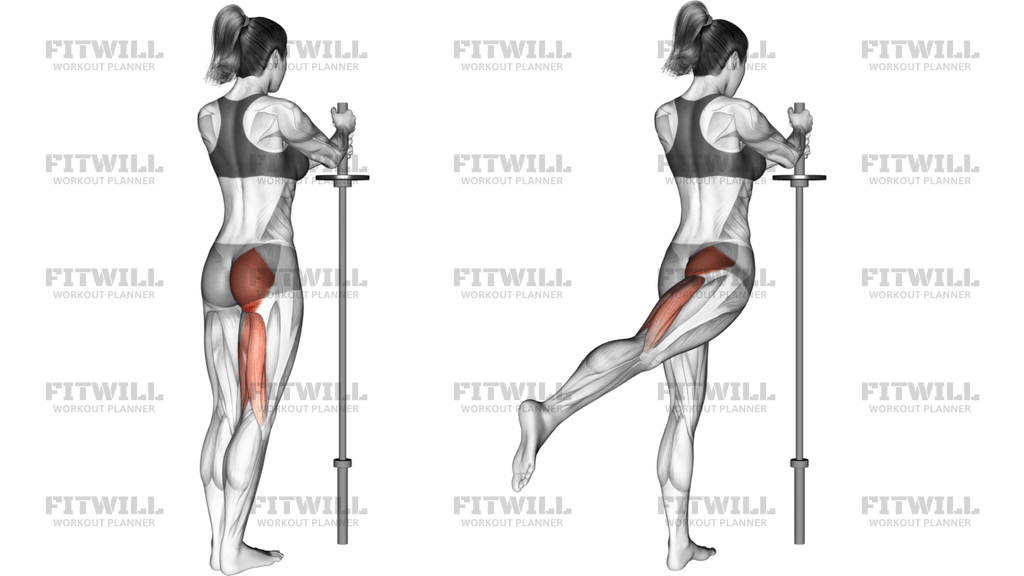
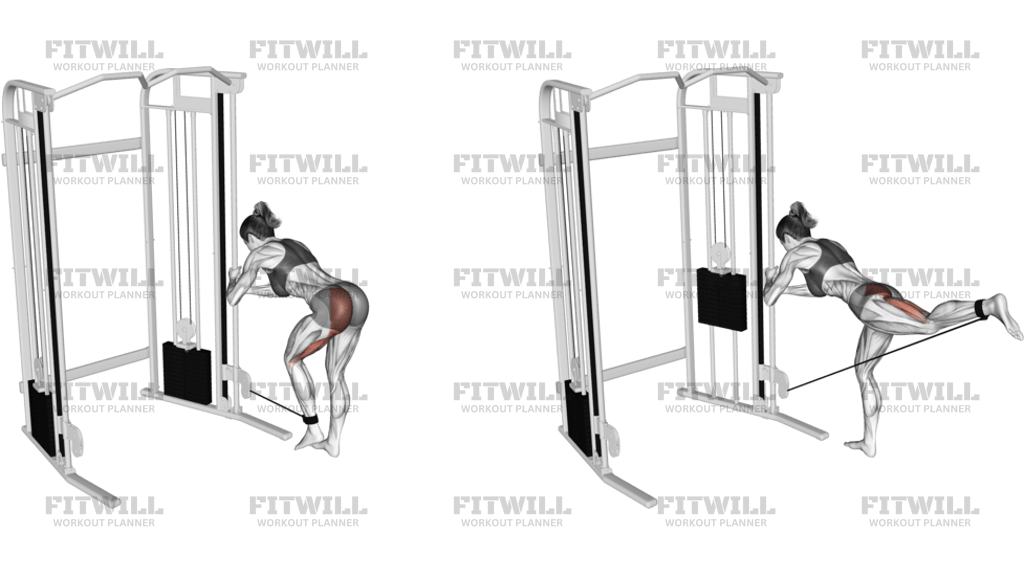
Cable Donkey Kickback is a single-leg hip extension exercise that uses a low cable and an ankle strap to isolate the glutes while the torso stays hinged forward. One or both hands brace on the machine frame, the support leg stays softly bent, and the working leg drives back behind the body in a controlled arc. The cable keeps tension on the glutes through much of the range, which makes this a useful movement for building glute size, strength, and a better mind-muscle connection without loading the spine the way a heavy hinge can.
The setup matters because the cable line determines how stable the rep feels. The attachment should pull from low behind the ankle, not from the side, and the torso should be hinged forward until it is nearly parallel to the floor. Keep the ribs stacked over the pelvis, keep the shoulders quiet, and leave the support knee slightly bent so the pelvis can stay level. If the setup is rushed, the low back usually takes over before the glutes do.
Each rep begins with the working knee under the hip and a small amount of tension already on the cable. Drive the heel back and slightly up from the hip, then stop when the thigh reaches roughly in line with the torso or just behind it. Pause briefly and squeeze the glute without twisting the hip open. Lower the leg under control until the cable brings the foot back to the start position, then reset before the next rep.
Cable donkey kickbacks fit well in glute-focused accessory work, lower-body finishers, or higher-rep unilateral training blocks after squats, lunges, or deadlift variations. Because the exercise is performed one leg at a time, it also highlights side-to-side differences in hip control and balance. Use a load that lets you keep the same torso angle, pelvis position, and range of motion on every rep.
This is usually beginner-friendly if the resistance stays light and the machine setup is stable. The main goal is not to kick higher, but to keep the pelvis square and make the glute do the work. If the cable yanks the leg forward, the hips rotate open, or the low back starts arching to create more range, reduce the load and shorten the kickback until the rep stays clean.
[ Workout Log & Planner ]
Put your next workout in Fitwill
Keep your plan and training log ready when you are.


Instructions
- Set the pulley low and attach the strap to the working ankle. Stand facing the machine and hold the upright or frame for balance.
- Hinge forward from the hips until your torso is nearly parallel to the floor, keep your spine neutral, and leave the support knee softly bent.
- Let the working leg start slightly behind you so the cable has light tension before the first rep.
- Brace your abdomen and keep your ribs down before you move the working leg.
- Press the heel back and slightly up from the hip, keeping the movement smooth instead of swinging the leg.
- Stop when the thigh reaches about in line with the torso or just behind it without arching the low back or opening the hip.
- Squeeze the glute for a brief pause at the top while the shoulders, pelvis, and support leg stay quiet.
- Lower the leg slowly until the cable returns it to the start, breathe out on the kickback, and inhale on the return.
Tips & Tricks
- Keep both hip points aimed at the floor; if the working side opens up, shorten the kickback.
- Think about driving the heel back, not lifting the foot higher. Extra height usually comes from lumbar extension.
- Use the machine upright as a light balance aid instead of pulling your body forward with it.
- A slight bend in the support knee usually keeps the pelvis steadier than locking the leg straight.
- If the cable snaps the leg forward on the way down, reduce the weight and slow the lowering phase.
- Keep the ankle strap snug so the cable line stays clean and does not rotate around the foot.
- A short squeeze at peak extension is enough; long holds often shift tension into the low back.
- Choose a rep range that lets you keep the same torso angle and hip position from the first rep to the last.
Frequently Asked Questions
What muscles do cable donkey kickbacks train most?
They mainly target the gluteus maximus, with the glute medius, hamstrings, and core helping keep the pelvis steady.
Do I need an ankle strap for this exercise?
Yes, an ankle strap is the cleanest attachment because it keeps the cable aligned with the working leg and leaves the foot free to move naturally.
Should my torso stay upright during the rep?
No. A forward hip hinge is part of the setup, and keeping the torso nearly parallel to the floor helps the glutes do the work without turning the rep into a low-back exercise.
How high should I kick the leg back?
Only as high as you can while keeping the pelvis square and the ribs down. If the leg keeps rising after the glute stops contracting, the extra range is usually coming from the low back.
Is this better for beginners or advanced lifters?
It works well for both. Beginners should use light resistance and focus on balance and hip control, while advanced lifters can use it for higher-rep glute work and finishers.
What is the most common form mistake?
The biggest mistake is twisting the hips open or arching the spine to force more height. That usually shifts tension away from the glute and reduces control.
Can I do this if I only have a handle attachment?
Not ideally. The movement is meant for a lower-leg attachment, so a strap or cuff is usually more appropriate than a hand handle.
Where should I feel the exercise?
You should feel it mostly in the working glute, with light hamstring and trunk effort from stabilizing the body.