Roll Ball Pectoralis Major Sternal
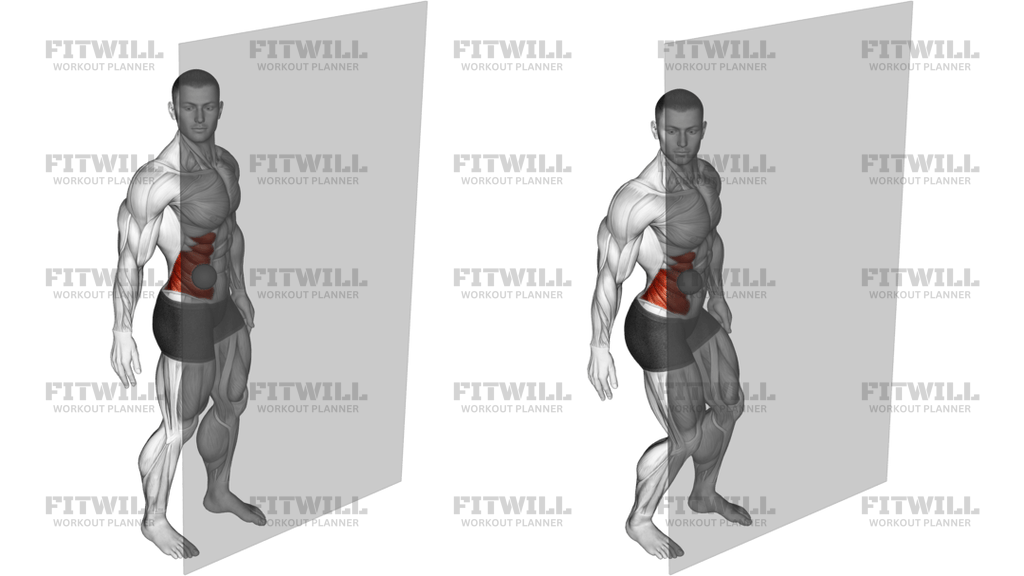
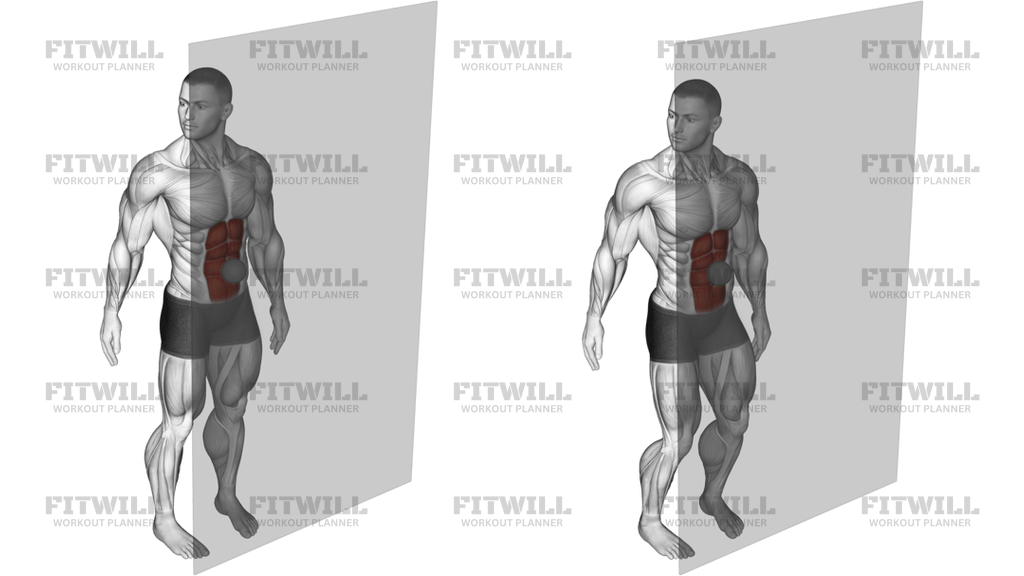
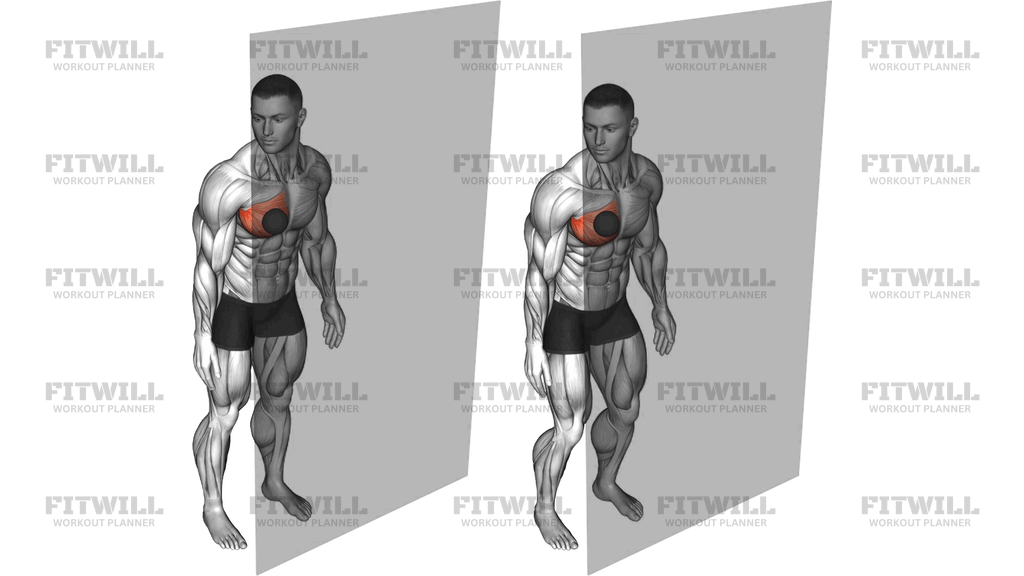
Roll Ball Pectoralis Major - Sternal is a wall-supported self-release for the inner portion of the chest, aimed at the sternal fibers of the pectoralis major. You place a small ball between the chest and a wall, then use bodyweight and tiny shifts in angle to find tight spots and ease them with controlled pressure. The exercise is not about forcing a big range; it is about locating the front-of-shoulder and upper-chest tissue that often gets stiff from pressing, desk posture, or rounded shoulders.
The setup matters because the ball needs to sit on the fleshy part of the chest, not on the collarbone, shoulder joint, or breastbone itself. A stable standing stance lets you control how much pressure you apply and keeps the release focused on the intended area. When the ribs stay stacked and the neck stays relaxed, you can bias the pressure into the chest instead of letting the shoulder roll forward and take over.
During the release, you make small rolls, pauses, or micro-circles over the tender spots while breathing slowly. The goal is a dull, manageable sensation rather than sharp pain or numbness. By shifting a few centimeters at a time and changing the angle of the torso, you can work along the inner pec fibers and the front edge of the chest without irritating the shoulder.
This drill works well before pressing work, overhead work, or any session where the shoulders need to move freely. It can also be useful after training as a down-regulation or mobility piece when the chest feels tight. Beginners can use very light pressure and short holds; stronger pressure should only come from better positioning, not from collapsing into the wall.
Use it as a precision mobility tool. The best repetitions are slow, controlled, and repeatable, with enough pressure to change tissue tone but not so much that you brace hard or grind through discomfort. If the ball drifts toward the shoulder joint or the sensation becomes sharp, move it back onto the chest and reduce pressure.
[ Workout Log & Planner ]
Put your next workout in Fitwill
Keep your plan and training log ready when you are.


Instructions
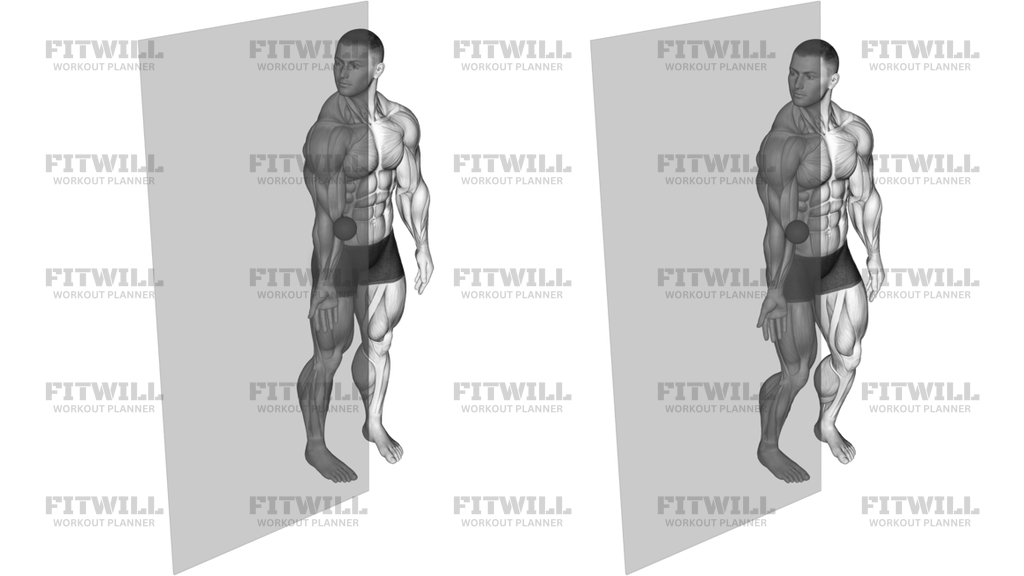
- Stand sideways to a wall and place the ball between the inner chest and the wall, over the sternal fibers of the pectoralis major.
- Keep the ball on the fleshy chest tissue, not on the collarbone, breastbone, or shoulder joint.
- Take a split stance and lean in just enough to create steady pressure without collapsing your rib cage forward.
- Relax the shoulder on the working side and let the arm hang naturally beside you.
- Roll the body a few centimeters up, down, and across the chest until you find a tight or tender spot.
- Hold on the spot for a slow breath or two, then make tiny circles or micro-shifts to ease the pressure.
- Keep breathing slowly through the nose or a soft exhale so the chest can soften under the ball.
- Move to the next spot with a small body shift, then repeat the same controlled pressure.
- After the set, step away from the wall and let the shoulder and chest settle before changing sides.
Tips & Tricks
- Press into the wall with bodyweight, not with a hard shoulder shrug.
- Keep the ball in the inner chest fibers; if it slides onto the front deltoid, reposition it.
- A softer wall lean is better than forcing deep pressure and tensing the neck.
- Short, repeated holds usually work better than one long painful grind.
- Use slow exhalations to help the chest wall relax under the ball.
- If you feel pinching in the front of the shoulder, move the ball lower and more medial.
- Keep the ribs stacked instead of arching the lower back to increase pressure.
- Work one side at a time so you can feel exactly where the tension changes.
Frequently Asked Questions
What does Roll Ball Pectoralis Major - Sternal target?
It targets the inner, sternal portion of the pectoralis major, with some nearby front-shoulder and chest wall tension also responding.
How do I place the ball on the chest for this drill?
Set the ball on the fleshy part of the inner chest, just outside the breastbone, so pressure stays on the pec instead of the shoulder joint.
Should this feel painful?
No. A strong but tolerable pressure is fine, but sharp pain, numbness, or pinching means the ball is in the wrong spot or the lean is too aggressive.
Why is the wall position important?
The wall gives you a stable surface so you can control pressure with your body angle and keep the release focused on the chest.
Can I use this before pressing exercises?
Yes. It is often useful before benching, push-ups, or overhead work when the chest feels tight or the shoulders want more freedom.
What is the most common mistake with this exercise?
People usually lean too hard and turn it into a painful grind, or they let the ball drift onto the front of the shoulder instead of the pec.
How long should I stay on one tender spot?
A slow breath or two is usually enough, then move a few centimeters and search for the next area that feels tight.
Can beginners do this exercise?
Yes. Beginners should use very light pressure, small movements, and short holds so they can learn the setup without irritating the shoulder.