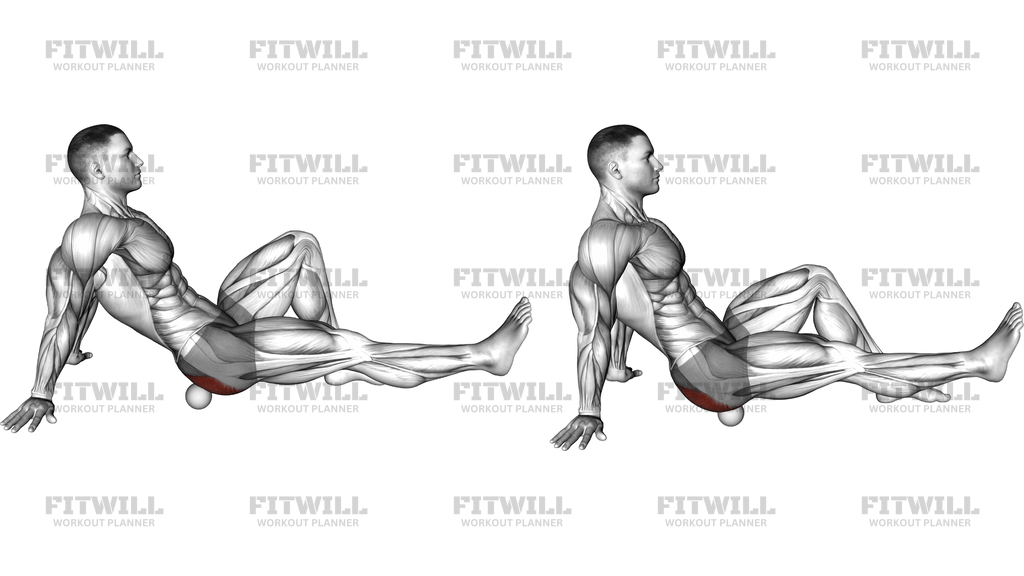
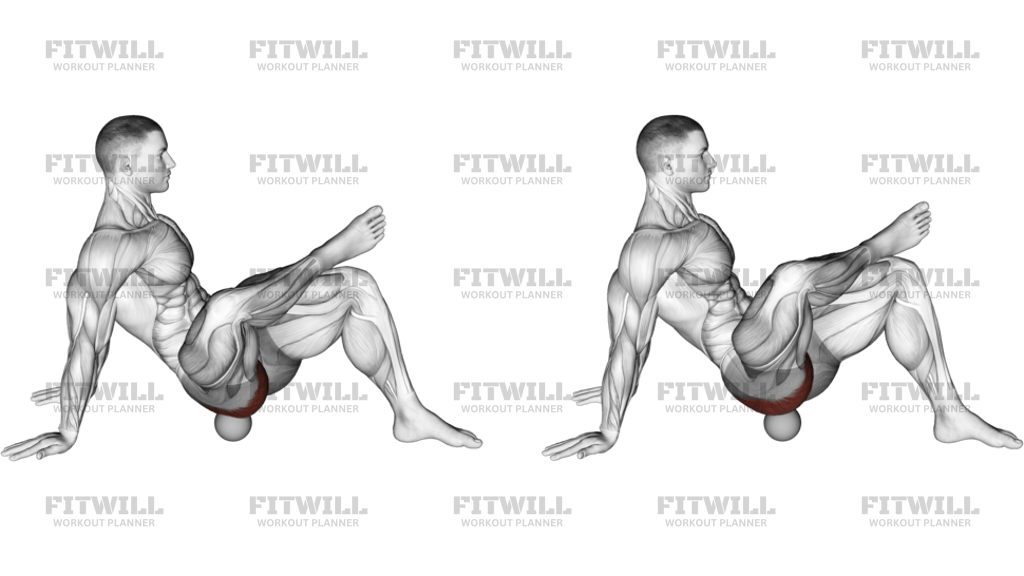
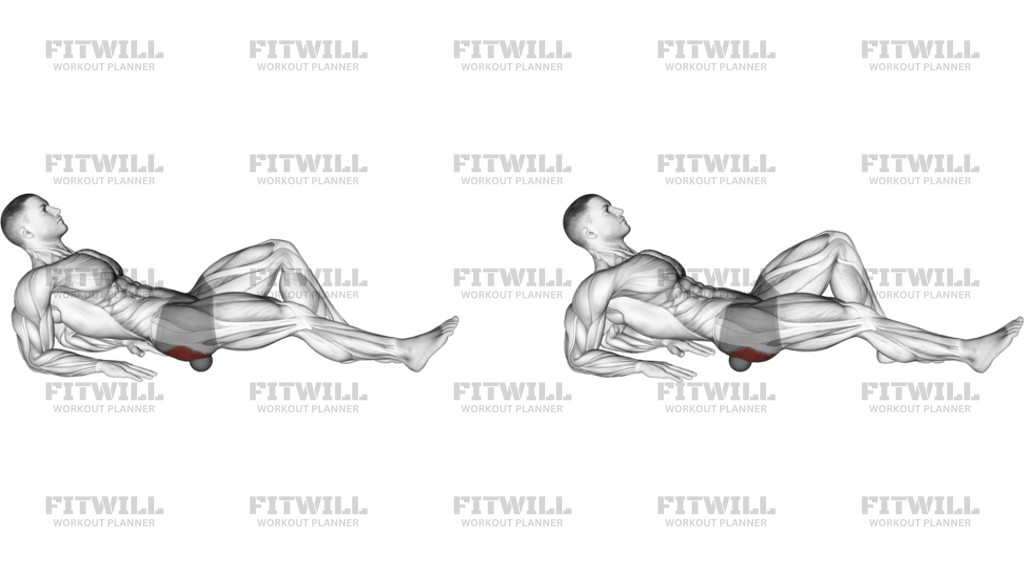
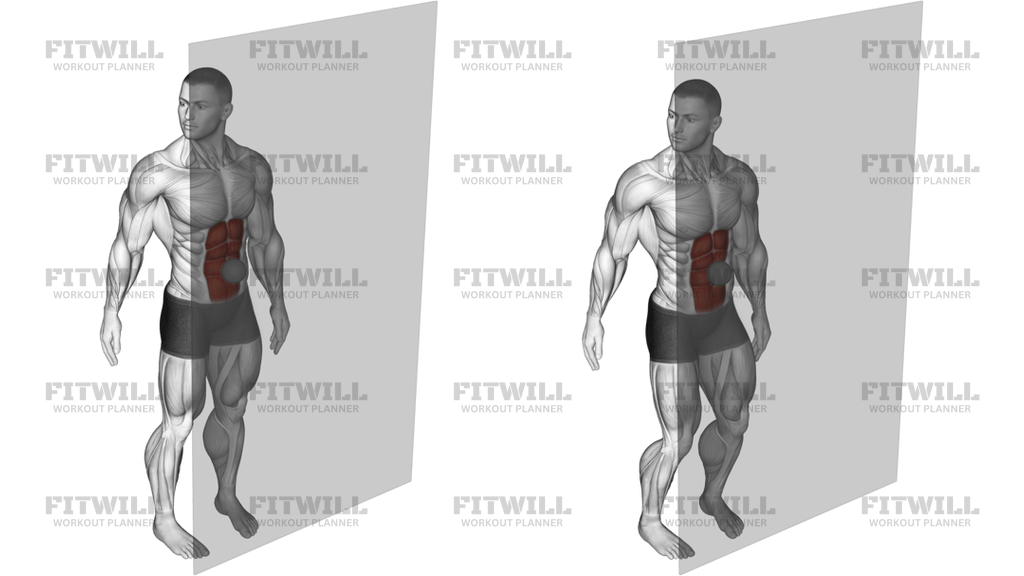
Roll Ball Forearm Extensors
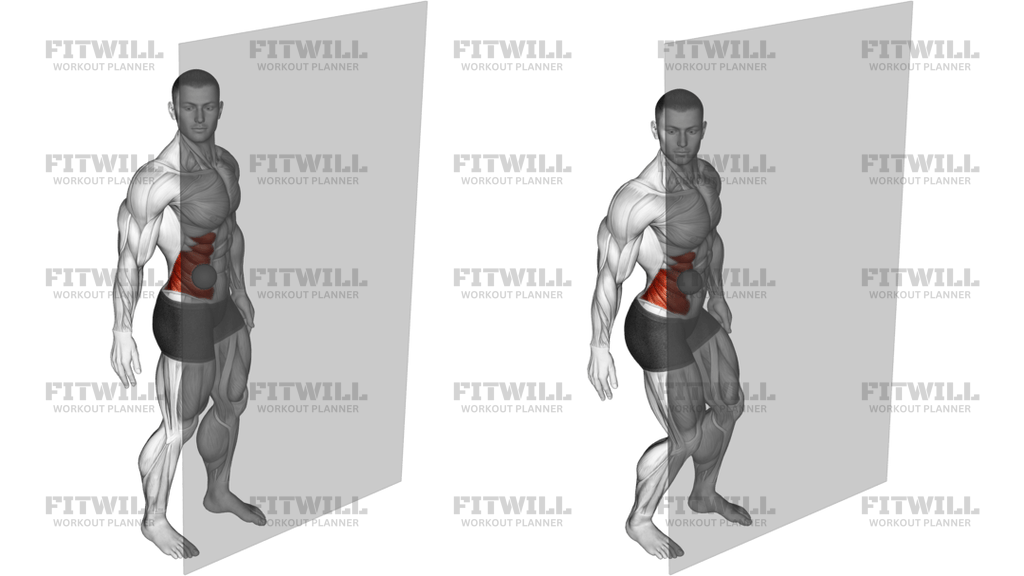
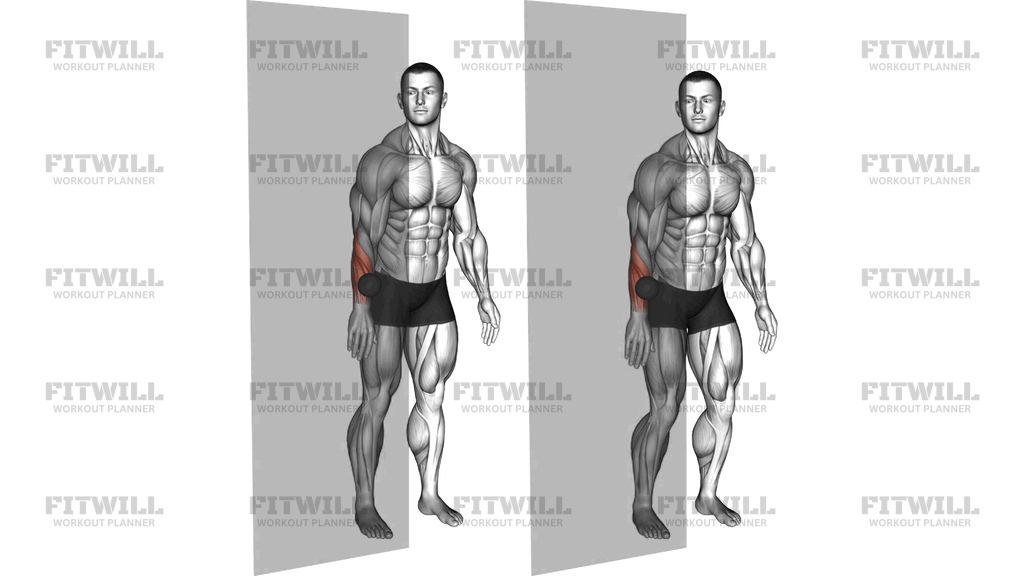
Roll Ball Forearm Extensors is a wall-supported forearm release drill that targets the back and outer side of the forearm. It is useful when your grip feels tired, your wrist extensors are tight, or you want to warm up the forearm before rows, deadlifts, pull-ups, racquet sports, or climbing. The rollball gives you a compact point of pressure so you can work one narrow strip of tissue instead of just rubbing the whole arm.
The main tissue involved is the wrist and finger extensor group, especially the muscles that sit along the top of the forearm and help open the hand and control wrist position. The shoulder, upper arm, and trunk stay lightly active so you can keep the pressure steady without collapsing into the wall. That small amount of support matters because it lets you control how hard the ball presses into the muscle belly.
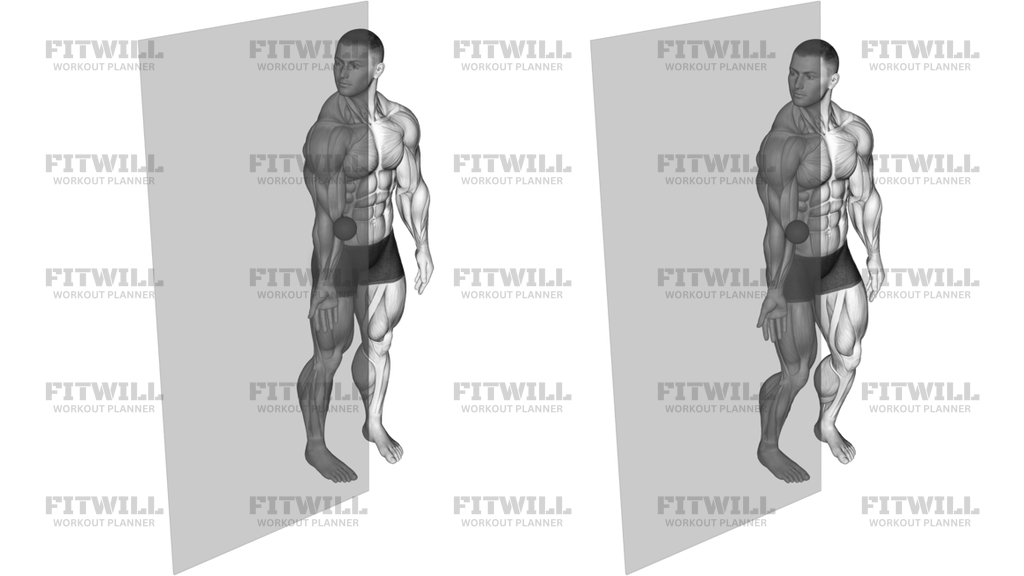
Set the ball between the wall and one forearm, then stand side-on so the working arm is relaxed and slightly bent. Place the ball on the fleshy part of the forearm just below the elbow and above the wrist, not on the bony elbow tip or the wrist crease. Lean in gradually until the pressure feels firm but still tolerable, then keep the shoulder down and the neck long.
Roll slowly up and down the forearm, then make tiny pauses where the tissue feels especially tight. A small turn of the palm in or out can shift the contact onto a different strip of the extensors, which is useful if one area feels too sensitive. Breathe out as you settle into a tender spot, then move on before the hand starts to tense up.
Use controlled passes rather than chasing pain or forcing a deep release. This drill works well as part of a warm-up, between strength sets, or on recovery days when the forearms feel cooked from repetitive gripping. If you feel sharp pain, numbness, or tingling into the fingers, back off pressure and move the ball to a softer section of the muscle.
[ Workout Log & Planner ]
Put your next workout in Fitwill
Keep your plan and training log ready when you are.


Instructions
- Stand side-on to a wall and place the rollball against the back and outer side of one forearm.
- Set the ball on the fleshy muscle belly just below the elbow, with the elbow slightly bent and the hand relaxed.
- Lean in until the ball presses firmly into the forearm without digging into the elbow bone or wrist.
- Keep the shoulder dropped and the wrist neutral while you start the first slow pass.
- Roll the ball a few inches toward the wrist, then return toward the elbow with the same light pressure.
- Pause on a tender spot for two or three breaths and make tiny one-inch rocks or circles.
- Slightly turn the palm inward or outward to find a different line of the extensor muscles if needed.
- Reset the ball higher or lower on the forearm, repeat on the same arm, then switch sides and shake out the hand.
Tips & Tricks
- Keep the pressure in a firm stretch-like zone, not a bruising one.
- Use the thicker muscle belly just below the elbow first; that area usually tolerates pressure better than the wrist end.
- If the forearm tightens defensively, exhale and reduce your lean instead of pushing harder.
- Tiny circles usually work better than long fast rolls on sensitive forearms.
- Don't pin the ball on the point of the elbow or the tendons at the wrist.
- A softer ball is usually better than a hard lacrosse ball for the first few sessions.
- When the hand opens and closes more freely, you are probably on the right tissue.
- Stop if the sensation changes from pressure to tingling or sharp pain.
- Use this after pulling or gripping work when the extensors are stiff from repeated wrist extension.
Frequently Asked Questions
What does Roll Ball Forearm Extensors work?
It targets the forearm extensor group on the back and outer side of the arm, especially the muscles that help extend the wrist and fingers.
Is Roll Ball Forearm Extensors a stretch or a massage drill?
It is more of a soft-tissue release and mobility drill than a loaded strength exercise. The goal is controlled pressure and smoother forearm motion, not resistance.
Where should the rollball sit on my forearm?
Place it on the fleshy part just below the elbow and above the wrist. Avoid the elbow bone and the wrist crease so the pressure stays on muscle tissue.
How hard should I lean into the wall?
Lean only enough to feel firm, useful pressure. If your fingers tense up, your wrist aches, or the sensation turns sharp, back off immediately.
Can beginners do Roll Ball Forearm Extensors?
Yes. Start with light pressure and short passes of 20 to 30 seconds per spot, then increase time only if the forearm stays relaxed.
Why does my hand tingle during this exercise?
Tingling usually means the ball is too close to nerve-sensitive tissue or the pressure is too high. Move slightly toward the muscle belly and reduce bodyweight.
Should I use this before lifting or after?
Both can work. Use it before pulling or gripping work to open up the forearm, or after training to ease the tight, pumped feeling.
Can I use a lacrosse ball instead of a rollball?
Yes, but a lacrosse ball creates sharper pressure and can be too intense at first. A softer ball is usually easier to control on the forearm.