Kneeling Shoulder Tap
Kneeling Shoulder Tap is a bodyweight anti-rotation drill performed from a kneeling plank position. One hand stays planted on the floor while the other hand leaves the base of support to touch the opposite shoulder, forcing the trunk, shoulders, and hips to stay quiet while the body resists twisting. It is useful for teaching shoulder stability, core control, and clean weight shift before moving to harder plank or push-up variations.
The exercise looks simple, but the setup determines whether it trains stability or just turns into a sway-and-reach movement. The knees stay down, the hands are set under the shoulders, and the torso should form one long line from head to knees. The working shoulder, serratus, chest, and triceps support the planted side while the abs and obliques resist rotation. If the hips drift or the lower back arches, the tap is too aggressive for the current level.
A good repetition begins with pressure through the planted hand and a deliberate lift of the opposite hand. Reach across to tap the opposite shoulder without shifting the ribcage, then return the hand to the floor with control. The movement should be short and precise, not fast. Each tap is a test of balance and bracing, so the quality of the hold matters more than the number of reps.
This variation is helpful in warm-ups, accessory work, core circuits, and shoulder-prep sessions because it builds control with little setup and no equipment. It can also expose side-to-side differences in stability, which is useful when one shoulder or one hip tends to collapse first. Beginners can use it as a regression from a full plank shoulder tap, while more advanced athletes can slow the tempo or narrow the base to increase the challenge.
Use clean shoulder taps as a skill-focused bodyweight drill. Stop the set as soon as the hips start rocking, the neck tenses, or the planted shoulder loses its stacked position over the wrist. The goal is a stable, repeatable tap pattern that teaches the body to resist motion while staying in a strong kneeling support position.
Fitwill
Log Workouts, Track Progress & Build Strength.
Achieve more with Fitwill: explore over 9600 exercises with images and videos, access built-in and custom workouts, perfect for both gym and home sessions, and see real results.
Start your journey. Download today!




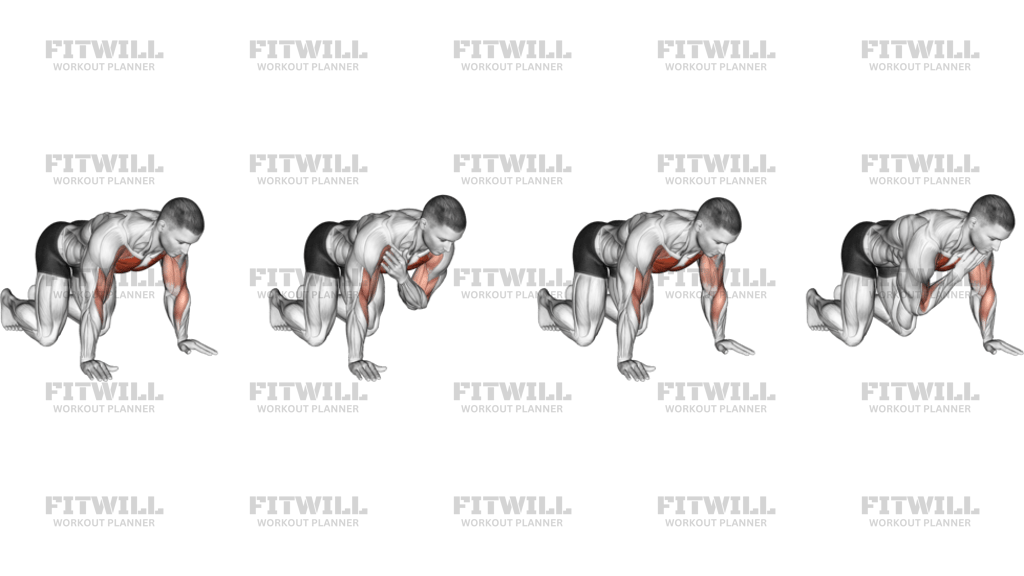
Instructions
- Set up on hands and knees with your hands under your shoulders and your knees under your hips.
- Walk your hands slightly forward so your torso forms a straight line from head to knees.
- Press the floor away, keep your neck long, and brace your ribs down before the first rep.
- Shift your weight slightly into one planted hand without letting the shoulders turn or the hips drift.
- Lift the opposite hand and tap the opposite shoulder with a short, controlled reach.
- Pause for a brief moment without collapsing into the supporting shoulder.
- Place the hand back under the shoulder in the same controlled path.
- Alternate sides for the planned number of reps while keeping the pelvis level and breathing steady.
Tips & Tricks
- If your hips rock from side to side, widen your knees a little or slow the pace until the torso stays quiet.
- Keep the tap short; reaching farther usually adds twist without adding useful work.
- Push the floor away with the planted hand so the supporting shoulder stays active instead of sinking.
- Think about keeping both front hip bones pointed straight down, especially when you switch sides.
- Exhale as the hand lifts and taps, then inhale as it returns to the floor.
- A softer knee position is fine, but do not let the knees slide so far back that the low back sags.
- If one side feels much harder, reduce the rep count and clean up the alignment instead of chasing fatigue.
- Use this as a control drill, not a speed drill; fast taps usually hide trunk rotation and shoulder collapse.
Frequently Asked Questions
What does Kneeling Shoulder Tap train most?
It trains anti-rotation core control, shoulder stability, and the ability to keep the torso steady while one arm moves.
Why are the knees down in this version?
The kneeling position lowers the load and makes it easier to learn stable shoulder taps before progressing to a full plank.
Where should my hands be during the setup?
Place your hands under your shoulders and keep enough space to hold a straight line from your head to your knees.
Should my hips move when I tap the opposite shoulder?
No. A small shift is normal, but the pelvis should stay mostly level and avoid obvious rocking.
Which muscles do I feel most during this exercise?
You should feel the shoulders, serratus, triceps, and chest supporting the position, with the abs and obliques working hard to prevent rotation.
What is the most common mistake?
The biggest mistake is reaching too fast and letting the trunk twist, which turns the movement into a balance wobble instead of a stability drill.
Can I make the exercise easier?
Yes. Slow the tempo, widen your knees slightly, and make a smaller tap until you can keep the body still.
How do I progress Kneeling Shoulder Tap?
You can narrow the base, slow the pause at the top, or eventually move to a full plank shoulder tap once the kneeling version stays strict.