Kettlebell Single-Arm Clean And Press
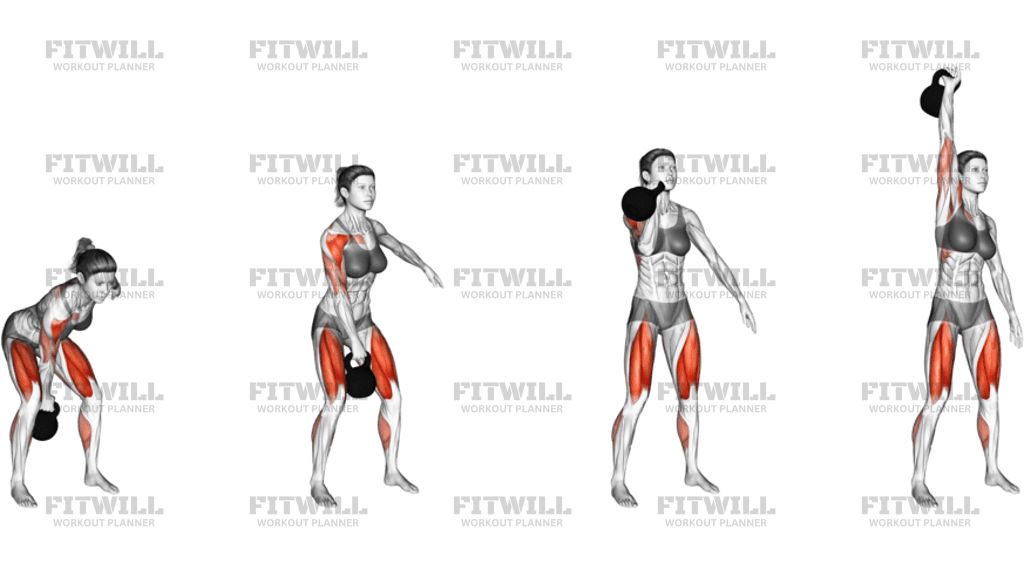
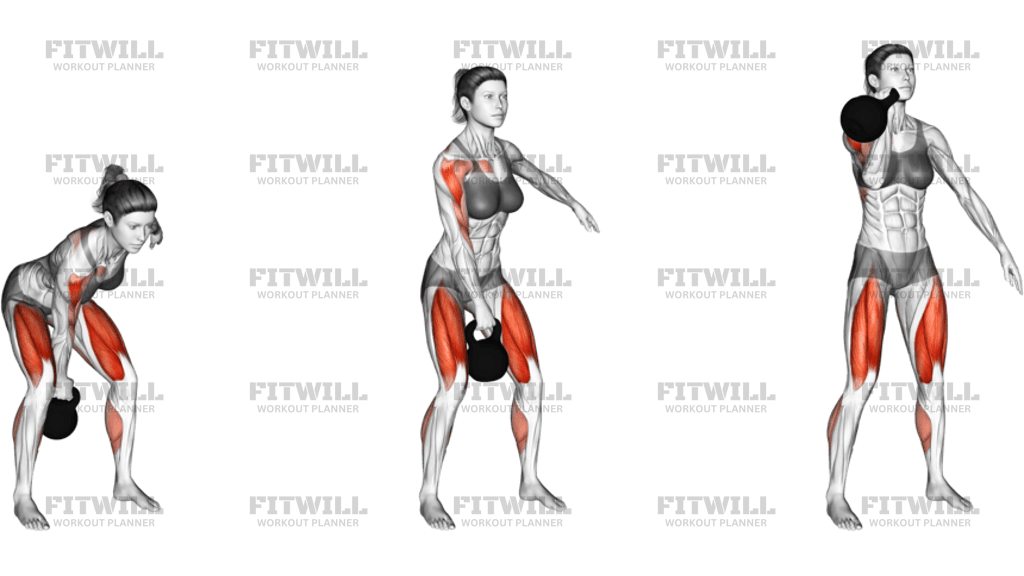
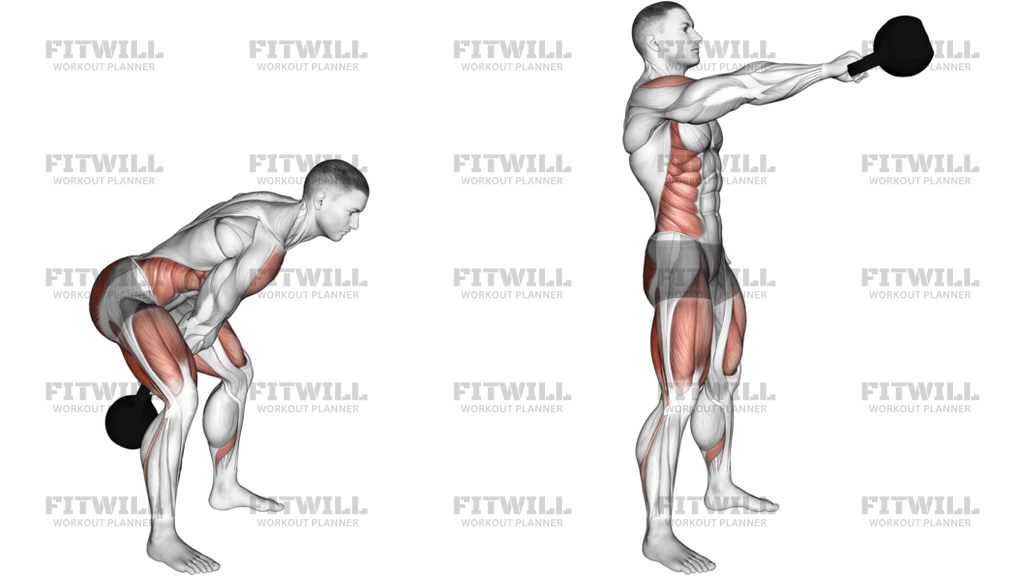
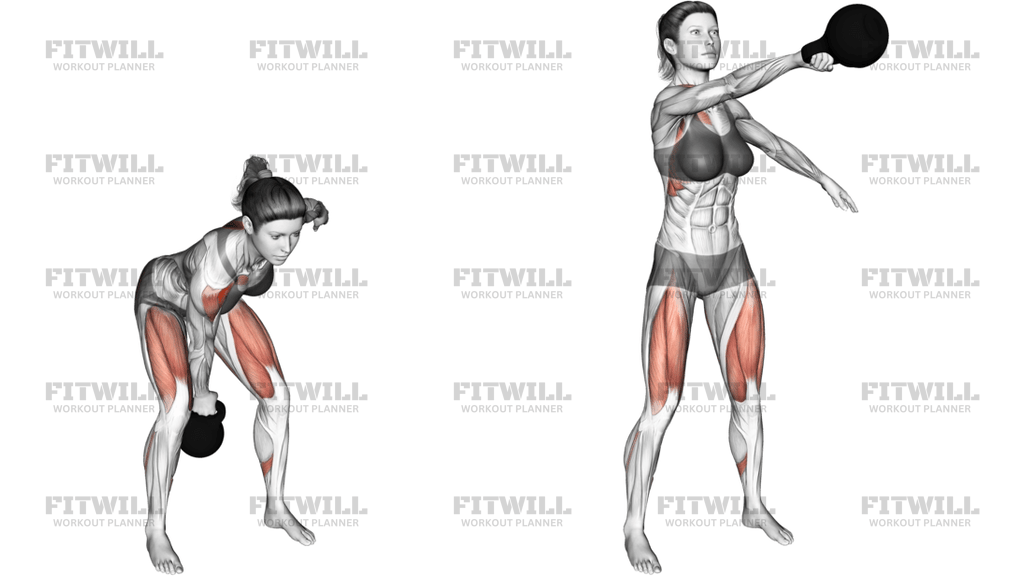
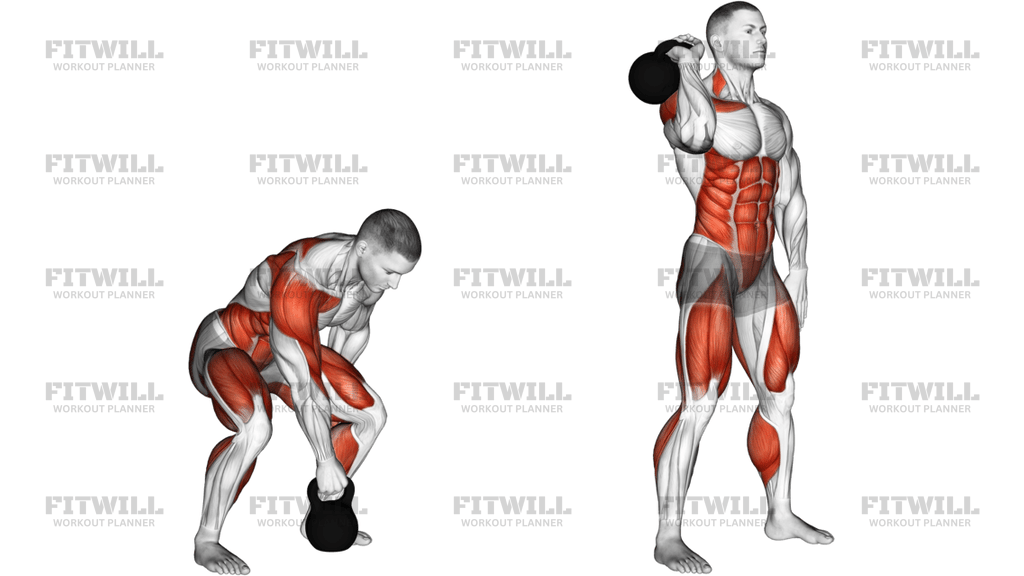
Kettlebell Single-Arm Clean and Press is a unilateral power-and-strength movement built from a hip hinge, a clean to the front rack, and an overhead press. The hanging start in the image shows the first job clearly: load the hips, keep the torso long, and let the kettlebell travel close to the body instead of swinging away from it. When the clean is crisp, the lift feels athletic and controlled; when it is sloppy, the kettlebell slaps the forearm or drifts forward and steals tension from the press.
This exercise trains the shoulders, triceps, upper back, glutes, hamstrings, and core at the same time, with the rack position demanding a lot of stability through the trunk and shoulder. Because only one arm is working, the torso has to resist rotation as the weight moves from the hang to the rack and then overhead. That makes it a useful choice for general strength, conditioning, and coordination work when you want a single pattern that challenges both lower-body drive and upper-body control.
The clean portion should start from a stable stance with the kettlebell between the feet or slightly ahead of them, the working shoulder packed, and the free arm used for balance. From there, hinge back, hike the bell, then snap the hips to float the kettlebell into the rack without muscling it up with the arm alone. The forearm should finish close to the ribs, the wrist neutral, and the elbow tucked rather than flared. Once the rack is secure, press the kettlebell straight up until the arm is locked out and the biceps finish near the ear.
The return matters just as much as the lift. Lower the bell under control to the rack, soften the knees, and guide it back into the hinge so the next rep starts from a clean position instead of a collapse. Breathe out through the clean or the press, then reset the brace before the next repetition. If you are switching sides, finish the set on one arm before changing hands so the hinge, rack, and press stay consistent.
Use this exercise when you want a strong carryover to overhead control, one-arm coordination, and total-body tension. It works well in strength blocks, conditioning circuits, or as a technical lift with moderate reps and full recovery between sides. The best sets look smooth and repeatable: no early arm curl, no leaning back on the press, and no twisting through the torso as the kettlebell moves from the floor line to overhead.
[ Workout Log & Planner ]
Put your next workout in Fitwill
Keep your plan and training log ready when you are.


Instructions
- Stand with the kettlebell on the floor or hanging just in front of the feet, feet about hip-width apart, and the working hand over the handle.
- Hinge at the hips with a long spine, soft knees, and the free arm reaching out for balance.
- Grip the handle firmly, pack the shoulder, and brace the trunk before you start the pull.
- Hike the kettlebell back between the legs, keeping it close to the body as you load the hips.
- Drive the hips forward and let the bell float upward, then rotate the hand around it into the front rack.
- Catch the bell on the forearm with the elbow tucked, wrist neutral, and the weight resting close to the chest.
- Press the kettlebell straight overhead until the arm is fully locked out and the ribs stay stacked over the pelvis.
- Lower the bell back to the rack with control, then guide it back into the hinge for the next rep.
- Complete the planned reps on one side, set the bell down safely, and repeat on the other arm.
Tips & Tricks
- Keep the kettlebell path tight to the torso so the clean uses hip drive instead of a looping arm swing.
- Do not curl the bell up early; the elbow should stay close until the hips finish the snap.
- If the handle crashes onto the forearm, the clean is usually too far from the body or too late in the rack turn.
- In the rack, keep the wrist straight and the knuckles vertical so the shoulder can support the bell without collapse.
- Press with the ribs down; leaning back turns the rep into a low-back arch instead of an overhead press.
- Use the free hand as a counterbalance on the hinge, but do not let it pull the torso open.
- Treat each rep like a fresh start from the hinge instead of bouncing through a sloppy swing cycle.
- Choose a load you can clean quietly and press without grinding the shoulder or swaying the body.
Frequently Asked Questions
What muscles does the kettlebell single-arm clean and press train?
It trains the shoulders, triceps, upper back, glutes, hamstrings, and core, with the clean demanding hip drive and the press demanding overhead stability.
Should the kettlebell hit my forearm during the clean?
No. A clean bell should rotate smoothly into the rack and land close to the forearm without slamming into it.
What is the front rack supposed to look like?
The kettlebell should rest close to the chest with the elbow tucked, wrist neutral, and the shoulder packed rather than shrugged forward.
Can beginners do this exercise?
Yes, but they should start with a light bell and practice the hinge, clean, and rack separately before adding the press.
Why does my torso lean back during the press?
Usually the bell is too heavy or the ribs are flaring. Keep the glutes tight and press straight up without turning it into a backbend.
Do I need to lower the kettlebell all the way to the floor every rep?
Not necessarily. Many lifters cycle from the rack back into the hinge, but the bell should still return under control and not just drop.
What is the biggest mistake in the clean part?
A common mistake is muscling the bell up with the arm instead of letting the hip snap float it into the rack.
How should I progress this movement?
Progress by first owning the clean and the press separately, then increasing load or reps only when both sides stay smooth and balanced.