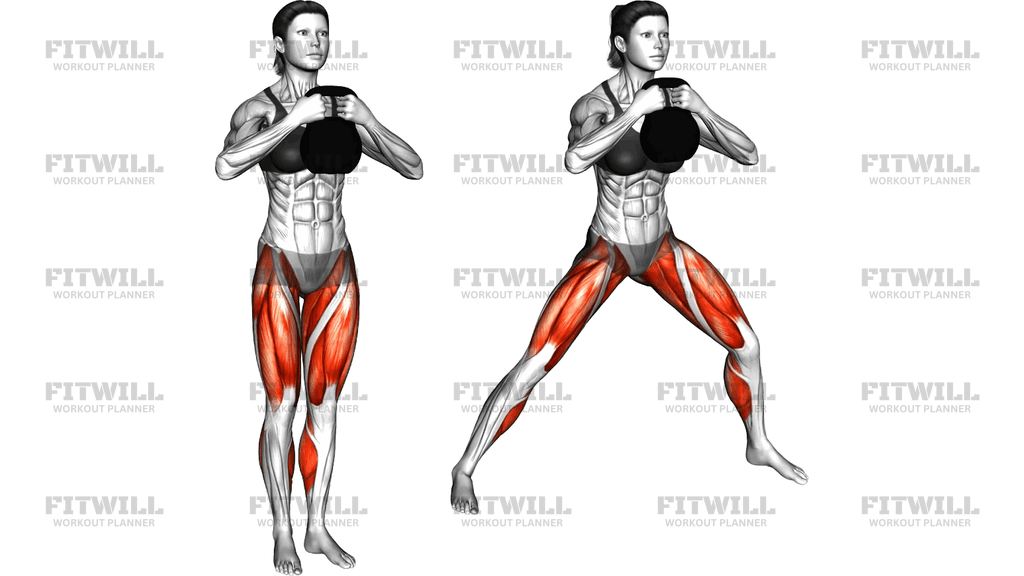
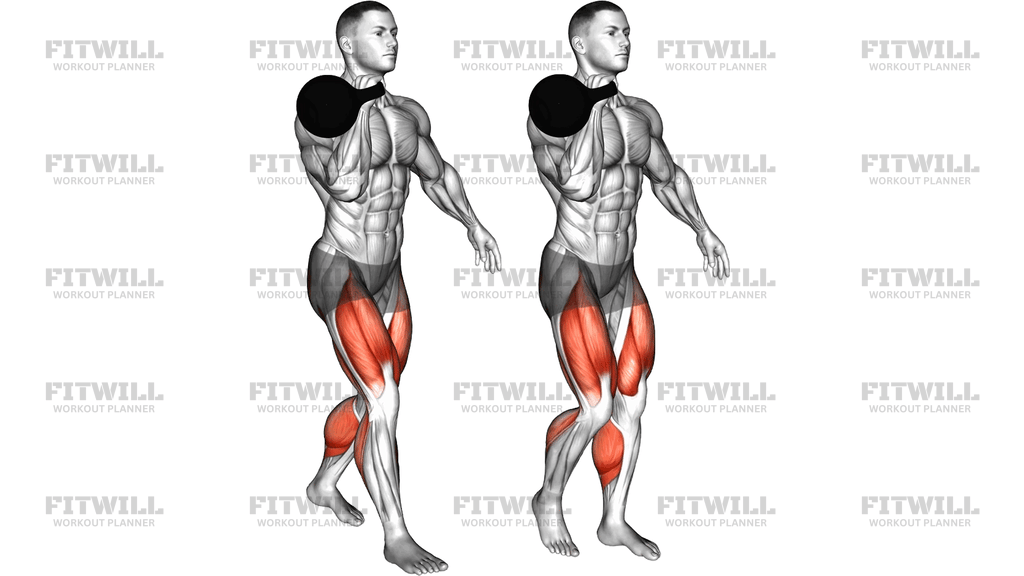
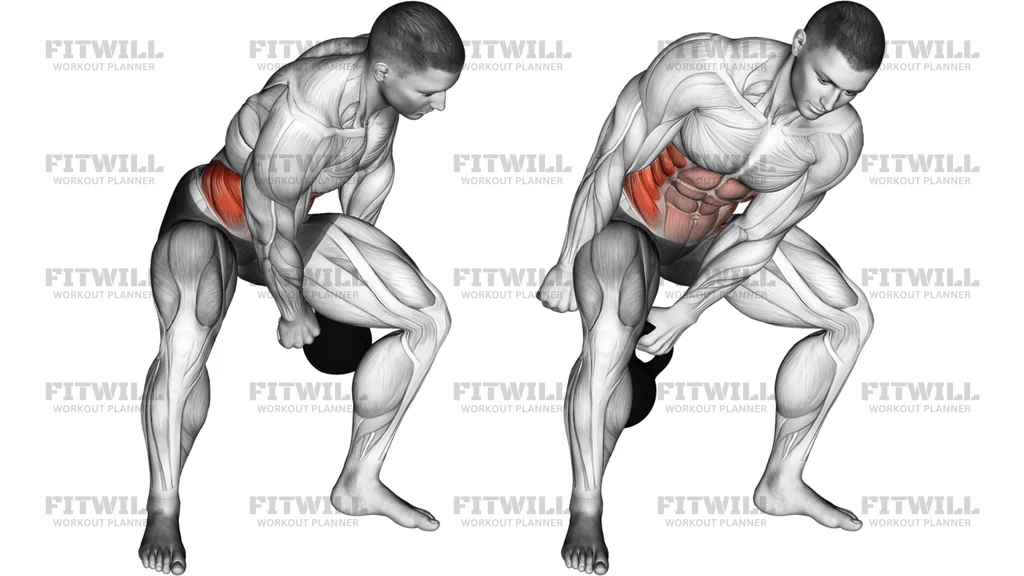
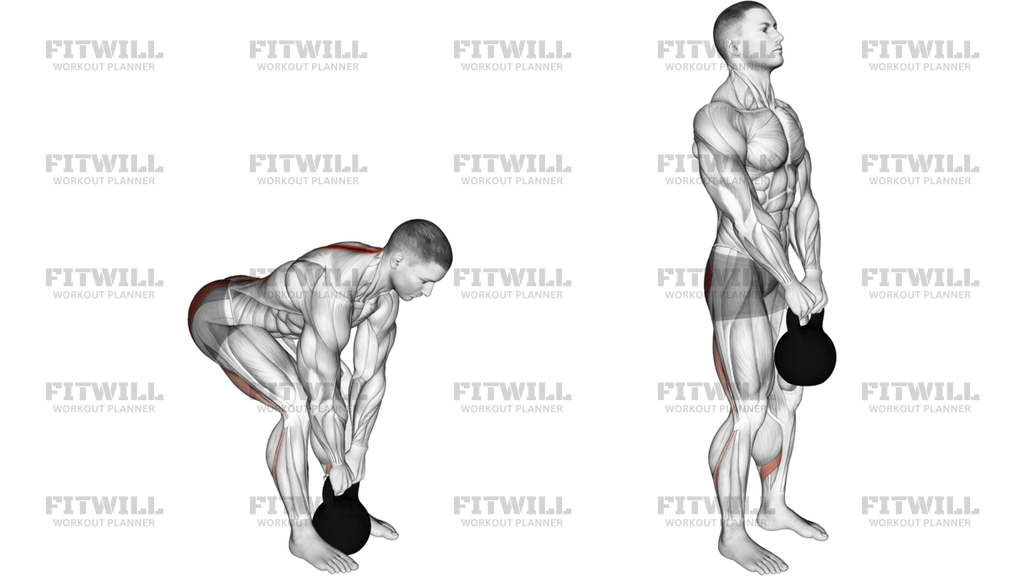
Kettlebell Forward Lunge
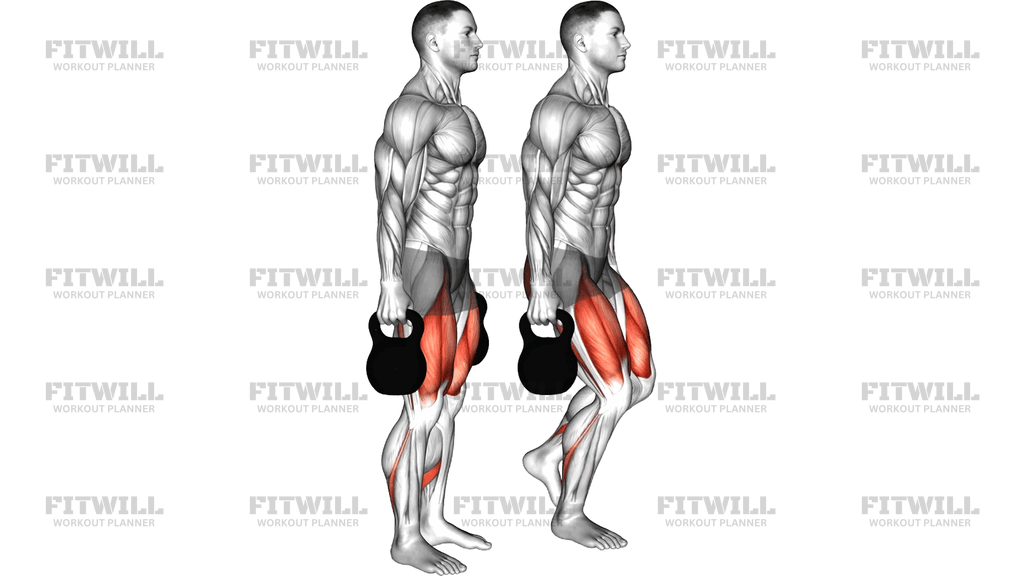
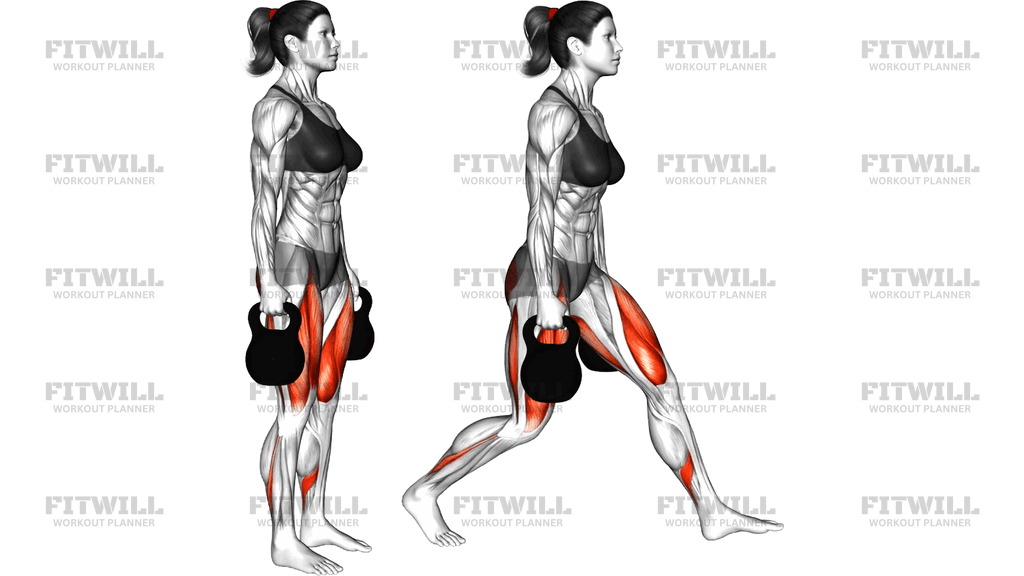
Kettlebell Forward Lunge is a lower-body strength exercise built around a controlled step forward, a deep split stance, and a stable return to standing. In this version, the bells are held at the sides, which makes the exercise feel more like a loaded walking pattern than a machine-driven leg movement. That side-loaded position challenges the thighs, glutes, calves, and trunk at the same time, so each rep has to stay organized from the first step to the last.
The biggest training value comes from the way the exercise loads one leg at a time while the body stays upright. A forward lunge asks the front leg to absorb your bodyweight and the kettlebells, while the back leg helps control balance and depth. That makes it useful for building leg strength, improving coordination, and cleaning up side-to-side differences that can hide in bilateral lifts.
The setup matters because a forward lunge gets messy fast if the stance is too short, the torso folds forward, or the bells swing away from your legs. Stand tall with a kettlebell in each hand, arms long, shoulders level, and feet about hip-width apart. Keep your ribs stacked over your pelvis before you step so the load stays centered instead of pulling you into a wobble.
Each repetition should feel like a controlled step, a quiet descent, and a strong drive back to standing. Step forward far enough that the front heel stays planted and the front knee can track over the middle toes without collapsing inward. Lower until the back knee hovers just above the floor, then press through the front foot to return to standing without bouncing off the bottom.
Kettlebell Forward Lunge fits well in strength sessions, lower-body accessories, athletic prep, and unilateral work where balance and leg drive matter. It can be a good option for beginners if the bells are light and the step length is consistent, but the exercise rewards patience more than speed. If the torso twists, the front knee caves, or the rear knee slams into the floor, shorten the range, lighten the load, and rebuild the pattern before adding volume.
[ Workout Log & Planner ]
Put your next workout in Fitwill
Keep your plan and training log ready when you are.


Instructions
- Stand tall with a kettlebell in each hand, arms straight at your sides, feet hip-width apart, and your shoulders square.
- Set your ribs over your pelvis, keep your chest tall, and let the bells hang still beside your thighs before you step.
- Step forward with one leg and plant the whole front foot flat so the stride is long enough to keep your balance.
- Lower straight down by bending both knees until the back knee hovers just above the floor and the front shin stays roughly vertical.
- Keep the front knee tracking over the middle toes and avoid letting it cave inward as you descend.
- Pause briefly at the bottom without resting on the floor or bouncing out of the stretch.
- Drive through the front heel and midfoot to stand back up, bringing the back leg forward to finish tall.
- Exhale as you rise, reset your stance, and step forward with the opposite leg for the next repetition.
Tips & Tricks
- Keep the kettlebells close to your outer thighs instead of letting them swing forward when you step.
- Take a longer step if your front knee shoots far past your toes or your heel wants to lift.
- Keep your torso stacked over your hips; a big forward lean usually means the stride is too short or the load is too heavy.
- Let the back knee hover just above the floor rather than crashing into it on every rep.
- Use quiet feet. If the front foot slaps the floor or shifts around, slow the step and reduce the load.
- Match both sides by using the same step length and depth on every rep instead of chasing maximum range.
- If your grip starts to fail before your legs do, lower the kettlebell weight so the lunge stays crisp.
- Stop the set when the front knee caves inward or the hips twist toward the stepping leg.
Frequently Asked Questions
What muscles does Kettlebell Forward Lunge work most?
It mainly trains the thighs, especially the quadriceps, while the glutes, hamstrings, calves, and core help control the split stance and the return to standing.
Can beginners perform this exercise?
Yes. Beginners should start with light kettlebells and a shorter set of reps so they can learn the step length, knee tracking, and balance without rushing.
Should the kettlebells stay at my sides the whole time?
Yes. In this version, the bells stay low and still at your sides, which helps keep the torso upright and makes balance easier to control.
How far forward should I step?
Step far enough that your front heel stays down and your front knee can bend without collapsing inward. If the front knee shoots too far ahead or the torso folds, the stride is usually too short.
What is the most common mistake in Kettlebell Forward Lunge?
The most common error is leaning forward and letting the kettlebells swing. Keep the ribs stacked, the chest tall, and the bells hanging quietly beside your legs.
Do I lower my back knee to the floor?
No. Lower until the back knee hovers just above the floor, then press back up. Touching down can turn the rep into a bounce instead of a controlled lunge.
Is this better than a reverse lunge?
Neither is universally better, but the forward version puts more demand on balance and stepping control. If your knees or balance do not like the forward step, a reverse lunge is often easier to learn.
What should I do if I feel this in my lower back?
Reduce the load and shorten the step only if you can keep your ribs stacked over your pelvis. If the lower back still takes over, the bells are probably too heavy or the torso is leaning too far forward.
How should I breathe during Kettlebell Forward Lunge?
Inhale as you step and lower, then exhale as you drive back to standing. That rhythm helps keep the trunk stable through the transition.