Kettlebell Figure 8
Kettlebell Figure 8 is a dynamic hand-to-hand swing drill where the bell travels in a tight loop between your legs while your torso stays hinged and your stance stays planted. It combines hip loading, trunk control, and coordination, so the exercise is useful when you want core work that still feels athletic instead of static.
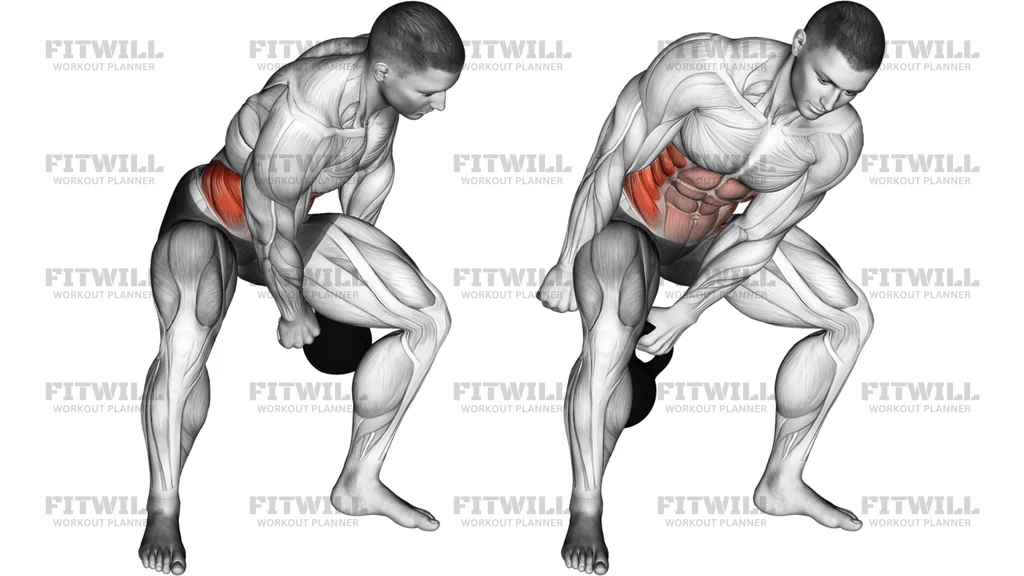
The visible setup matters because the bell must have room to pass cleanly behind and between the thighs. You start in a wide stance with a soft knee bend, a neutral spine, and the hips pushed back enough to create a stable hinge. From there, each rep asks you to guide the kettlebell around one leg, pass it to the other hand, and continue the figure-eight path without standing tall or twisting the shoulders to fake the motion.
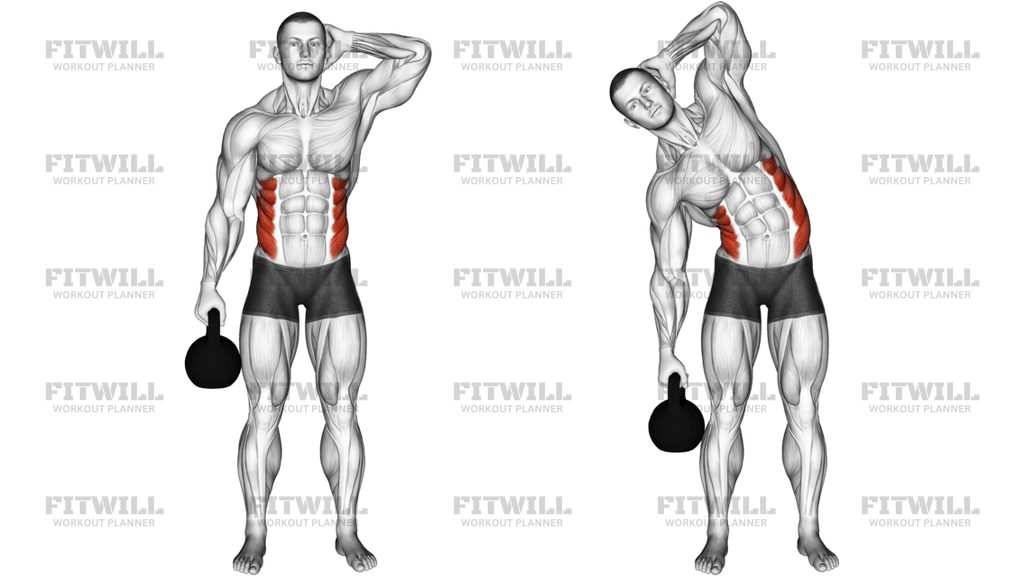
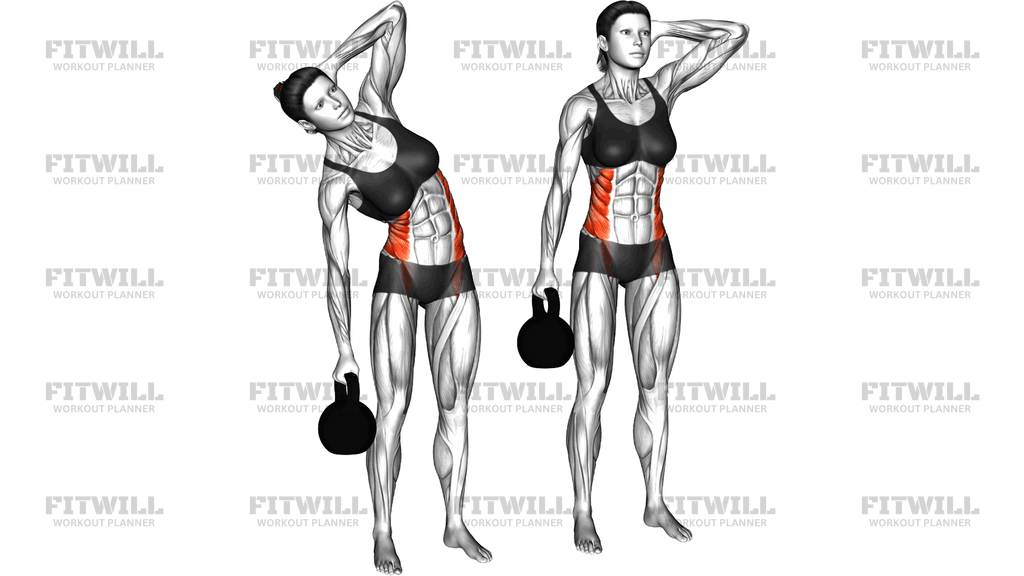
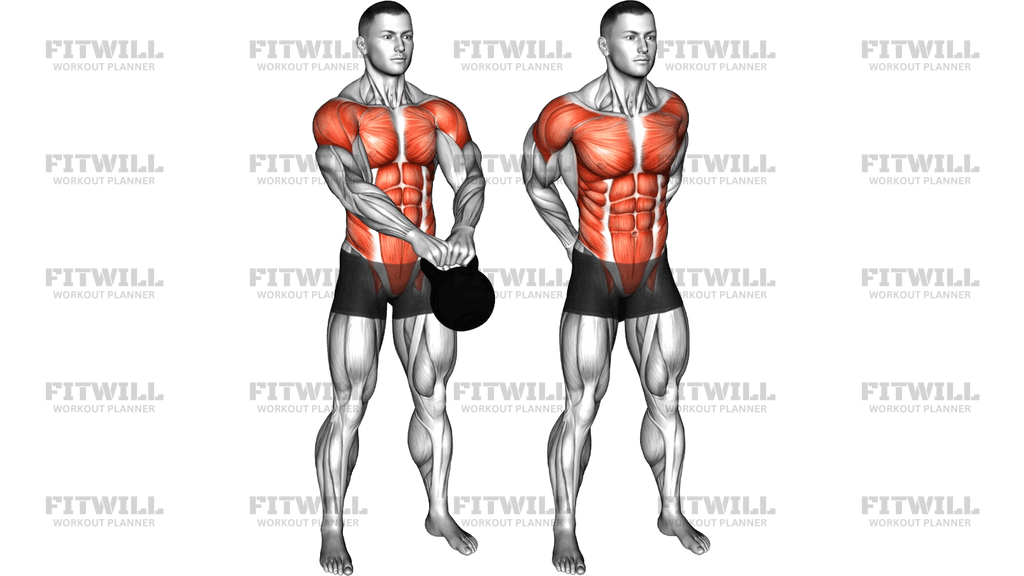
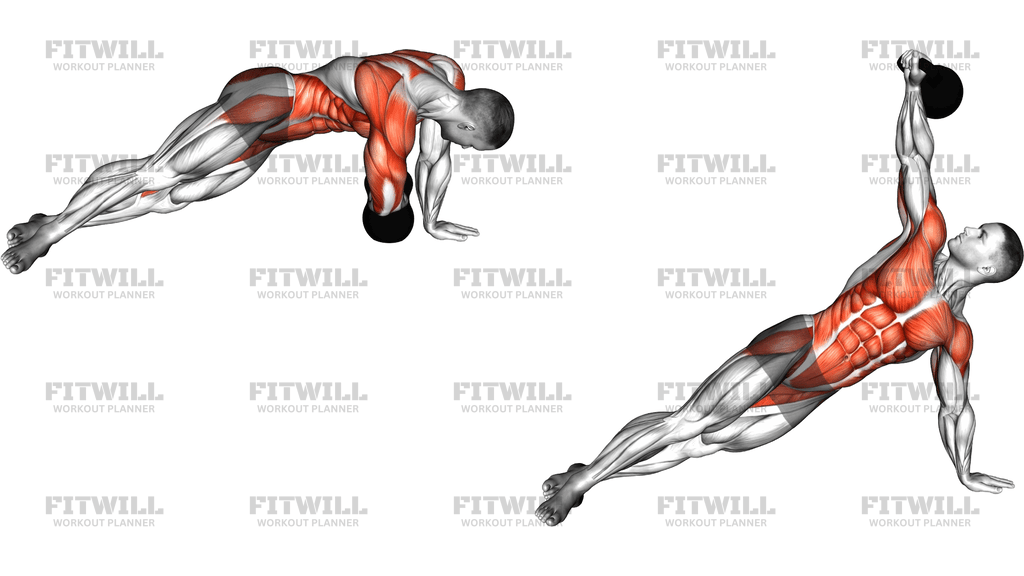
The main emphasis is on the obliques, with the abs and deeper core muscles helping resist rotation as the bell changes hands. The hips, glutes, and hamstrings help hold the hinge, while the lower back works isometrically to keep the torso from collapsing. In anatomy terms, the strongest contribution comes from the External obliques, with support from Rectus abdominis, Erector spinae, and Transversus abdominis.
Good repetitions feel smooth and deliberate, not yanked through momentum. The hand that receives the bell should stay close to the groin and inner thigh path, and the free hand should be ready to take over the moment the bell clears the leg. Keep your eyes and chest slightly forward, breathe rhythmically, and keep the swing low enough that the bell stays under control rather than drifting into a full kettlebell swing.
Use Kettlebell Figure 8 as a conditioning drill, core accessory, warm-up pattern, or coordination finisher. It works best with moderate-to-light weight, especially for athletes or beginners learning to brace while moving. If the bell bumps the thighs, your hinge is too shallow, your stance is too narrow, or the transfer is happening too far behind you. Clean spacing and crisp handoffs matter more than speed.
[ Workout Log & Planner ]
Put your next workout in Fitwill
Keep your plan and training log ready when you are.


Instructions
- Stand with your feet wider than shoulder width, toes turned slightly out, and hold the kettlebell with both hands in front of your hips.
- Hinge at the hips, bend the knees, and send the bell down between your thighs while keeping your chest angled forward and your back neutral.
- Let the bell travel around one leg and pass it to the opposite hand close to the inner thigh path.
- Guide the kettlebell behind you to the other side of the stance without letting your shoulders twist open.
- Receive the bell with the free hand in front of the next leg and keep the transfer tight to the body.
- Continue the figure-eight pattern from one hand to the other, staying in the hinge and keeping your weight centered over both feet.
- Breathe out as the bell moves across the front of the body and inhale as it passes behind the legs.
- Finish the set by slowing the bell down, standing tall, and resetting the grip before lowering it safely.
Tips & Tricks
- Keep the bell close to the groin and inner thighs so the handoff stays compact and the arc does not drift into a sloppy swing.
- A wider stance gives the bell room to pass, but do not squat straight down; the movement should stay in a hip hinge.
- Your torso should resist rotation while the arms only guide the bell, so avoid letting the rib cage spin toward the working hand.
- Light to moderate weight usually works best; if the bell pulls you off balance, the load is too heavy for the figure-eight pattern.
- Keep your head and eyes forward enough to maintain balance, but do not crank the neck up to watch the bell.
- The transfer should happen just in front of and just behind the legs, not far outside the stance where momentum takes over.
- If the bell taps your thighs, soften the knees a little more and hinge deeper before the next rep.
- Stop the set when the handoff gets late or the bell starts swinging higher, because that usually means the core is no longer controlling the path.
Frequently Asked Questions
What muscle does Kettlebell Figure 8 target most?
The obliques are the main target, with the abs, lower back, hips, and grip muscles assisting.
Can beginners perform this exercise?
Yes, beginners can do it with a light kettlebell if they can hold a stable hinge and keep the handoff close to the legs.
Where should the kettlebell travel during the figure eight?
It should pass low and close between the legs, then loop around each thigh in a tight hand-to-hand path.
Should I squat or hinge for this movement?
Use a hip hinge with bent knees, not a deep squat. The torso stays angled forward while the hips move back to make room for the bell.
What do the hands do when the bell changes sides?
One hand releases as the other receives the kettlebell close to the inner thigh, so the transfer stays smooth and does not swing wide.
Is this more of a strength or conditioning exercise?
It can be both, but it is usually used as a coordination and conditioning drill with a strong core and grip component.
What is a common mistake with the bell path?
Letting the kettlebell swing too far away from the body makes the exercise unstable and turns it into a momentum drill.
How should I breathe during Kettlebell Figure 8?
Keep breathing rhythmic and controlled, usually exhaling as the bell crosses the front and inhaling as it moves behind the legs.