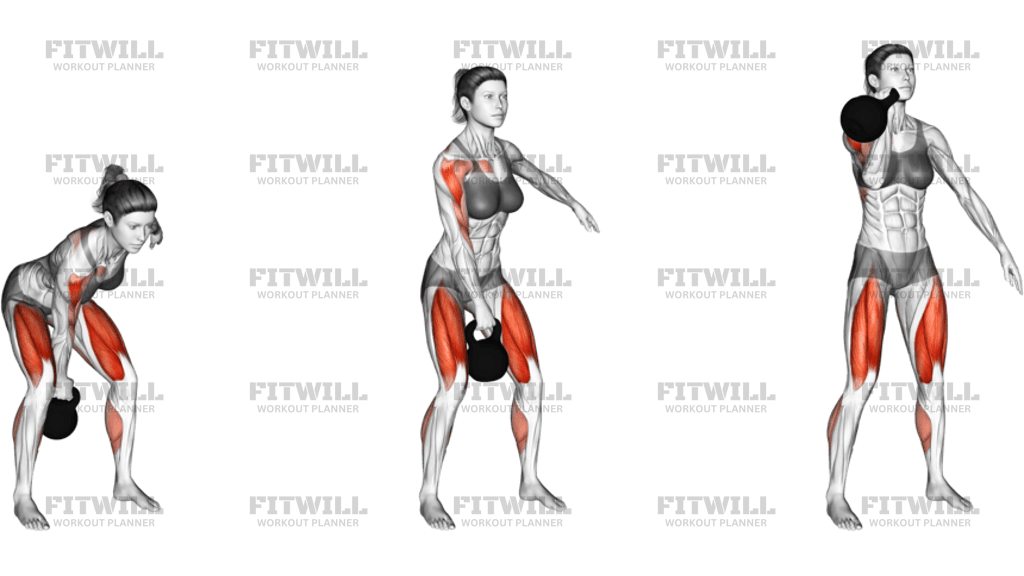
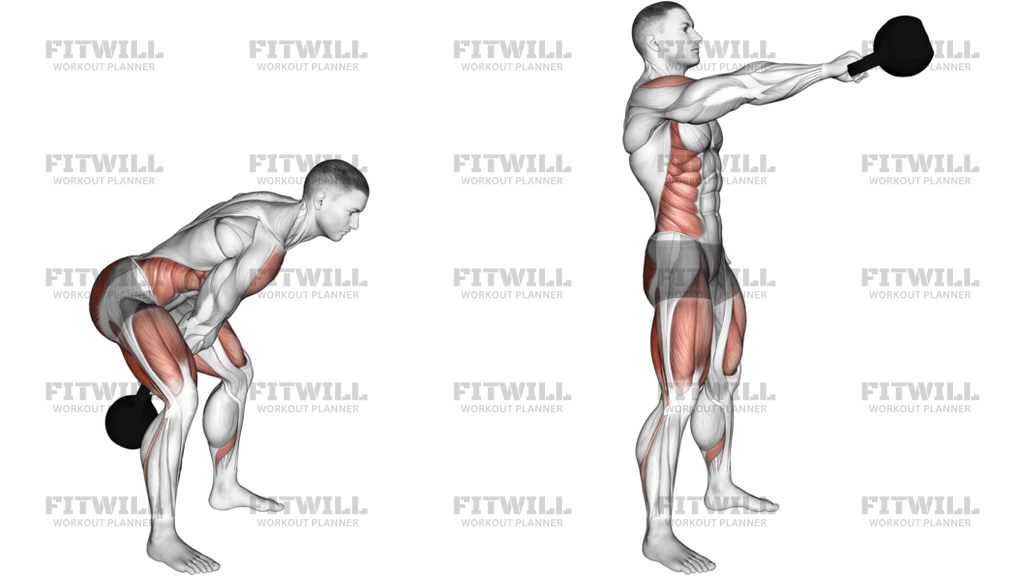
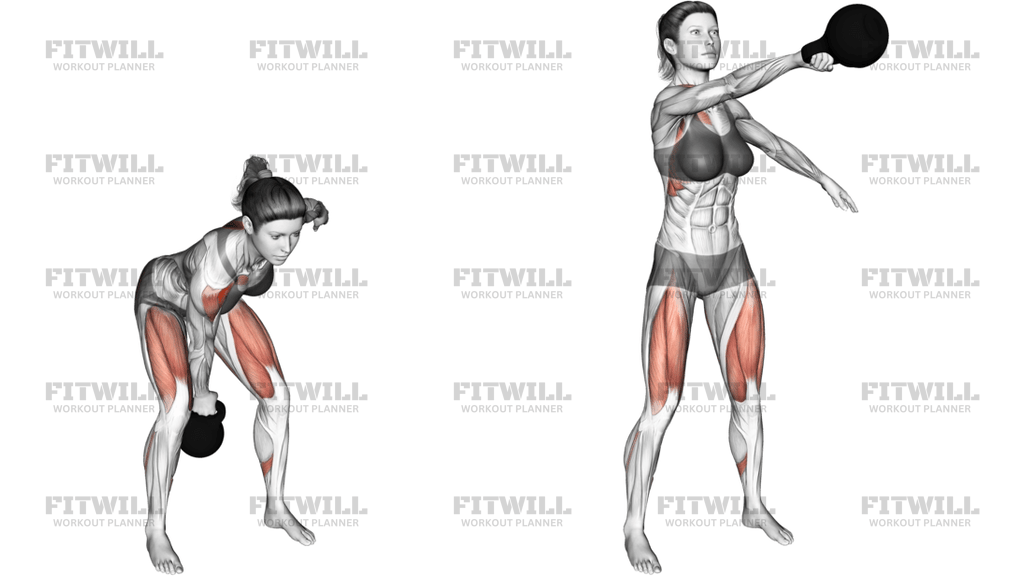
Kettlebell Snatch
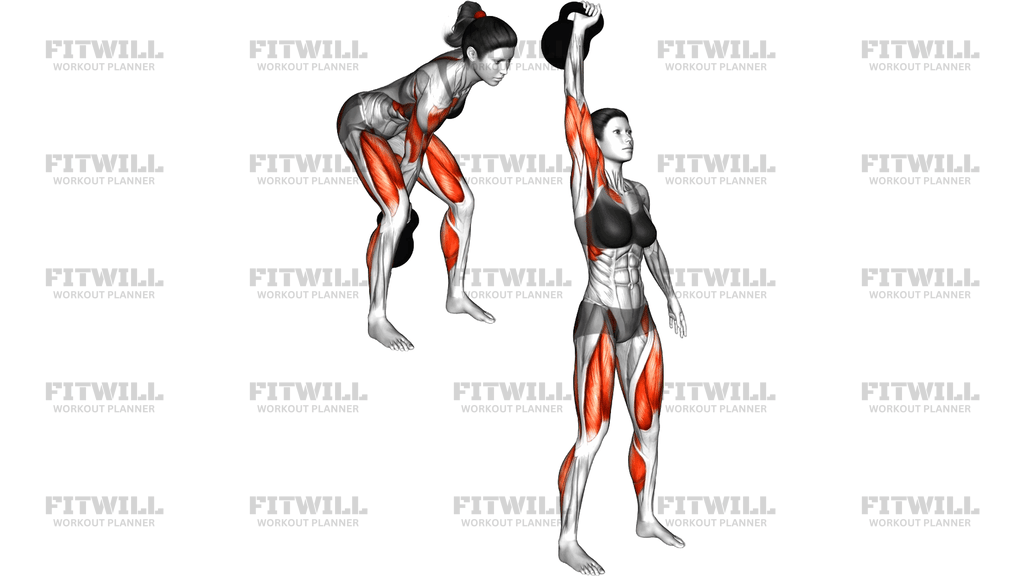
Kettlebell Snatch is a ballistic single-arm kettlebell lift that drives the bell from a hinge between the legs to a stable overhead lockout. It trains explosive hip extension, shoulder control, grip endurance, and trunk stiffness in one movement, which is why the setup and timing matter as much as the finish. When it is done well, the bell feels like it is redirected by the hips rather than muscled up with the arm.
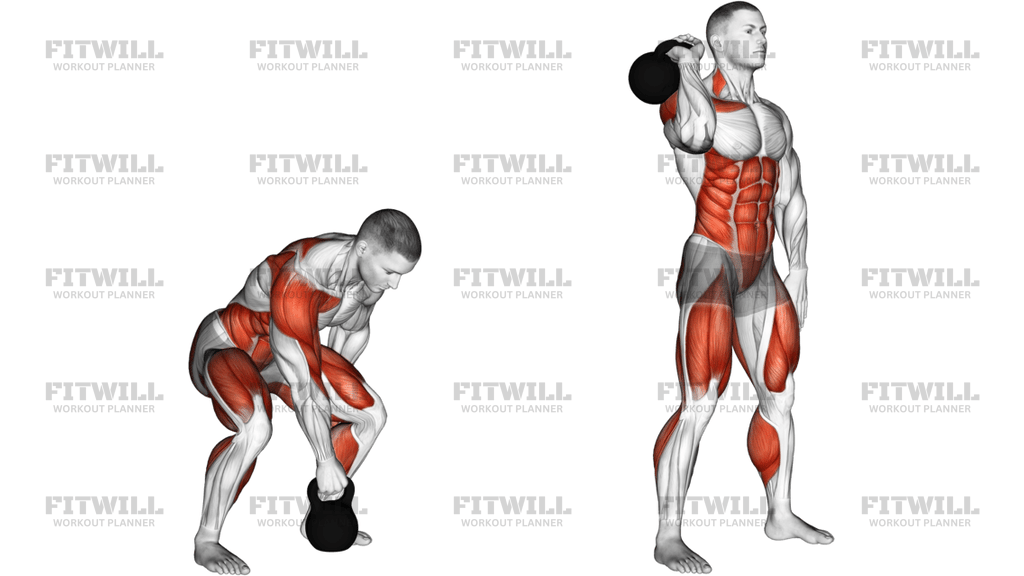
The exercise starts from a hinged stance with the bell hanging low and close to the body, then moves through a powerful extension before the arm finishes overhead. The hand, forearm, and shoulder have to stay organized through the turnover so the bell does not crash around the wrist. That makes Kettlebell Snatch useful for athletes and lifters who want a more dynamic strength movement than a basic press or swing.
The best repetitions come from a clean path: load the hips, stand fast, keep the bell close, then punch the hand to the ceiling as the kettlebell settles overhead. The bell should travel in a tight arc, not drift forward away from the body. In the top position, the arm is straight, the ribs stay down, and the shoulder is packed rather than shrugged loose.
Because the movement is fast, fatigue can change technique quickly. A snatch that starts to loop away from the body, bang the forearm, or overarch the lower back is usually too heavy or too rushed. Use a bell that lets you keep the hinge crisp, the turnover smooth, and the overhead position steady for every rep.
Kettlebell Snatch is commonly used for power development, conditioning, and advanced full-body training. It can also fit into accessory work when the goal is to sharpen hip drive and overhead stability without heavy barbell loading. Light to moderate loads are usually the best choice, especially when you want repeated crisp reps instead of a grind.
[ Workout Log & Planner ]
Put your next workout in Fitwill
Keep your plan and training log ready when you are.


Instructions
- Stand with your feet a little wider than hip-width and place the kettlebell a few inches in front of you on the floor.
- Hinge at the hips, bend your knees slightly, and grip the handle with one hand while keeping your back flat and chest long.
- Hike the kettlebell back between your legs like a one-arm swing, keeping it close to the groin and loading the hips.
- Snap the hips forward to drive the bell upward; let the arm stay relaxed until the kettlebell is moving because the hips create the speed.
- As the bell rises, keep it close to the body and guide it upward rather than letting it arc away from you.
- Punch your hand through the handle as the kettlebell flips around the wrist so the bell settles softly overhead.
- Finish with the elbow locked, biceps near the ear, ribs down, glutes tight, and weight stacked over the middle of the foot.
- Lower the bell under control, guiding it back down in front of the body and into the next hinge or swing rep.
- Breathe out through the drive and overhead lockout, then reset your brace before the next repetition.
Tips & Tricks
- If the bell is banging your forearm, you are pulling too early or letting it swing too far away from your body.
- Think of the snatch as a hard hip snap first and an overhead finish second; the arm only guides the bell after the hips do the work.
- Keep the bell close on the way up and back down so the turnover stays smooth and the shoulder does not get yanked forward.
- Lock the overhead position with the knuckles pointing up and the wrist neutral instead of letting the kettlebell fold the hand back.
- Do not overarch to catch the bell overhead; the ribs should stay down and the glutes should finish the rep.
- Use a bell you can snatch cleanly for multiple crisp reps, not one that forces a slow grind through the turnover.
- If your grip is failing before your hips, shorten the set rather than turning the movement into a sloppy press.
- Reset your hinge before every rep so the start position stays organized and the bell does not drift into a deadlift-style pull.
Frequently Asked Questions
What does Kettlebell Snatch train most?
It emphasizes explosive hip extension, shoulder stability, grip endurance, and bracing under a fast overhead finish.
Should the kettlebell stay close to my body?
Yes. The bell should travel in a tight line so the turnover is smooth and the shoulder does not get pulled forward.
Do I start this like a swing or a deadlift?
It starts from a hinged, swing-like load rather than a straight-up deadlift. The kettlebell should hike back between the legs before the hip snap.
How do I keep the bell from hitting my wrist?
Punch your hand through the handle as the bell turns over and keep the path close. If the bell is slamming your forearm, you are pulling too early or too far away from the body.
What should the overhead position look like?
Your arm should be straight, the bell stacked over the shoulder, the ribs down, and the shoulder packed instead of shrugged.
Can beginners learn Kettlebell Snatch?
Yes, but only with a very light kettlebell and clean swing mechanics first. Beginners should be able to control the hinge, the hike, and the turnover before adding speed.
What is the most common mistake?
Most people let the bell loop away from the body or overarch the lower back to catch it overhead. Both usually mean the load is too heavy or the timing is off.
How many reps should I do at a time?
Short sets are usually better because technique drops quickly with fatigue. Stop the set as soon as the hinge, turnover, or lockout gets sloppy.