Dumbbell Step-Up With Knee Raise
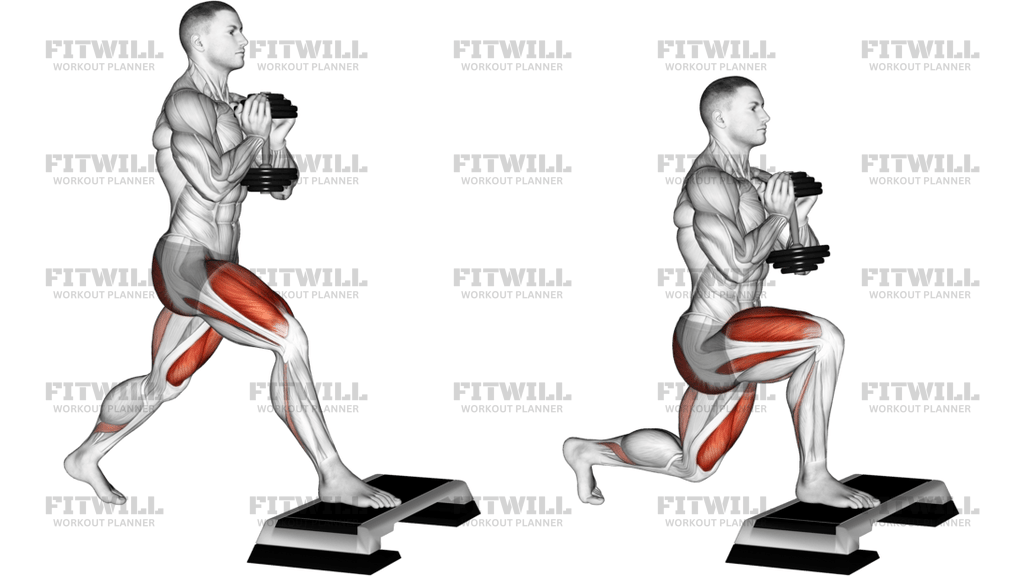
Dumbbell Step-Up With Knee Raise is a lower-body strength exercise that combines a single-leg step-up with a controlled knee drive at the top. It is usually performed with a dumbbell in each hand while stepping onto a sturdy bench, box, or platform and finishing each rep by lifting the free knee toward hip height. The movement trains the quads heavily, but it also asks the glutes, calves, hip stabilizers, and trunk to keep the body organized while one leg does most of the work.
The setup matters because this is a balance and force-production exercise at the same time. A step that is too high turns the rep into a hip-hike and lunge hybrid; a step that is too low reduces the training value and makes the knee raise less meaningful. The goal is to place the whole working foot firmly on the platform, keep the torso tall, and let the stepping leg drive the body upward without bouncing off the floor leg.
At the top of each rep, the lifted knee should come up under control rather than swinging forward. That knee drive helps teach single-leg stability and upright posture, but it should not turn into a lean-back or an aggressive arch through the lower back. Hold the dumbbells quietly at your sides, keep the ribs stacked over the pelvis, and lower yourself slowly enough that the working leg controls the descent instead of dropping off the platform.
This exercise fits well in lower-body sessions, athletic conditioning blocks, and accessory work when you want unilateral leg strength plus balance. It is a useful option for people who need better stair-climbing strength, sprint support, or general leg coordination. Beginners can use bodyweight first or very light dumbbells until they can step up, balance at the top, and lower with the same control on every rep.
Use a platform height that lets you keep a clean shin angle and stable knee tracking. If the standing knee caves inward, the back foot launches off the floor, or the torso has to tip hard to finish the rep, the load or height is too ambitious. The best reps look smooth from start to finish: plant, drive, lift the knee, stand tall, and step back down under control.
[ Workout Log & Planner ]
Put your next workout in Fitwill
Keep your plan and training log ready when you are.


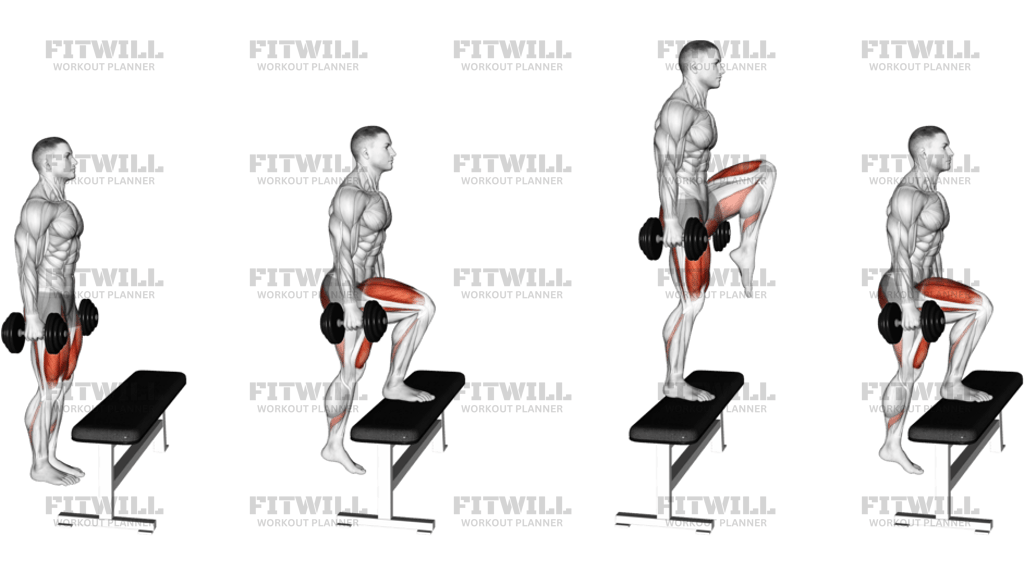
Instructions
- Place a sturdy bench or box in front of you and stand tall with a dumbbell in each hand at your sides.
- Set one whole foot flat on the platform, keeping your hips square and your chest lifted.
- Brace your trunk, then press through the working heel and midfoot to stand up onto the box.
- Bring the trailing knee up in front of you as you finish tall on the step.
- Pause briefly at the top without leaning back or shrugging the shoulders.
- Lower the raised foot back to the floor in a slow, controlled line.
- Keep the working foot planted on the platform and control the descent instead of dropping off the box.
- Exhale as you drive up and inhale as you step back down.
- Complete all repetitions on one side before switching legs, unless your program says to alternate.
Tips & Tricks
- Use a bench height that lets the working knee stay aligned without the hip needing to hike hard to clear the box.
- Keep the entire front foot on the platform; hanging the heel off the edge makes the step unstable.
- Think about pushing the floor away with the stepping leg instead of jumping lightly off the back leg.
- Let the knee rise forward under control, but do not force it so high that your lower back arches.
- Keep the dumbbells still at your sides so they do not swing and pull your torso off balance.
- Track the standing knee over the middle toes rather than letting it collapse inward on the way up.
- Lower slowly enough that you can feel the working leg absorb the descent instead of dropping straight down.
- If your torso has to lean far forward to stand up, reduce the load or lower the platform.
- Stop the set when the top position gets sloppy, especially if the knee drive turns into momentum.
Frequently Asked Questions
What does Dumbbell Step-Up With Knee Raise train most?
The quads do most of the work, with the glutes, calves, and hip stabilizers helping to finish and control each rep.
Can beginners perform this exercise?
Yes. Beginners should start with bodyweight or light dumbbells and a low platform until they can step up and lower down without wobbling.
How high should the bench or box be?
Use a height that lets the whole foot stay planted and the knee track cleanly. If you have to dive forward or bounce off the back leg, the step is probably too high.
Should I alternate legs or finish one side first?
Either can work, but finishing all reps on one leg usually makes the balance challenge clearer and keeps the set more controlled.
Why do I need the knee raise at the top?
The knee drive teaches upright single-leg control and makes the top position more athletic, but it should stay smooth rather than becoming a swing.
What is the most common form mistake?
Pushing off the floor too much with the trailing leg is a common issue. The working leg should control the step-up and the lowering phase.
How should the dumbbells be held?
Hold them quietly at your sides with straight wrists and relaxed shoulders so they do not swing as you step.
Where does this fit in a workout?
It works well in leg day warmups, unilateral strength work, or athletic accessory blocks when you want balance and leg drive in the same drill.