Bodyweight Step-Up On Stepbox
Bodyweight Step Up On Stepbox is a lower-body bodyweight exercise built around a simple but demanding pattern: place one foot on a stable box, drive through that working leg, stand tall on top, and lower back down with control. Because the movement is unilateral, it trains the quads hard while also asking the glutes, calves, and hip stabilizers to keep the pelvis level and the knee tracking cleanly.
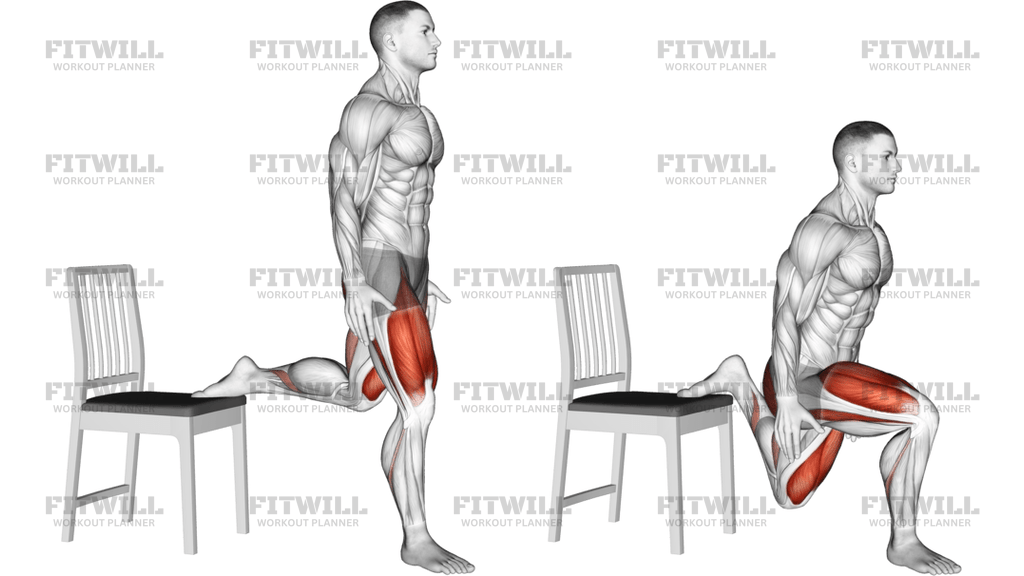
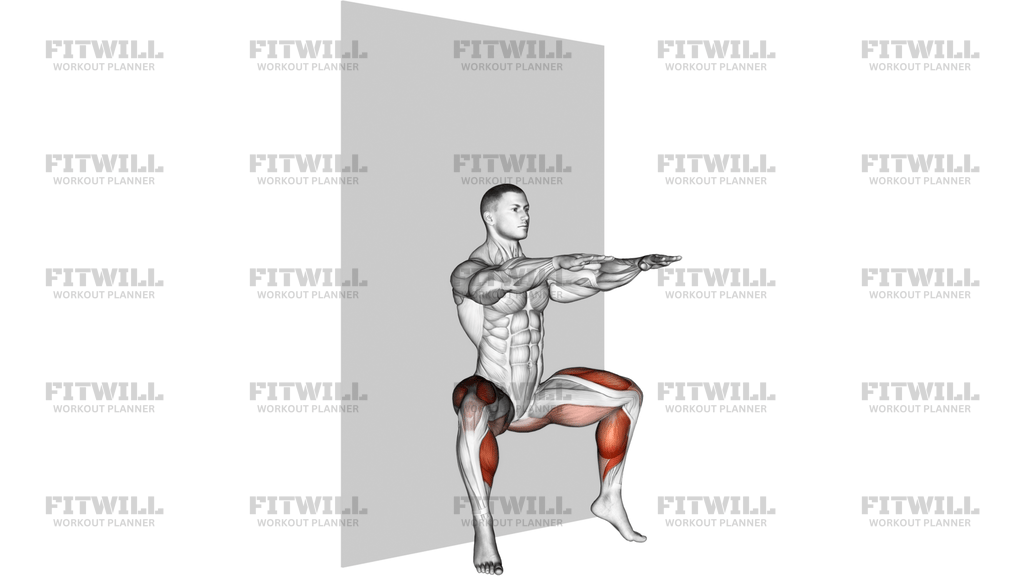
The box height matters more than most people think. A stepbox that is too high usually turns the exercise into a bounce, a push-off from the back leg, or a forward collapse through the trunk. A box that is low enough to keep the whole foot planted lets you load the front leg properly and use the step-up as a controlled strength drill instead of a scramble. The image shows a straightforward standing step-up, not a jump, so the goal is a smooth transfer of bodyweight onto the box and an equally controlled return to the floor.
Use the working foot fully on the platform, keep your chest tall, and drive the floor away through the heel and midfoot. The trail leg should help with balance, not do the work. At the top, finish with the hips and knee of the working side extended before stepping down again. That top position is where you should feel the standing leg do the majority of the work, with the core keeping your torso from tipping forward or leaning back.
This exercise is useful in warm-ups, accessory work, rehab-style lower-body training, conditioning circuits, and any program that needs single-leg control without external load. It is especially valuable for beginners who need a simpler way to learn stair-climbing mechanics, but it can also be made harder by increasing the box height, slowing the lowering phase, or adding dumbbells later. The safest version is the one you can repeat evenly on both sides without twisting the knee, wobbling the pelvis, or launching off the back leg.
Treat each rep like a quality check: stable foot, clean drive, tall finish, controlled descent. That rhythm keeps the emphasis on the thighs and hips instead of momentum, and it makes the exercise much more effective for strength, balance, and repeatable lower-body conditioning.
[ Workout Log & Planner ]
Put your next workout in Fitwill
Keep your plan and training log ready when you are.


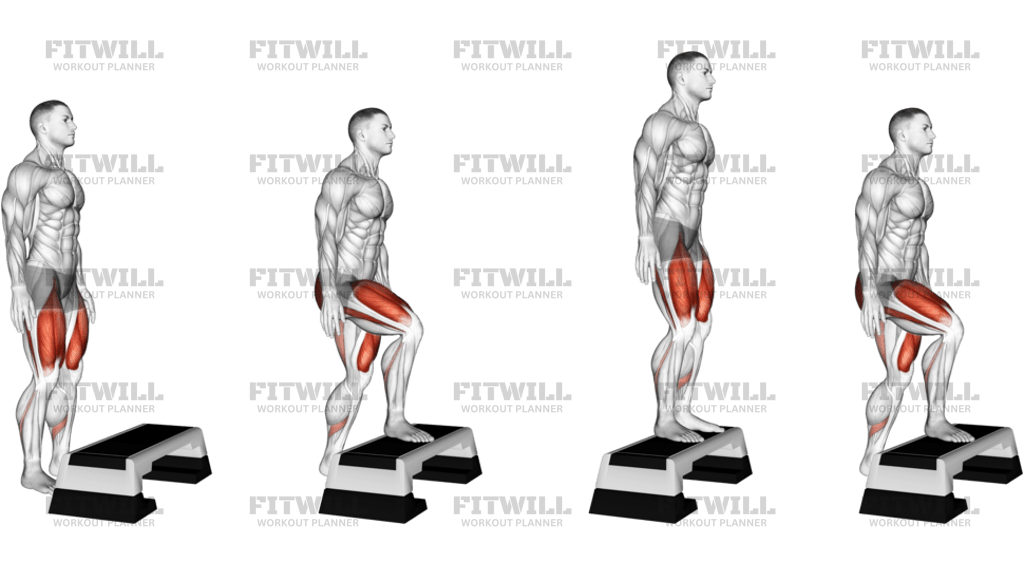
Instructions
- Place a stable stepbox in front of you and stand close enough that your working foot can land fully on the top surface without reaching.
- Set one whole foot on the box, keep the other foot on the floor, and square your hips so your torso faces forward.
- Brace your trunk, keep your chest tall, and let your arms hang naturally at your sides for balance.
- Shift your weight onto the foot on the box before you start driving upward.
- Press through the heel and midfoot of the working leg to lift your body until that leg straightens.
- Bring the trail leg up only after you are standing tall on the box, without pushing off hard from the floor.
- Pause briefly at the top with hips stacked, knee extended, and your standing foot still flat.
- Step back down with control, landing softly and resetting your stance before the next rep.
- Breathe out as you rise and inhale as you lower, then repeat for the planned number of repetitions.
Tips & Tricks
- Choose a box height that lets the working thigh do the work without your torso folding forward to clear the step.
- Keep the entire foot on the stepbox; hanging the heel off the edge makes the rep less stable and shifts force away from the leg.
- Do not launch off the floor leg. If the back foot is giving you a big push, lower the box or slow the rep down.
- Think about driving the knee up and over the box, then standing tall, instead of bouncing straight upward.
- Keep the working knee tracking in line with the toes so it does not cave inward on the way up or down.
- Use a quiet, controlled descent. The lowering phase is where this exercise builds a lot of control and thigh tension.
- If balance is the limiting factor, reduce speed before you reduce control, and keep your eyes fixed ahead.
- When you add load later, hold the dumbbells at your sides so the stepbox setup stays the same and your posture stays upright.
Frequently Asked Questions
What muscles does Bodyweight Step Up On Stepbox work most?
It mainly targets the quads, with the glutes and calves helping drive and stabilize the step-up.
Can beginners perform this exercise?
Yes. Beginners usually do best with a low stepbox and a slow, deliberate pace.
How high should the stepbox be?
Use a height that lets you place the whole foot on top and stand up without rocking your torso or pushing hard off the floor leg.
Should I push off the back leg?
The back leg should help with balance only. If it is driving most of the rep, the box is probably too high or the tempo is too fast.
What is the best foot position on the stepbox?
Plant the full foot on the platform so the heel stays supported and the knee can track naturally over the toes.
Do I need to alternate legs every rep?
You can alternate sides or complete all reps on one leg before switching, as long as the setup stays clean and even.
What is a common form mistake on this exercise?
The most common mistakes are leaning forward, bouncing off the floor leg, and letting the working knee collapse inward.
How do I make the bodyweight step-up harder?
Slow the lowering phase, add a pause at the top, increase the box height slightly, or hold light dumbbells once the bodyweight version is solid.