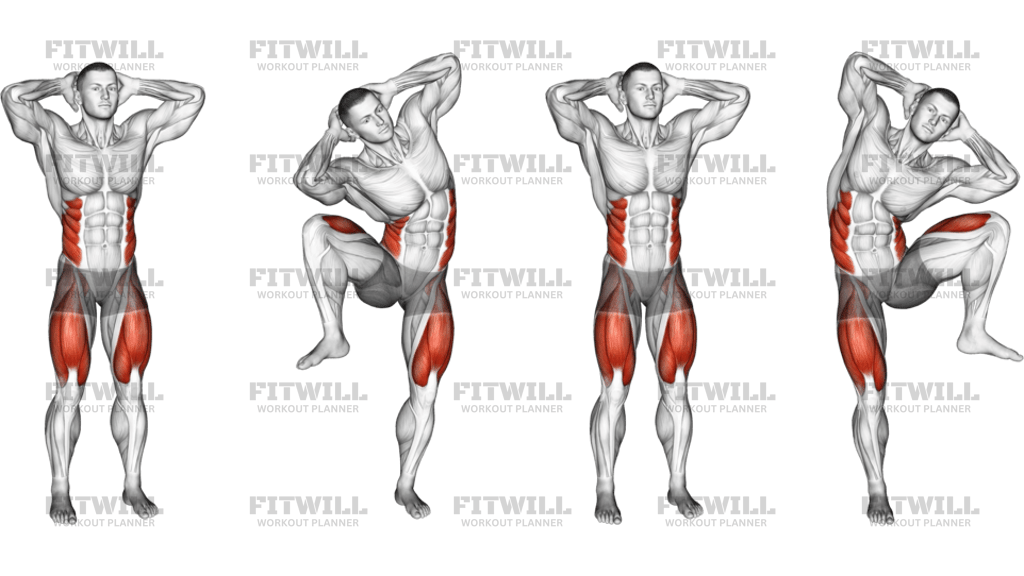
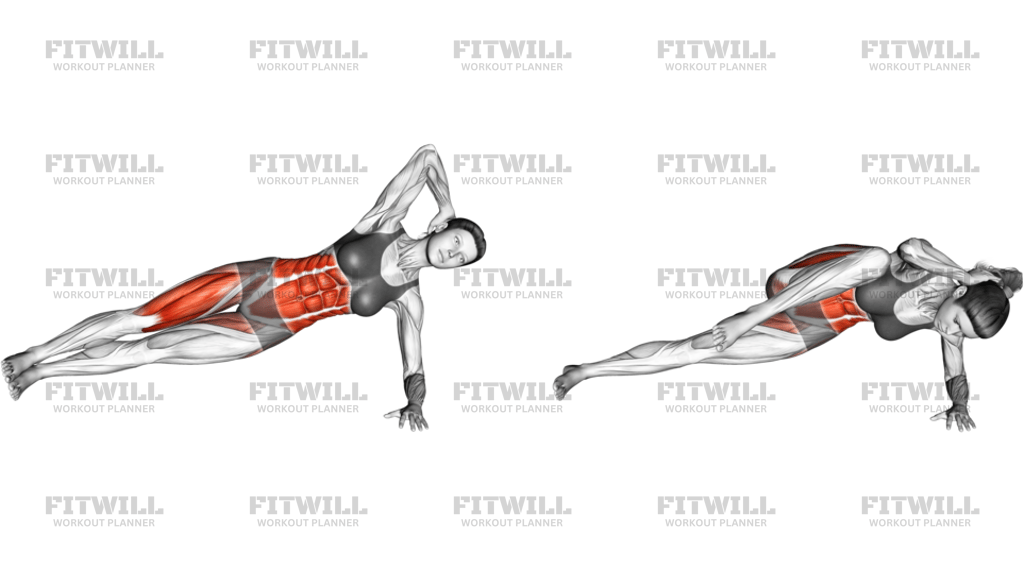
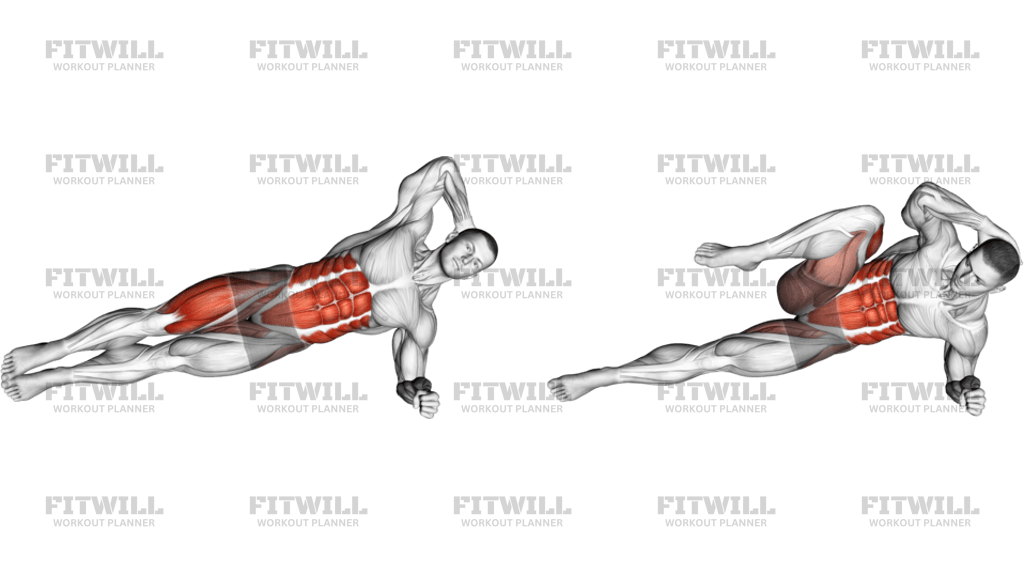
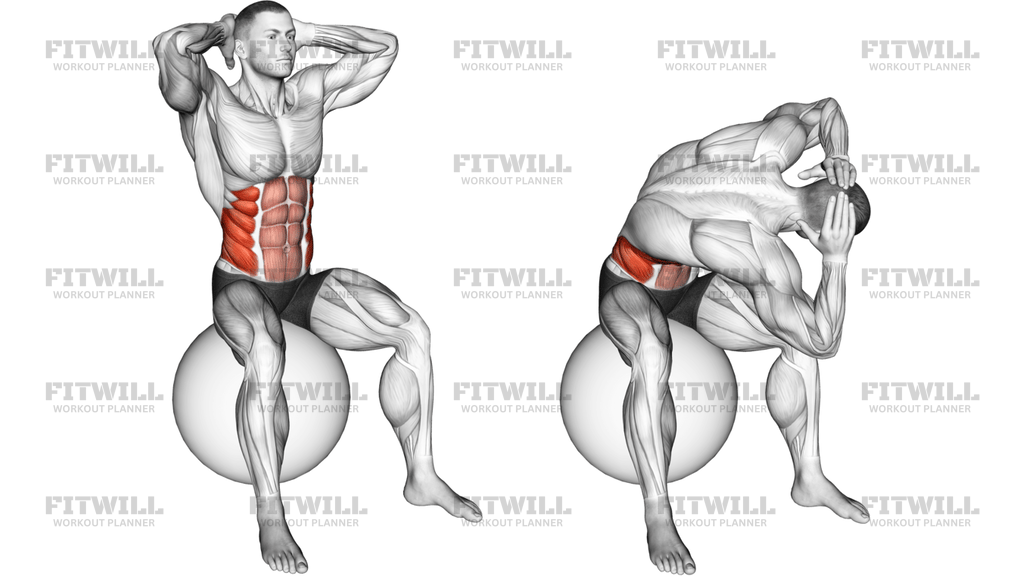
Twisting Crunch
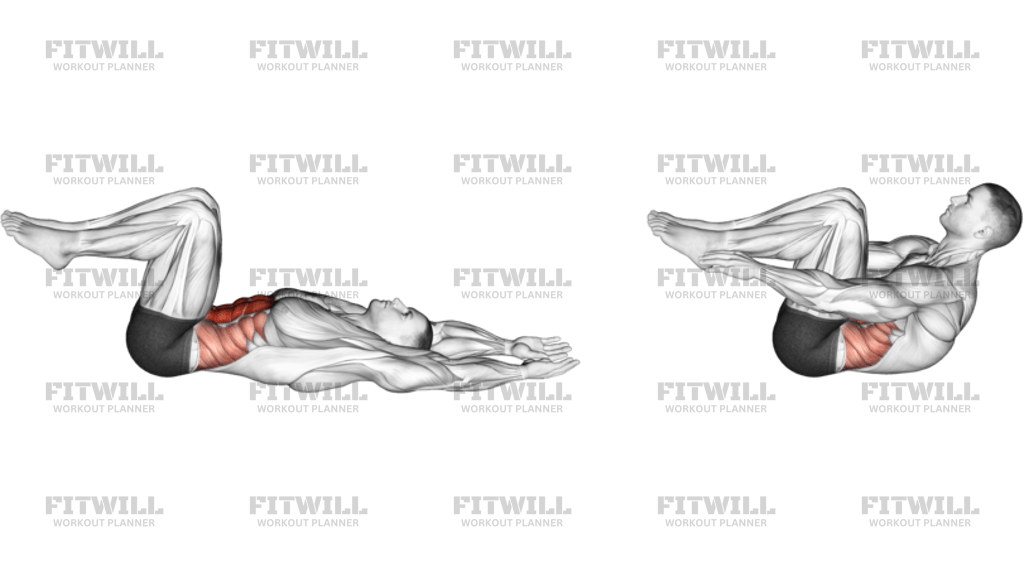
Twisting Crunch is a floor core exercise that blends a crunch with a small trunk rotation. Lie on your back with your knees bent and feet planted, then lift your shoulders and rotate your ribcage so one shoulder travels toward the opposite knee. The exercise trains trunk flexion and rotation together, which makes it a useful way to build abdominal strength, side-waist control, and better awareness of how your torso moves without letting the hips take over.
The setup matters because this movement should come from the ribcage and upper abs, not from yanking the head forward or swinging the knees around. Keeping the feet grounded and the lower back quiet helps the rectus abdominis do the main work while the obliques assist with the twist. In anatomy terms, the primary emphasis is on the Rectus abdominis, with the External obliques, Transversus abdominis, and Iliopsoas helping stabilize and finish each rep.
A good twisting crunch feels compact and deliberate. You curl up, rotate only as far as you can keep the motion smooth, and then lower back down under control. The twist should stay small enough that your shoulders, not your elbows, create the movement. Exhale as you rise, pause briefly at the top, and return slowly so the abs stay loaded through the full rep instead of handing the work to momentum.
This exercise fits well in a bodyweight ab block, warm-up circuit, or accessory core session when you want more control than a fast, repeated sit-up pattern provides. Beginners can use it with a short range and no added resistance, while more advanced lifters can slow the lowering phase or add a small pause without losing pelvic control. The main quality check is simple: the neck stays relaxed, the hips stay quiet, and the twist comes from the torso rather than from throwing the body side to side.
Use a mat or padded floor surface if your spine needs it, and stop the set if you feel the neck taking over or the low back arching off the floor. The best reps look almost identical from side to side, with steady breathing and a smooth return to the starting position. If you can only keep that quality for a handful of reps, that is the right point to end the set.
[ Workout Log & Planner ]
Put your next workout in Fitwill
Keep your plan and training log ready when you are.


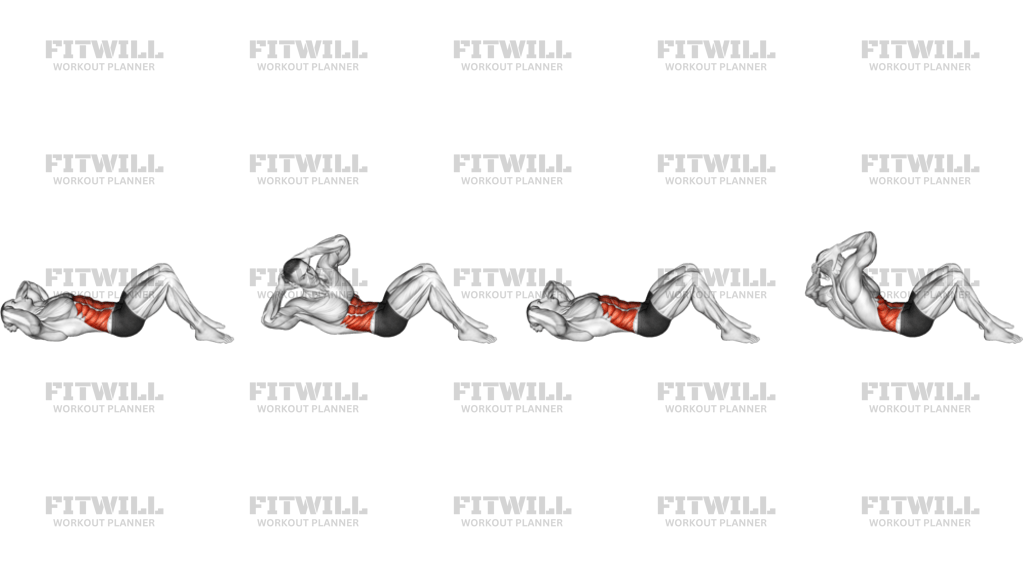
Instructions
- Lie on your back on a mat with your knees bent, feet flat on the floor, and your heels set about hip-width apart.
- Place your fingertips lightly behind your ears or at your temples so your head is supported without being pulled forward.
- Set your ribcage down and keep your lower back gently in contact with the floor before the first rep.
- Exhale and curl your shoulders off the floor while keeping your chin slightly tucked and your elbows wide.
- As you rise, rotate your ribcage so one shoulder moves toward the opposite knee.
- Keep your hips and feet quiet; the twist should come from your torso, not from rocking the pelvis.
- Squeeze your abs and obliques briefly at the top without jamming your neck forward.
- Lower your shoulders and upper back back to the mat under control, then repeat on the other side or alternate sides as you work.
Tips & Tricks
- Think about bringing your ribs toward your opposite hip instead of trying to drive your elbow all the way to your knee.
- Keep the twist small; if your shoulder turns far enough that the pelvis starts to roll, the range is too big.
- Let your hands support the head lightly, but never pull on the neck to finish the rep.
- Plant both feet firmly so the lower body stays quiet and the abs have to create the motion.
- Exhale on the way up to help keep the ribcage down and make the rotation feel cleaner.
- Lower slowly enough that you can feel the obliques control the return instead of dropping back to the floor.
- If your neck gets tight, shorten the range or keep your gaze fixed at the ceiling rather than curling harder.
- Stop each set when the twist becomes sloppy or your low back starts to arch off the mat.
Frequently Asked Questions
What muscle does Twisting Crunch target most?
It mainly targets the rectus abdominis, with the obliques helping to rotate the ribcage.
Can beginners perform this exercise?
Yes. Start with bodyweight only, a short range of motion, and a slow tempo until the twist feels smooth.
Where should my feet be during the twisting crunch?
Keep both feet planted on the floor and about hip-width apart so the hips do not have to chase the twist.
How do I keep the movement out of my neck?
Support your head lightly, keep your chin gently tucked, and lift with your ribs instead of pulling forward with your hands.
Should the twist come from my hips or my shoulders?
The shoulders and ribcage should rotate. Your hips should stay mostly still on the mat.
How far should I crunch up?
Only high enough to lift the shoulders and rotate the ribcage cleanly. A small, controlled range is better than a big sloppy curl.
Is this the same as a bicycle crunch?
It is similar, but the twisting crunch usually keeps the legs fixed and focuses more on the torso rotation.
How can I make the exercise harder without changing the setup?
Slow the lowering phase, pause briefly at the top, or add a small range of motion only if the lower back and neck stay quiet.