Russian Twist With Hands On Chest
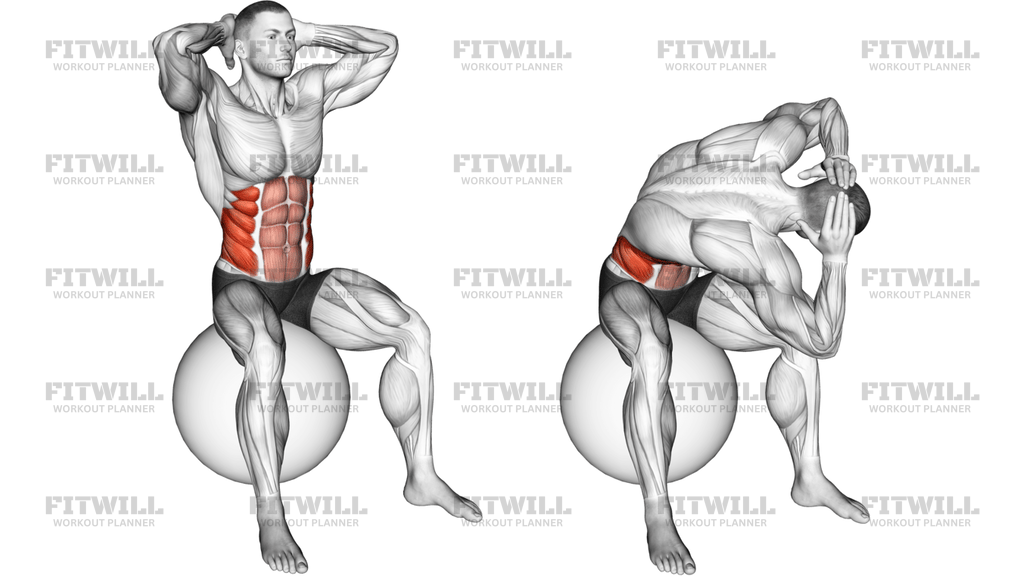
Russian Twist With Hands On Chest is a seated core exercise performed from a leaned-back position with the feet on the floor and the hands held against the chest. The torso rotates side to side while the hips stay mostly fixed, so the set trains trunk control rather than a fast swinging motion. It is usually used as a bodyweight or lightly loaded abdominal drill for building rotational strength, endurance, and better control through the midline.
Because the hands stay on the chest, the exercise removes the leverage of a reaching arm position and makes the torso do the work. That shifts the focus toward the obliques and the rest of the abdominal wall while still demanding support from the hip flexors and deeper core muscles to keep the trunk from collapsing. The leaned-back setup also increases the challenge, so small changes in torso angle have a big effect on difficulty.
The key is to stay tall through the chest, keep the ribs down, and rotate the shoulders together as one unit instead of flinging the arms or shrugging the neck. The feet can stay planted for a more controlled version, which is useful when you want to keep the motion strict and reduce momentum. Each rep should feel deliberate, with a brief turn to one side, a controlled pass through center, and an equally controlled turn to the other side.
This movement fits well in core circuits, warm-ups, accessory work, or conditioning blocks when the goal is quality trunk rotation and abdominal tension. It is easy to scale by changing the lean angle, slowing the tempo, or adding a small load to the chest, but the priority should always be crisp rotation without bouncing through the hips or yanking the lower back.
[ Workout Log & Planner ]
Put your next workout in Fitwill
Keep your plan and training log ready when you are.


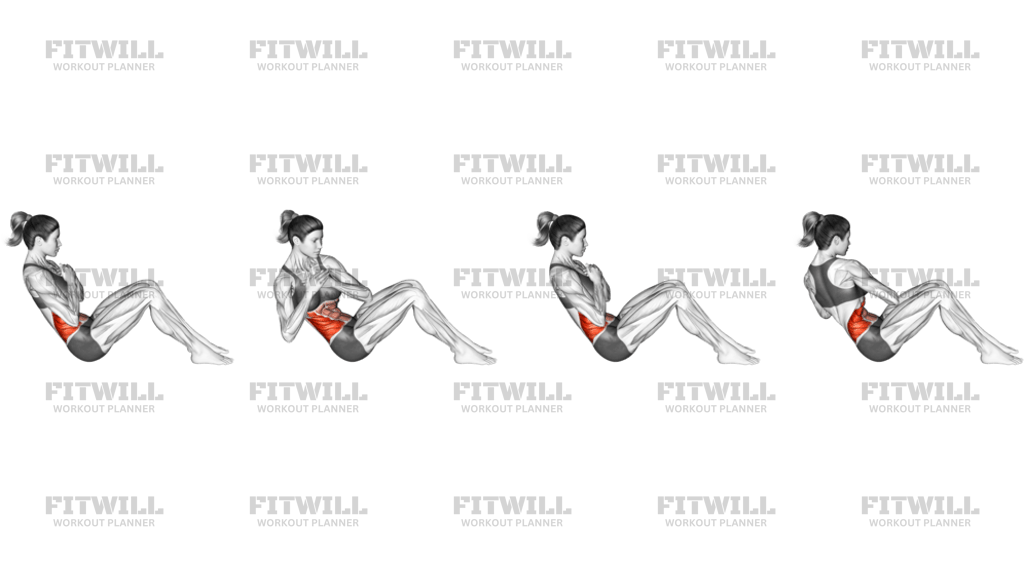
Instructions
- Sit on the floor with your knees bent, feet flat, and your torso leaned back to about a 30 to 45 degree angle.
- Bring your hands to your chest and keep your elbows lifted enough that your shoulders stay relaxed.
- Brace your abdomen, stack your ribs over your pelvis as much as the lean allows, and keep your chin slightly tucked.
- Rotate your shoulders and upper torso to one side without letting the knees or hips swing with the twist.
- Pause briefly at the end of the turn while keeping the chest lifted and the lower back long.
- Turn back through center under control, then rotate to the opposite side with the same range and speed.
- Keep your feet planted and your heels light if needed so the torso, not the legs, drives the motion.
- Exhale as you twist and inhale as you pass back through center.
- Continue for the planned reps, then sit upright before you stop to unload your core.
Tips & Tricks
- If your low back starts rounding, reduce the lean angle instead of forcing a bigger twist.
- Keep the hands on the chest rather than reaching forward; that keeps the load on the torso and not the arms.
- Rotate the sternum and shoulders together so the movement stays organized instead of becoming a loose arm swing.
- A slower tempo makes the obliques work harder and helps keep the set strict when fatigue builds.
- Planting the feet makes the drill more stable, while lifting them slightly increases demand on the hip flexors and anti-extension control.
- Do not chase a huge side-to-side range if your pelvis starts rocking or the knees drift with the twist.
- A small pause near each side helps remove momentum and makes each rep cleaner.
- Stop the set when your breathing gets choppy enough that you can no longer keep the trunk braced and the chest lifted.
Frequently Asked Questions
What muscles does Russian Twist With Hands On Chest work most?
It primarily targets the obliques and the rest of the abdominal wall, with the hip flexors and deep core muscles helping to stabilize the lean.
Is the feet-planted version easier than lifting the feet?
Yes. Keeping the feet on the floor makes the twist more stable and is usually the better starting point for beginners.
How far should I lean back during the setup?
Lean back only far enough to feel your abs working while you can still keep your chest up and your lower back from rounding.
Should my knees move from side to side as I twist?
No. The knees may stay softly together or planted, but the rotation should come from the torso rather than a sweeping leg swing.
Can I hold a weight on my chest for this exercise?
Yes, a small plate or dumbbell held at the chest can increase the challenge, but only if you can keep the twist controlled.
What is the biggest mistake on Russian twists?
The most common error is using momentum from the arms, hips, or feet instead of rotating the torso under control.
Is this a good exercise for beginners?
Yes, as long as the lean is modest and the twist stays slow, controlled, and pain-free.
Where should I feel the movement working?
You should feel the strongest effort through the sides of the waist and the front of the abdomen, not in the neck or lower back.