Dumbbell Bent Arm Lateral Raise
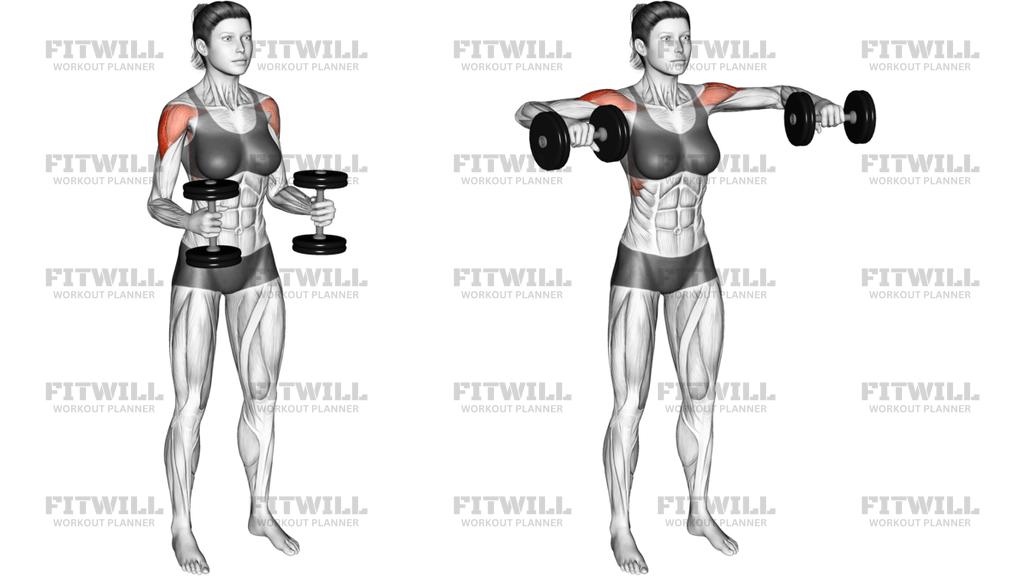
Dumbbell Bent Arm Lateral Raise is a standing shoulder isolation exercise that uses dumbbells to train the delts through a short, controlled arc. The bent-elbow position keeps the lift focused on shoulder abduction instead of turning into a straight-arm swing, so the load stays on the deltoids while the traps and upper back help only enough to stabilize the torso and shoulder girdle.
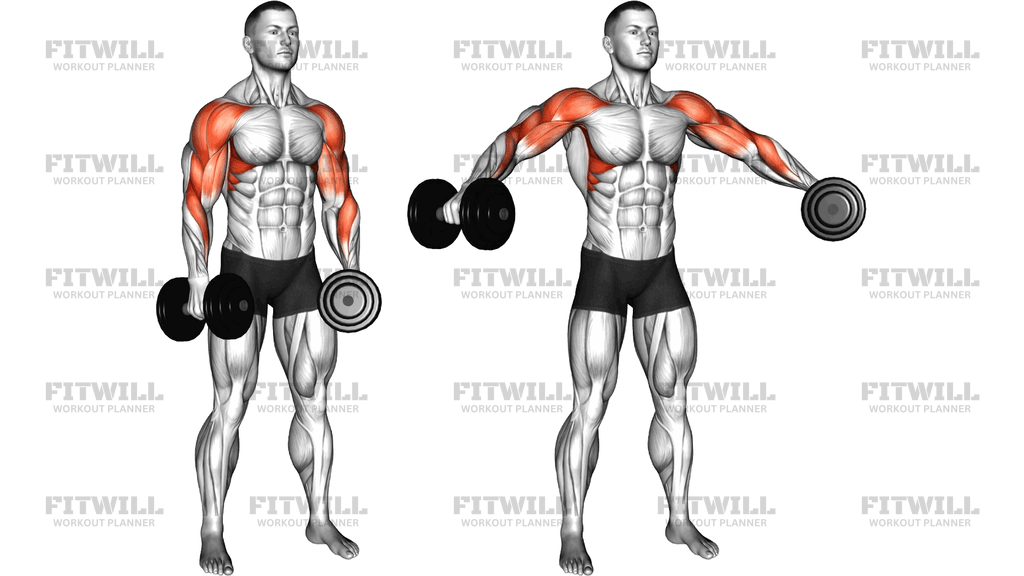
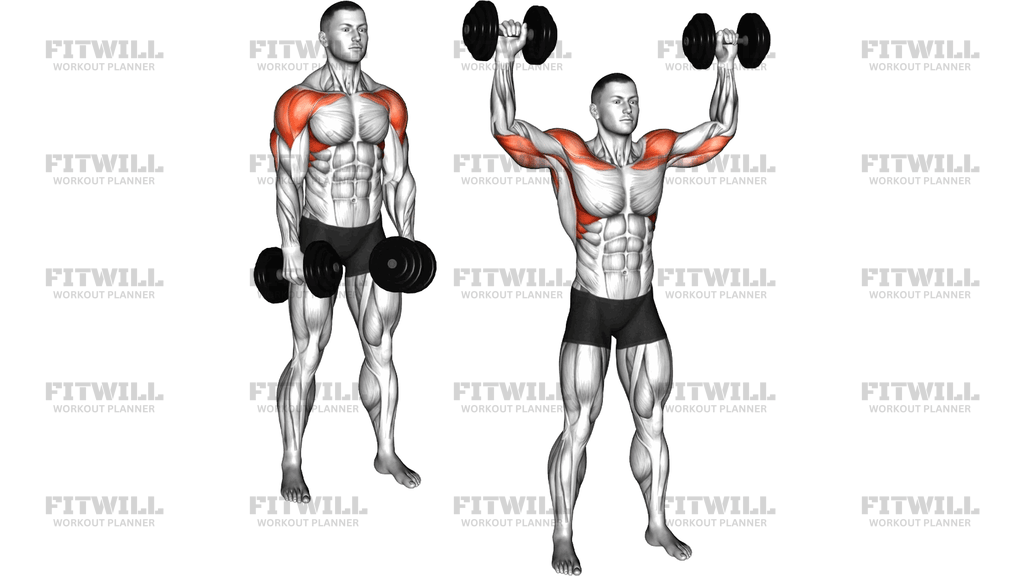
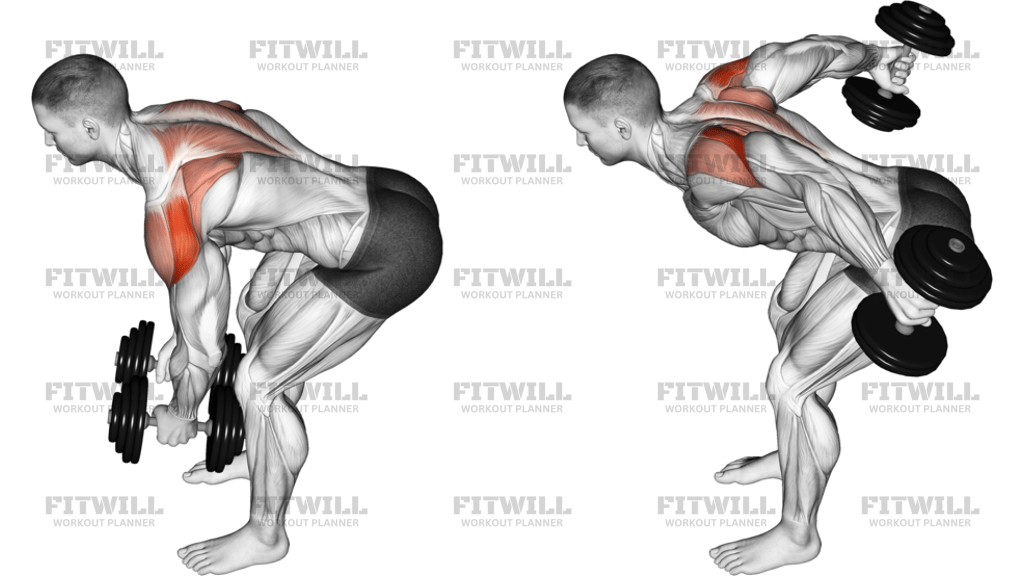
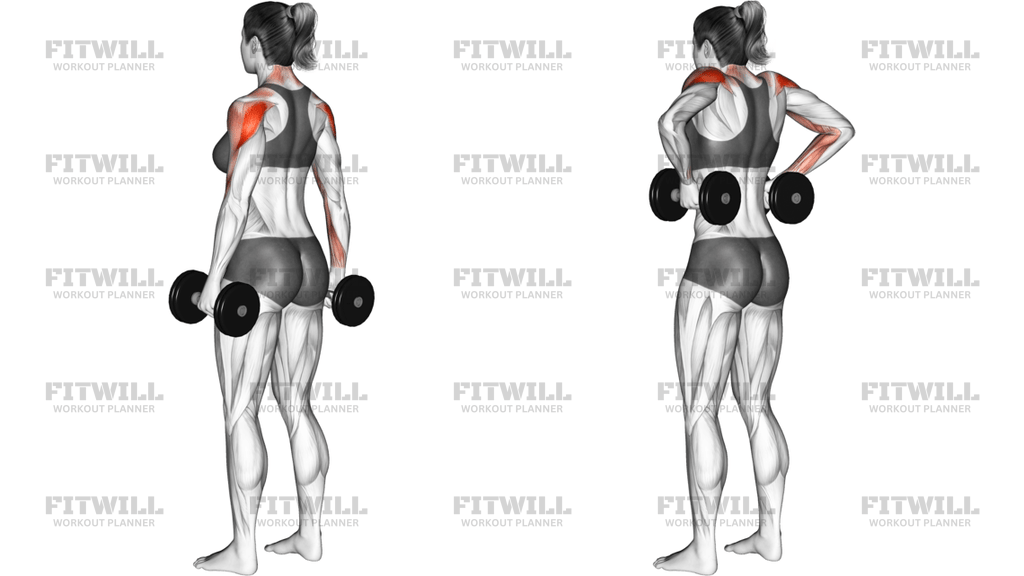
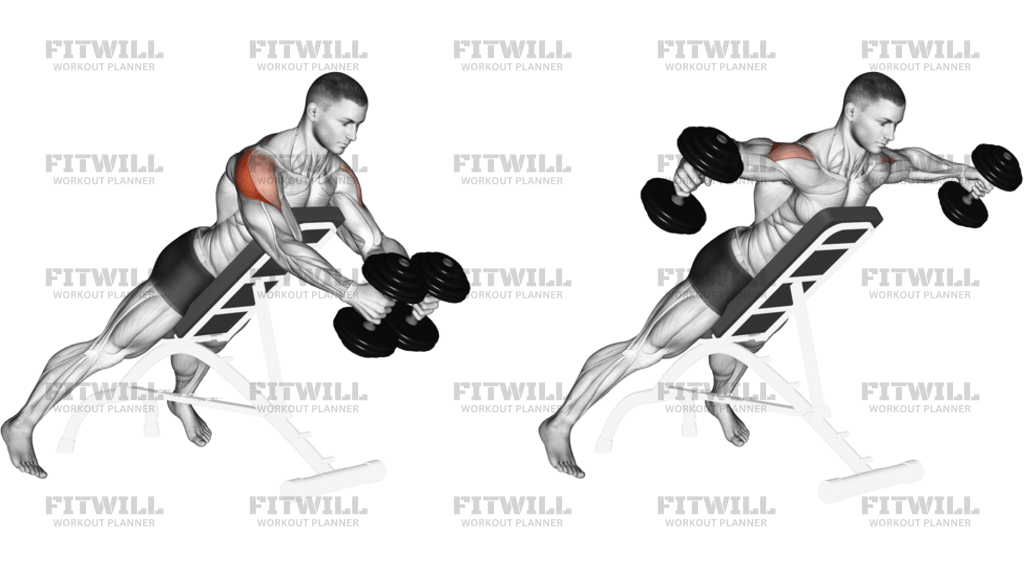
The image shows the lifter standing tall with the dumbbells hanging by the sides, elbows already bent, and the arms traveling out to shoulder height. That setup matters because the exercise is most effective when the ribs stay down, the neck stays long, and the elbows lead the movement without the hands drifting far ahead of the shoulders. If the torso leans or twists, the reps stop feeling like a clean lateral raise and become a body-English cheat rep.
At the top, the upper arms should approach shoulder level with the elbows still softly bent and the wrists stacked over the dumbbells. The goal is not to crank the weights high or shrug them upward. It is to open the arms out to the sides under control, pause briefly in the top position, and lower the dumbbells on the same path with steady tension. That makes the movement useful for building shoulder size, improving shoulder control, and adding precise accessory work after pressing or pulling sessions.
Because the range is limited and the shoulder joint is working near a vulnerable position, load choice matters more than ego. Light to moderate dumbbells usually work best, especially when the lifter wants clean tension on the side delts rather than a fast swing. This is a good accessory movement for hypertrophy blocks, warmups before overhead pressing, or shoulder-focused finishers, and it can also help beginners learn how to raise the arms without shrugging or arching the low back.
Keep the motion smooth, pain-free, and symmetrical from side to side. If one shoulder climbs faster than the other, reduce the load and reset the posture. The exercise should feel like a controlled shoulder raise with bent arms, not a trap shrug or a front-delt front raise. When the setup is consistent and the elbows stay in the correct path, the movement delivers steady tension where it belongs: on the delts.
[ Workout Log & Planner ]
Put your next workout in Fitwill
Keep your plan and training log ready when you are.


Instructions
- Stand tall with a dumbbell in each hand, feet about hip-width apart, and arms hanging by your sides.
- Bend your elbows to roughly 90 degrees so the dumbbells sit just in front of your thighs and your palms face inward.
- Set your ribs down, lengthen your neck, and keep a soft bend in the knees without leaning back.
- Start the raise by driving the elbows out and up in a wide arc until the upper arms reach about shoulder height.
- Keep the wrists neutral and let the elbows lead the motion instead of swinging the hands forward.
- Pause briefly at the top without shrugging the shoulders toward your ears.
- Lower the dumbbells on the same path under control until the elbows return near the starting position.
- Exhale as you lift, inhale as you lower, and keep both sides moving at the same speed.
- Reset your posture before the next rep if the torso starts to sway or the shoulders start to hike.
Tips & Tricks
- Use light dumbbells first; bent-arm lateral raises get sloppy fast once the shoulders start to shrug.
- Think about moving the elbows out, not lifting the hands higher than the shoulders.
- Keep the upper arms slightly in front of the torso if that feels better on the shoulder joint.
- Stop the ascent around shoulder height; going higher usually turns the rep into a trap-dominant shrug.
- Keep the neck long and the chin level so the upper traps do not take over.
- If you have to swing, the load is too heavy or the set is too long.
- Control the lowering phase for about two to three seconds to keep tension on the delts.
- Match the right and left sides on every rep; do not let one arm race ahead.
- If the shoulders pinch, shorten the range and slightly rotate the elbows forward.
Frequently Asked Questions
What muscle does Dumbbell Bent Arm Lateral Raise target most?
The side delts do most of the work, with the upper traps and upper back helping stabilize the lift.
Can beginners perform this exercise?
Yes. Beginners usually do best with very light dumbbells so they can learn the elbow path and avoid shrugging.
Where should my elbows be during the raise?
Keep the elbows bent and leading the movement out to the sides until the upper arms are about level with the shoulders.
Should I lift the dumbbells above shoulder height?
Usually no. Going much higher often turns the rep into a shrug and reduces the tension on the delts.
Why are the elbows bent instead of straight?
The bent-arm position shortens the lever, which makes the movement easier to control and keeps it focused on the shoulders.
What if I feel this mostly in my traps?
Lower the weight, keep the shoulders away from the ears, and stop the lift at shoulder level instead of forcing a higher range.
Is this a good accessory after pressing work?
Yes. It fits well after benching or overhead pressing when you want extra shoulder volume without another heavy compound lift.
How heavy should the dumbbells be?
Heavy enough to challenge the delts, but light enough that you can keep the torso still and lower the weight without dropping it.