Resistance Band Serratus Wall Slide With Foam Roll
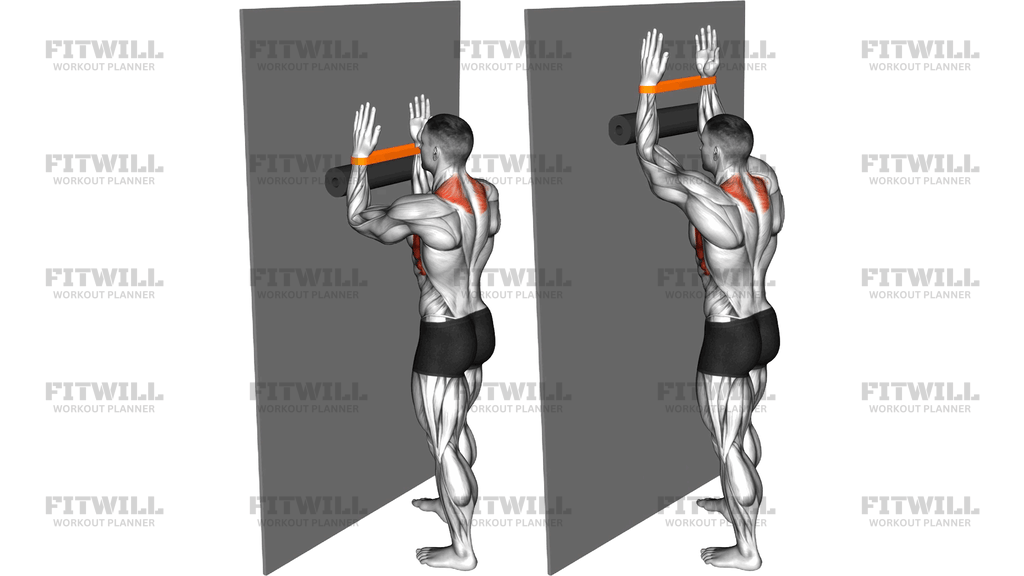
Resistance Band Serratus Wall Slide With Foam Roll is a wall-based shoulder control drill that trains serratus anterior activation, scapular upward rotation, and overhead reach mechanics. The foam roller gives your forearms a stable track against the wall, while the band at the wrists adds outward tension so the shoulders stay engaged instead of collapsing inward. It is commonly used as a warm-up or accessory exercise before pressing, pulling, climbing, throwing, or any session that needs cleaner overhead shoulder motion.
The movement is not about forcing a big range. It is about keeping the rib cage stacked, the neck long, and the shoulder blades moving smoothly as the arms slide up the wall. When the band is active and the forearms stay connected to the roller, you get a strong cue to reach without shrugging excessively or arching the lower back. That makes the drill useful for people who want better scapular control and a more efficient overhead position.
Because the setup matters, the wall, roller, and wrist band should all feel organized before the first rep. The forearms press lightly into the roller, the elbows stay under the hands, and the wrists push out against the band the whole time. If the roller drifts, the ribs flare, or the shoulders jam upward, the rep usually turns into compensation instead of serratus work. Smaller, cleaner slides are better than chasing height.
Use controlled reps and treat the top position as a reach, not a shrug. The shoulders should rotate upward while the rib cage stays quiet. A smooth lowering phase is just as important as the slide up, because the return teaches control under tension. This exercise fits best when you want shoulder activation, posture practice, or low-load preparation for more demanding upper-body work.
Beginners can use it if they can keep contact with the wall and maintain a steady exhale. If the wall position feels awkward, reduce the band tension, shorten the range, or lower the roller slightly. Stop if the front of the shoulder pinches or if you cannot keep the low back from taking over the motion.
[ Workout Log & Planner ]
Put your next workout in Fitwill
Keep your plan and training log ready when you are.


Instructions
- Stand facing a wall with a foam roller pinned across the wall at upper-chest height and your forearms resting on it, elbows bent about 90 degrees.
- Place a light resistance band around your wrists and step close enough that your forearms stay in contact with the roller without reaching forward.
- Set your feet hip-width apart, soften your knees, and brace so your ribs stay stacked over your pelvis.
- Press your forearms gently into the roller and push your wrists outward into the band before you start the slide.
- Exhale and glide the roller upward by reaching your arms up the wall, letting the shoulder blades rotate upward rather than shrugging hard.
- Keep your forearms connected to the roller as the hands travel higher and stop when you can no longer keep the ribs and neck organized.
- Pause briefly at the top with the band still active and the upper back long, not pinched or flared.
- Lower the roller back to the start under control while keeping outward wrist tension and steady breathing.
- Reset your rib cage and shoulders before the next rep, then repeat for the planned number of repetitions.
Tips & Tricks
- Keep the roller lightly pinned to the wall; if it slides away, the shoulder blades usually lose their path and the rep turns into a reach.
- Push the wrists out into the band the whole time so the upper arms stay active instead of drifting inward.
- Think of sliding the forearms upward and forward, not just shrugging the shoulders toward your ears.
- Let the ribs stay down as the arms rise; if the low back arches, the wall slide has turned into a lumbar extension drill.
- Use a band tension that lets you keep the elbows soft and the forearms flat without shaking or compensating.
- Stop the upward phase before the neck tightens or the front of the shoulder starts to pinch.
- Make the lowering phase slow enough that you can feel the shoulder blades stay controlled against the rib cage.
- Choose a smaller range and a cleaner line if you cannot keep the roller, wrists, and torso organized together.
Frequently Asked Questions
What does Resistance Band Serratus Wall Slide With Foam Roll train most?
It mainly trains serratus anterior activation and scapular upward rotation, with help from the upper back and shoulder stabilizers.
Why use a foam roller on the wall instead of sliding directly on the wall?
The roller gives your forearms a smoother track and makes it easier to keep pressure, alignment, and upward reach organized during the slide.
How high should my hands go on the wall?
Go only as high as you can while keeping the ribs stacked, the neck relaxed, and the forearms connected to the roller.
Should I feel this in my shoulders or upper back?
You should feel the serratus area under the armpit, the upper back, and the shoulder stabilizers working together without a sharp pinch in the front of the shoulder.
Can beginners do this exercise?
Yes. Beginners usually do best with a light band, a shorter range, and slow reps that keep the wall, roller, and ribs organized.
What are the most common mistakes with the band and roller?
Letting the wrists collapse inward, losing contact with the roller, and arching the low back are the most common ways the movement breaks down.
Where does this fit in a workout?
It works well in a warm-up, activation block, or accessory circuit before pressing, overhead work, or other shoulder-intensive training.
How do I make it harder without turning it into a different exercise?
Use a slightly stronger band, keep more outward wrist tension, or increase the controlled range while keeping the torso and shoulders clean.