Bodyweight Kneeling Sissy Squat
Bodyweight Kneeling Sissy Squat is a bodyweight quad exercise built around a kneeling lean-back pattern rather than a normal hip-dominant squat. The knees stay down while the torso and thighs move as one controlled line, so the work shifts hard into the quads and away from the glutes and hips. That makes the setup important: if the knees, ankles, and trunk are not organized before you lean back, the movement can feel unstable very quickly.
This version is useful when you want a strict thigh-focused drill without adding external load. It can be used as an accessory movement, a knee-friendly quad finisher, or a technique exercise for learning how much range you can control in the kneeling position. Because the movement is small and precise, the goal is not to drop back aggressively. The goal is to stay tall through the torso, keep tension in the front of the thighs, and control both the backward lean and the return.
The exercise should feel like a long lever working around the knees. Start from a tall kneeling position with the knees on the floor, the lower legs behind you, and the feet relaxed or lightly anchored as shown. From there, keep the hips extended, brace the trunk, and lean back only as far as you can without collapsing at the waist or losing the quad line of tension. The stronger the control, the more useful each rep becomes.
Because Bodyweight Kneeling Sissy Squat is demanding on the quads and on knee tolerance, technique matters more than depth. A smooth tempo, a steady brace, and a controlled return are what make the rep effective. If the knees are irritated, the range of motion should be shortened or the exercise skipped. When it is done well, it is a focused way to challenge the thighs with almost no setup and very little equipment.
Use this movement when you want strict quad work, better kneeling body control, and a clean bodyweight stimulus that does not rely on momentum. It fits well in lower-body warmups, quad hypertrophy sessions, or bodyweight circuits where controlled tension is the priority. Keep the motion deliberate, keep the spine long, and stop the set when you can no longer hold the lean-back position without compensation.
[ Workout Log & Planner ]
Put your next workout in Fitwill
Keep your plan and training log ready when you are.


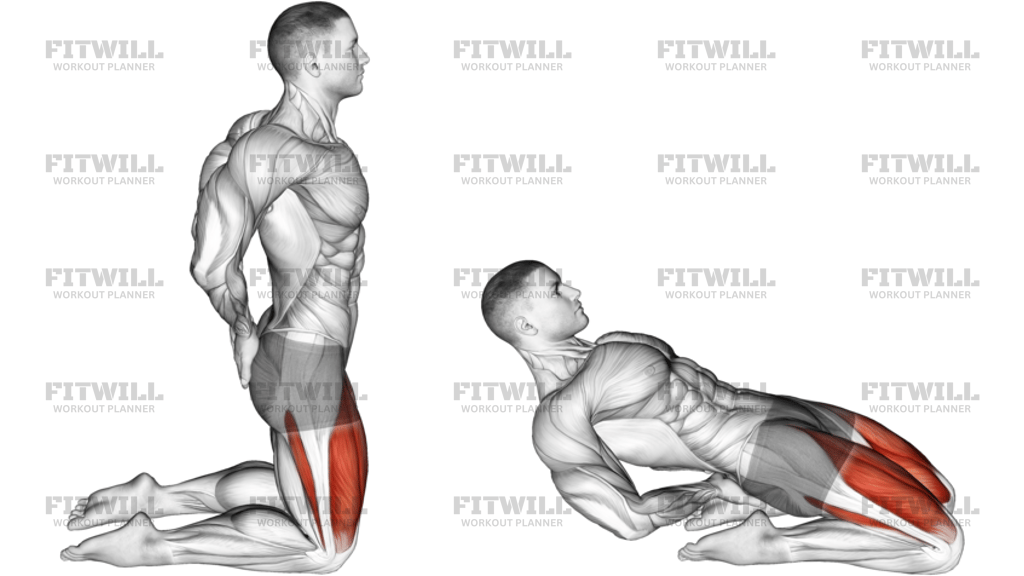
Instructions
- Kneel on the floor with your knees about hip-width apart, your shins resting behind you, and your torso tall and stacked over your thighs.
- Place the tops of your feet on the floor or lightly anchor the feet behind you, then keep your hips extended and your glutes relaxed enough to let the knees do the work.
- Set your ribs down, brace your abdomen, and keep your eyes forward before you start the lean.
- Begin to lean your body backward as one piece, letting the knees travel into the floor while the torso stays long and the hips do not fold back.
- Lower only as far as you can while keeping tension in the quads and control through the trunk.
- Pause briefly in the leaned-back position without letting the lower back arch or the shoulders shrug forward.
- Drive through your quads to bring your torso back to the tall kneeling start under control.
- Inhale on the way down, exhale as you come back up, and reset fully before the next repetition.
Tips & Tricks
- Keep the movement in the knees, not the hips; if your hips are sitting back like a squat, you are losing the quad emphasis.
- A slightly soft brace helps you stay long through the torso without flaring the ribs as you lean back.
- Do not chase depth by collapsing at the waist; stop the rep when the lean-back position starts to break your line.
- If the tops of your feet cramp or feel jammed, reduce how far you anchor them and shorten the range.
- The descent should feel slow and deliberate; rushing the backward lean usually turns the exercise into a drop-and-rebound.
- Keep the neck neutral and your gaze forward so you do not overextend the upper spine while holding the lean.
- Use the floor contact of the knees as feedback: pressure should stay even, not dump onto one side.
- Stop the set before the quads lose tension and the movement turns into a hip hinge or low-back compensation.
Frequently Asked Questions
What muscles does Bodyweight Kneeling Sissy Squat train most?
The quads do most of the work, especially as you control the backward lean and drive back to tall kneeling.
Should my feet be flat or tucked under me?
Use the foot position shown in the image: the lower legs stay behind you and the tops of the feet rest on the floor or stay lightly anchored, depending on comfort.
How far should I lean back in Bodyweight Kneeling Sissy Squat?
Lean back only until you can keep the torso long, the ribs down, and the quads under tension. Depth matters less than a clean line.
Is this exercise hard on the knees?
It can be if you force range or drop into the bottom. Keep the motion slow, shorten the range if needed, and skip it if it causes sharp knee pain.
What is the most common mistake?
The biggest mistake is folding at the hips or arching the lower back instead of leaning back as one controlled unit.
Can beginners do Bodyweight Kneeling Sissy Squat?
Yes, but beginners should start with a very short range and prioritize balance and control before trying deeper reps.
How many reps should I do?
This movement usually works well for moderate to higher reps because the load is bodyweight and the challenge comes from control and tension.
What can I use instead if kneeling is uncomfortable?
A supported sissy squat variation, a wall-assisted lean-back, or another strict quad exercise such as leg extensions may be a better fit.