Dumbbell Floor Wiper
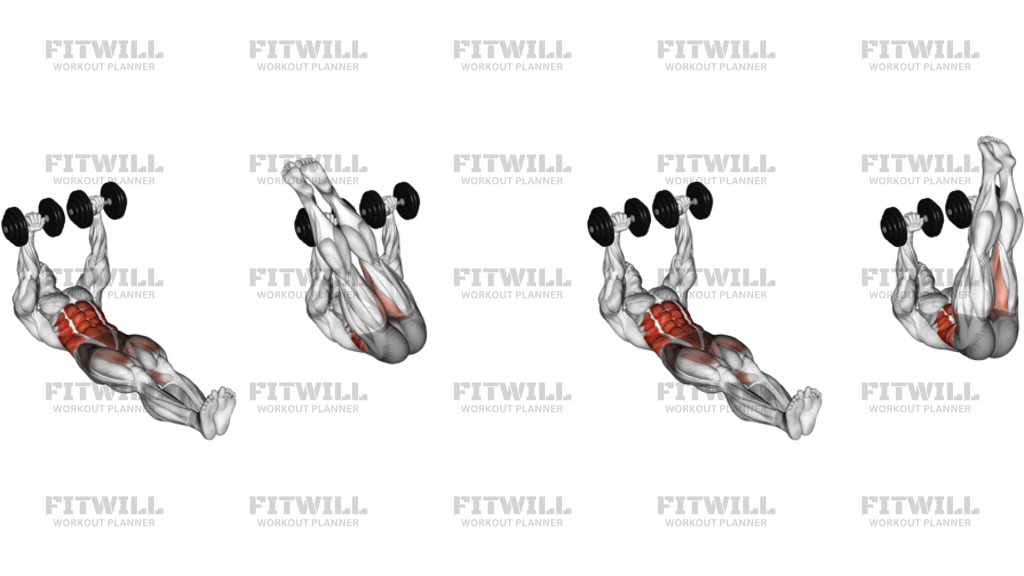
Dumbbell Floor Wiper is a floor-based core and waist exercise that uses a pair of dumbbells overhead while the legs sweep from side to side in a controlled arc. The movement asks the trunk to resist rotation as much as it asks the lower body to move, so it is useful for training the obliques, deep abdominal muscles, and the stabilizers that keep the pelvis from twisting too freely. It also works well as an accessory drill when you want a slow, precise core pattern instead of a fast conditioning movement.
The dumbbells are not the main driver of the rep; they act as a loaded counterbalance that makes the torso work harder to stay organized. Because the arms stay fixed while the legs travel, the exercise rewards clean positioning far more than heavy loading. If the shoulders drift, the lower back arches, or the legs swing too far, the set quickly turns into momentum instead of trunk control.
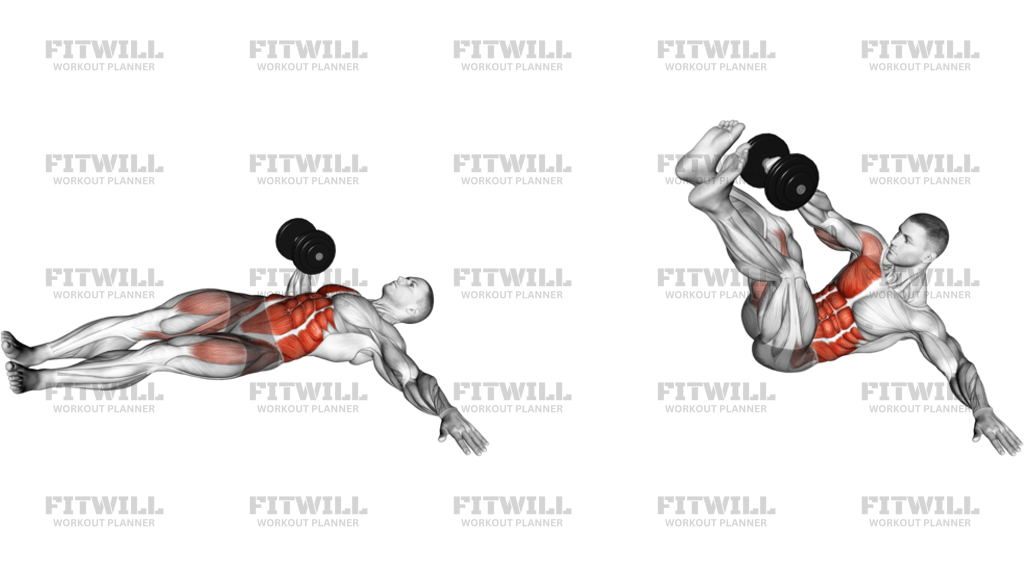
Set up on your back with the dumbbells held straight above the chest or slightly back toward the shoulders, depending on what the image and your body position allow without strain. Keep the shoulder blades heavy on the floor, press the ribs down, and bring the legs together before the first rep. That setup matters because the exercise starts with bracing, not with the sweep itself. A steady start helps you keep the lower back from popping off the floor as the legs travel.
As the legs move from one side to the other, the goal is to keep the upper body quiet and the movement smooth. The range should come from how much rotation you can control through the hips and trunk, not from forcing the feet to touch the floor. A short pause near the end of each sweep can make the set more productive, especially if you are learning to keep the pelvis stacked and the core tight.
Dumbbell Floor Wiper fits well in core sessions, athletic accessories, or as a finishing drill after bigger compound lifts. It is most useful when you want anti-rotation control, better awareness of pelvic position, and stronger midsection tension under low-to-moderate load. Light to moderate dumbbells are usually enough; if the set becomes jerky, shorten the range and clean up the body position before adding load.
Fitwill
Log Workouts, Track Progress & Build Strength.
Achieve more with Fitwill: explore over 9600 exercises with images and videos, access built-in and custom workouts, perfect for both gym and home sessions, and see real results.
Start your journey. Download today!




Instructions
- Lie on your back on the floor and hold a dumbbell in each hand with your arms straight above your chest or slightly back toward your shoulders.
- Bring your legs together, straighten them, and press your shoulder blades and upper back into the floor before the first rep.
- Brace your midsection so your ribs stay down and your lower back stays controlled against the floor.
- Keep the dumbbells fixed overhead and begin lowering both legs together toward one side in a slow, smooth arc.
- Stop the sweep before your lower back pops up or your shoulders start rolling off the floor.
- Use your obliques and lower abs to pull the legs back through the middle and over to the other side.
- Keep the movement even on both sides and avoid kicking the legs or swinging the dumbbells.
- Breathe out as the legs sweep and breathe in as you bring them back through the center.
- Finish the set by bringing the legs back to the middle, lowering the dumbbells with control, and relaxing flat on the floor.
Tips & Tricks
- If the dumbbells make your shoulders wobble, lighten the load and keep the arms fixed instead of pressing harder.
- A smaller sweep is better than forcing the feet to the floor and letting the low back arch.
- Keep the dumbbells stacked over the chest if the overhead position pulls your ribs up.
- Slow the return through center; that transition is where most people lose tension and start swinging.
- Let the hips rotate only as far as the trunk can control, not as far as the feet can travel.
- If your neck strains, look upward and keep the back of the head heavy on the floor.
- Use one smooth breath cycle per side instead of holding your breath for the whole set.
- Treat this as a core control drill, not a strength lift, and stop the set when the legs start whipping.
Frequently Asked Questions
What muscles does Dumbbell Floor Wiper work most?
It mainly trains the obliques and deep core muscles, with the hips and lower abs helping control the leg sweep.
Should the dumbbells move during Dumbbell Floor Wiper?
No. Keep the dumbbells steady overhead while the legs do the sweeping so the trunk has to resist rotation.
How low should my legs go on each rep?
Only as low as you can keep your lower back controlled on the floor. If the ribs flare or the hips twist, shorten the range.
Can I bend my knees in Dumbbell Floor Wiper?
Yes, bending the knees slightly makes the exercise easier and can help you keep the movement smooth while you learn it.
Why do my shoulders come off the floor?
Usually the dumbbells are too far back or the legs are dropping too low. Bring the weights a little more over the chest and reduce the sweep.
Is Dumbbell Floor Wiper good for beginners?
Yes, if you start with very light dumbbells and a short range. The exercise gets hard quickly when control is the priority.
What is the most common mistake with this movement?
Most people try to force a bigger leg sweep than they can control, which makes the pelvis rock and the low back arch.
How many reps should I use?
Use low to moderate reps, usually 6-12 per side or a controlled time-based set, and stop before the sweep gets sloppy.