Dumbbell Overhead Sit-Up
Dumbbell Overhead Sit-Up is a floor-based core exercise that combines a standard sit-up with a long overhead lever. Holding one dumbbell with both hands above the chest or slightly behind the shoulder line makes the trunk work harder through the whole rep because the abs must overcome a bigger lever arm and keep the ribs from flaring as you rise.
The primary target is the rectus abdominis, with the obliques and hip flexors helping to flex the torso and the shoulders working isometrically to keep the dumbbell steady. That overhead position changes the feel of the exercise immediately: if the weight drifts, the neck cranes forward, or the lower back takes over, the set becomes more about compensation than abdominal work.
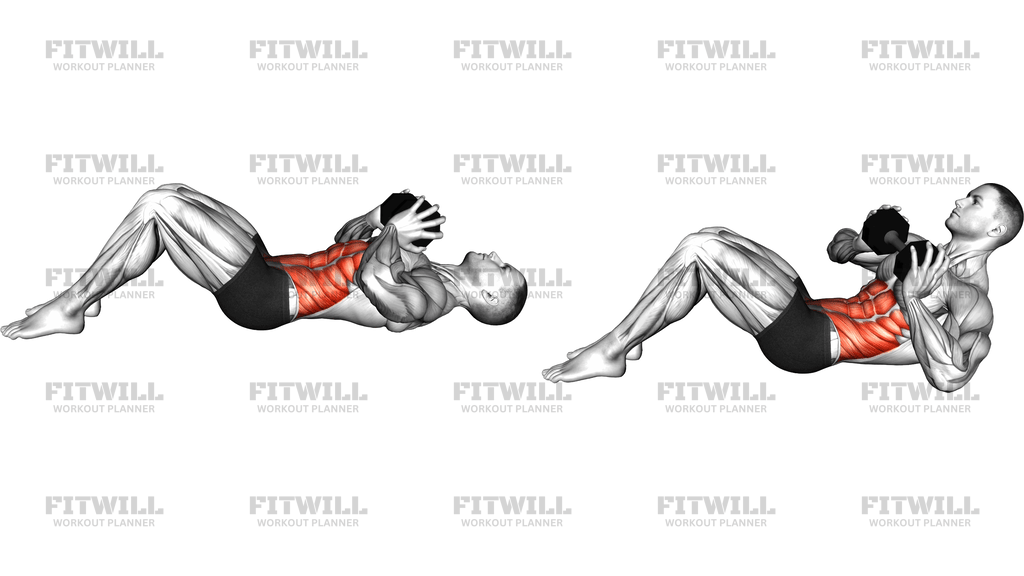
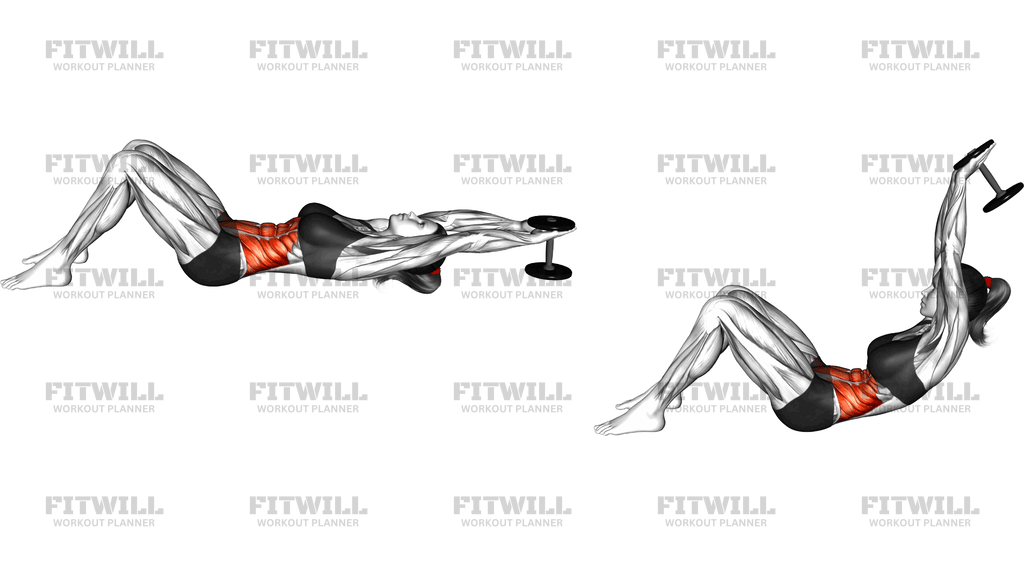
The setup matters more here than in a bodyweight sit-up. Lie on your back with the knees bent and feet flat, then extend the arms so the dumbbell stays stacked over the shoulder line. From the bottom, brace first, then curl the chest toward the thighs and sit all the way up without yanking with the neck or bouncing off the floor. The image shows a smooth path from a long, braced start to a tall seated finish, with the arms staying high the entire time.
Use a light to moderate load and a deliberate tempo. The goal is a clean, repeatable sit-up where the torso does the work and the dumbbell stays controlled from the first inch of the rep to the last. This works well as accessory core training, warm-up activation, or a finisher in an abs-focused session. If the feet pop up, the low back arches aggressively, or the dumbbell drifts behind the head, reduce the load and shorten the range until you can keep the position strict.
[ Workout Log & Planner ]
Put your next workout in Fitwill
Keep your plan and training log ready when you are.


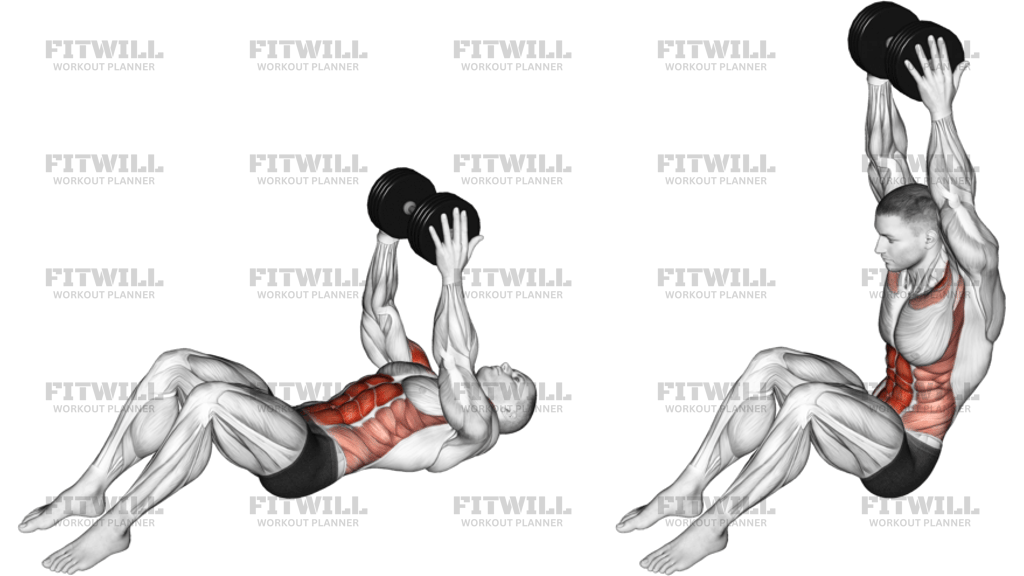
Instructions
- Lie on your back on a mat with your knees bent and your feet flat on the floor.
- Hold one dumbbell with both hands and extend your arms so the weight is above your chest and shoulder line.
- Set your ribs down, tuck your chin slightly, and brace your abs before the first rep.
- Keep your feet planted and press your heels lightly into the floor as you prepare to move.
- Exhale and curl your head, shoulders, and upper back off the floor to start the sit-up.
- Continue rolling your torso up until you reach a tall seated position while keeping the dumbbell fixed overhead.
- Squeeze your abs at the top without letting the weight drift forward or your lower back overarch.
- Lower yourself one vertebra at a time until your shoulder blades touch the floor again.
- Repeat for the planned number of reps with the same controlled tempo.
Tips & Tricks
- Keep the dumbbell light enough that your arms can stay straight without shaking or drifting.
- If the weight moves behind your head, it becomes harder to sit up cleanly and usually turns into a shoulder position fight.
- Do not pull on your neck; the chest should rise first and the head should stay in line with the torso.
- Exhale as you curl up and use the breath to help keep the ribs tucked instead of flared.
- Lower slowly and touch each part of your spine down instead of dropping to the floor.
- If your feet lift, move them farther from your hips or reduce the load before adding reps.
- A mat helps, but it should not be so thick that it makes the bottom position unstable.
- Stop the set when your lower back starts to arch or you can no longer keep the dumbbell centered overhead.
Frequently Asked Questions
What muscle does Dumbbell Overhead Sit-Up target most?
It mainly targets the rectus abdominis, with the obliques and hip flexors helping during the sit-up.
Can beginners perform this exercise?
Yes, but beginners should start with a very light dumbbell or no weight and focus on a strict sit-up path.
Should I hold one dumbbell or two?
Hold one dumbbell with both hands. Keeping a single load centered makes the overhead position easier to control.
Where should the dumbbell stay during the rep?
Keep it stacked above the chest and shoulder line. If it drifts too far back or forward, the sit-up gets sloppy.
Why is this harder than a regular sit-up?
The overhead hold creates a longer lever, so the abs must work harder to bring the torso upright without losing position.
What is the biggest form mistake to avoid?
Do not yank your head forward or let the lower back arch hard off the floor. The torso should curl smoothly instead.
What if my feet keep coming off the floor?
That usually means the load is too heavy or the range is too aggressive. Lighten the dumbbell and slow the lowering phase.
How can I progress this exercise over time?
Add reps, slow the descent, or move to a slightly heavier dumbbell only after you can keep the overhead position stable.