Side Split Squat
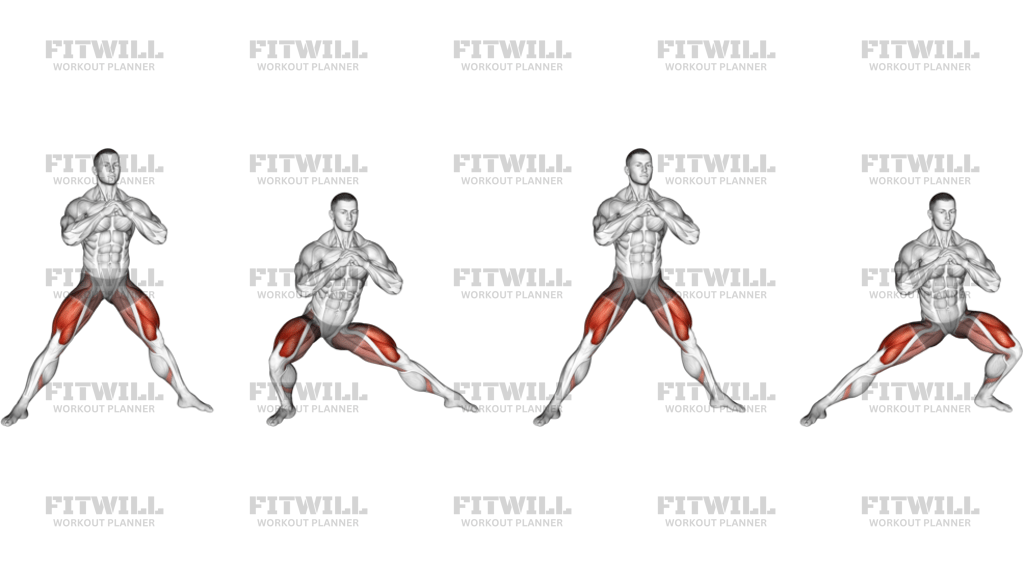
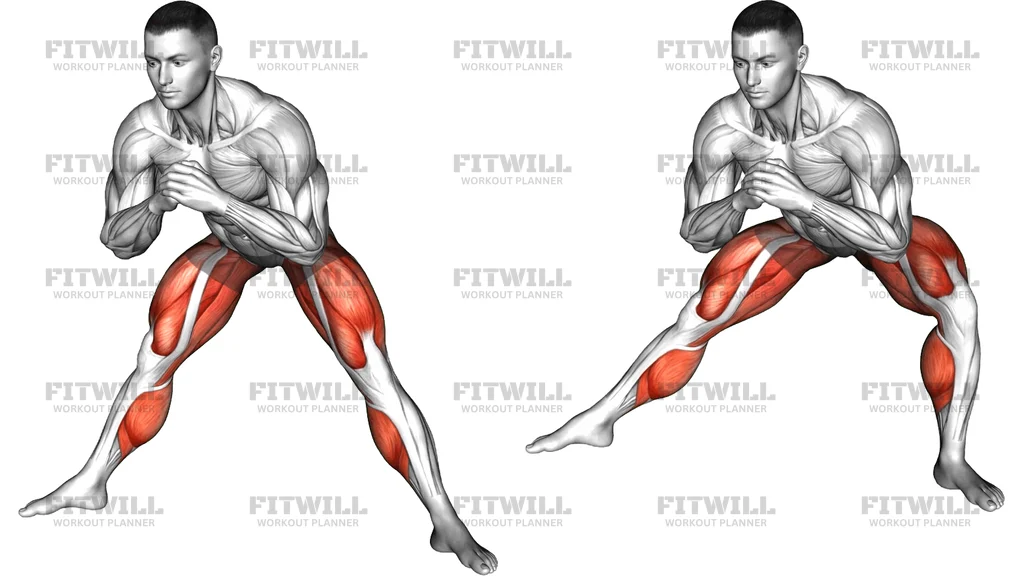
Side Split Squat is a bodyweight lateral squat that builds strength, control, and mobility through the thighs, glutes, adductors, and hips. From a wide stance, you shift into one leg while the opposite leg stays long, so each rep trains the lower body to produce force side to side instead of only forward and back.
The setup matters because small changes in stance width, foot angle, and torso position change the whole exercise. Stay tall through the chest, keep the working heel rooted, and let the straight leg stay long without forcing the knee into a hard lockout. That positioning keeps the load on the hip and thigh instead of dumping the stress into the lower back or feet.
On each repetition, send the hips toward the bent-knee side and let that knee track over the toes as the other leg stays extended. Lower only as far as you can control, then drive through the heel and midfoot to return to center. Breathe in as you descend, exhale as you stand, and keep the motion smooth rather than bouncing out of the bottom.
This movement is useful for warmups, lower-body accessories, adductor strength work, and athletic prep because it teaches you to own the side-to-side pattern. It also makes weakness or stiffness obvious: if the pelvis twists, the arch collapses, or the heel lifts, the set is too aggressive. Work in a pain-free range, use a smaller stance if the groin feels pinched, and stop the set when posture starts to unravel.
Fitwill
Log Workouts, Track Progress & Build Strength.
Achieve more with Fitwill: explore over 9600 exercises with images and videos, access built-in and custom workouts, perfect for both gym and home sessions, and see real results.
Start your journey. Download today!




Instructions
- Stand with your feet wider than shoulder width and turn the toes slightly out, then bring your hands together in front of your chest for balance.
- Keep your torso tall, ribs stacked over your pelvis, and shift your weight toward one side without letting the chest fold forward.
- Bend the knee on the working side while the opposite leg stays long and the foot stays rooted to the floor.
- Sit the hips down and across toward the bent-knee side instead of dropping straight between both feet.
- Track the working knee over the toes and keep the whole working foot planted, especially through the heel and big toe.
- Lower only until you feel a strong inner-thigh stretch and can still keep the pelvis level and the spine controlled.
- Pause briefly at the bottom if needed, then drive through the working heel and midfoot to return to the center.
- Exhale as you stand, reset your stance, and repeat on the other side for the planned number of reps.
- Finish the set if you lose balance, the torso starts twisting, or the heel on the working side begins to rise.
Tips & Tricks
- Choose a stance width that lets you keep the working heel down without forcing the groin to stretch beyond control.
- Think about sitting into one hip, not doing a shallow side step; the rep should feel like a loaded lateral squat.
- Keep the straight leg long, but do not lock the knee hard if that pulls the pelvis out of position.
- A small forward reach with the hands can help counterbalance the descent, especially if you are new to the pattern.
- If your knee caves inward on the bent side, shorten the range and press the knee out in line with the second toe.
- Do not bounce out of the bottom; the adductors and glutes should do the work, not momentum.
- If the inside thigh feels pinched rather than stretched, narrow the stance slightly and reduce depth.
- Use a slower lowering phase when you want more control and more time under tension through the inner thigh.
- Stop the set when the standing foot starts rolling to the outside edge or the pelvis starts rotating toward the floor.
Frequently Asked Questions
What muscles does the Side Split Squat work?
It primarily challenges the thighs and hips, especially the quads, glutes, and inner thighs, with the core helping you stay upright and balanced.
Is this more like a side lunge or a Cossack squat?
It sits closer to a Cossack-style side squat because the stance is wide and one leg stays long while you sink into the other side.
Should my straight leg stay flat on the floor?
Yes. Keep the foot rooted and the leg long so the body can shift side to side without losing control through the pelvis.
How low should I go?
Go only as deep as you can while keeping the working heel down, the chest tall, and the bent knee aligned with the toes.
What if I feel a pinch in my groin?
Reduce the depth first, then narrow the stance a little. You should feel a stretch in the inner thigh, not a sharp pinch.
Can beginners do this exercise?
Yes. Start with body weight, a shorter range of motion, and your hands held in front for balance until the side-to-side pattern feels stable.
What is the most common form mistake?
People usually fold forward, let the working knee collapse inward, or let the heel pop up instead of staying grounded through the foot.
How can I make the exercise harder?
You can slow the lowering phase, pause at the bottom, or hold a light goblet load once you can keep the pelvis and feet organized.