Dumbbell RDL To Jump Shrug
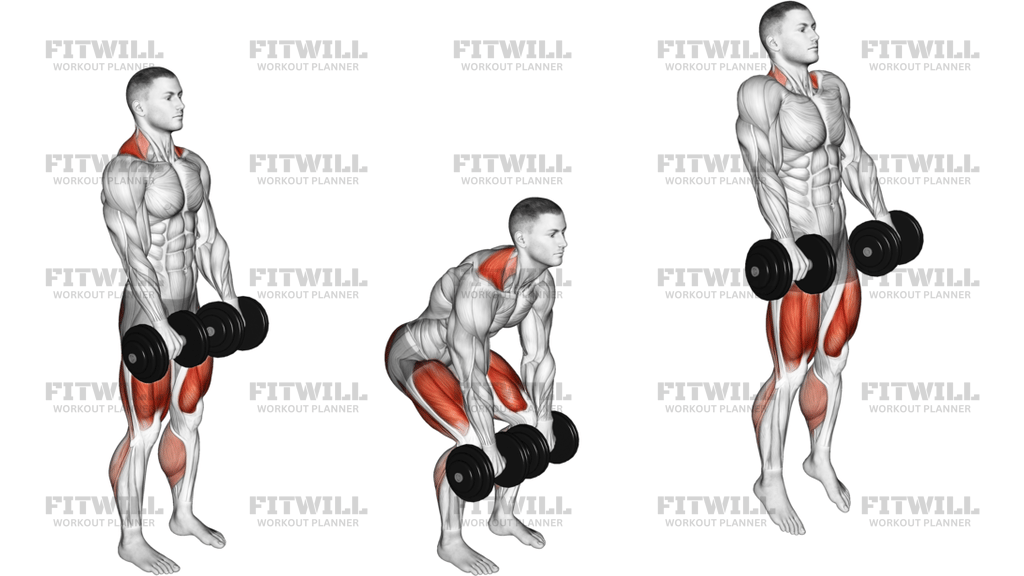
Dumbbell RDL to Jump Shrug is an explosive hinge drill that starts like a Romanian deadlift and finishes with a fast shrug and small jump. It trains the hamstrings and glutes through the hinge, then adds calves, traps, and core work as you extend hard at the top. Because the movement changes speed halfway through, the setup matters more than on a slow deadlift variation: the dumbbells need to stay close, the spine needs to stay long, and the shoulders should stay packed until the final drive.
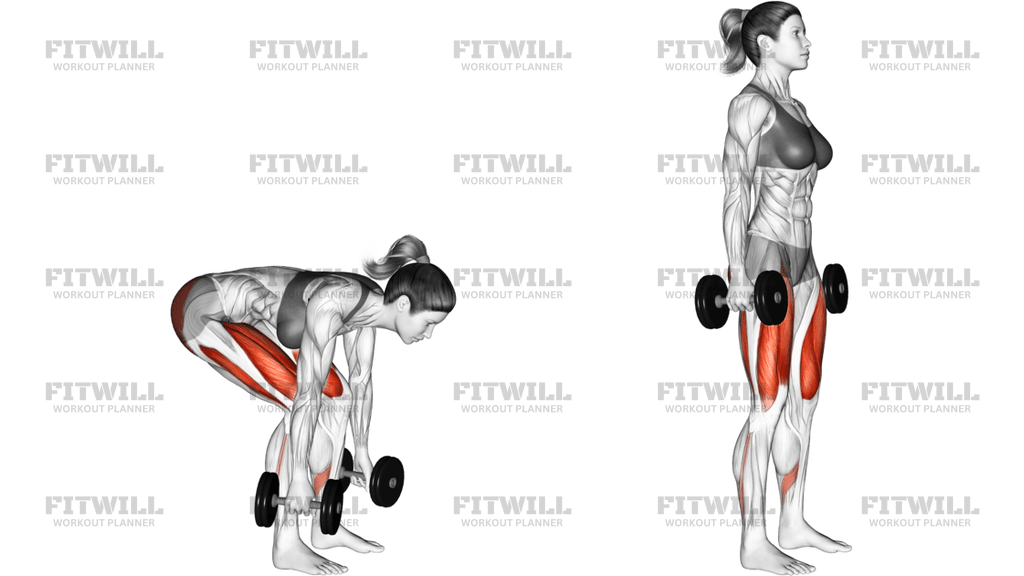
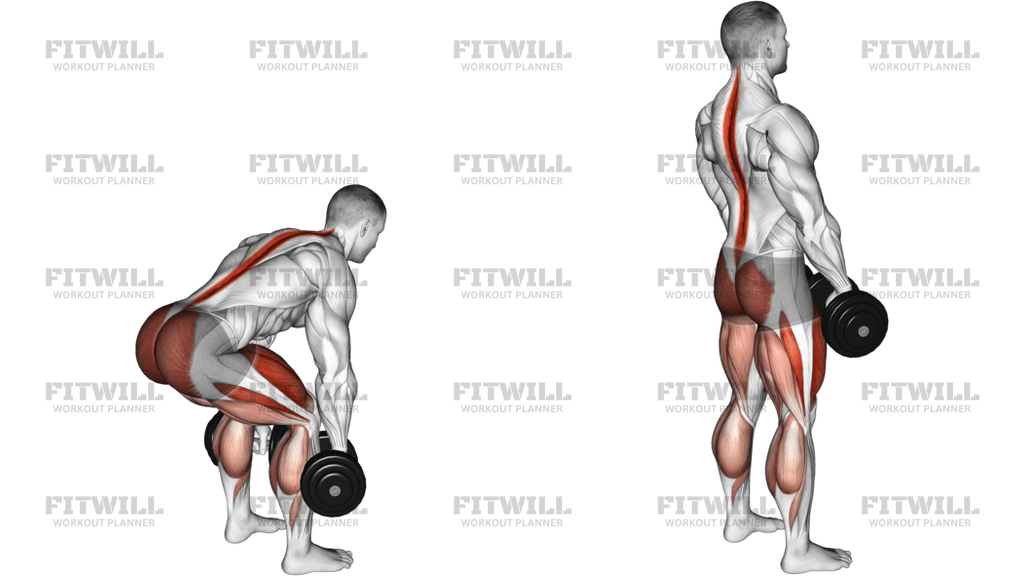
Use a hip-width stance and hold the dumbbells at your sides with the palms facing in. Unlock the knees just enough to let the hips travel back, then fold from the hips while keeping the chest open and the weight path close to the legs. The image shows the bells hanging near the thighs and shins, with the torso hinging forward rather than rounding. Lower only as far as you can keep tension in the back of the legs and maintain control, usually to just below the knees or mid-shin.
From the bottom, push the floor away and stand up fast by extending the hips before finishing with a shrug and a quick rise onto the toes. The jump should come from a coordinated triple-extension finish, not from swinging the arms or curling the dumbbells upward. At the top, keep the dumbbells under control, land softly, and absorb the landing into the next hinge instead of bouncing through the lower back or knees.
This exercise fits warmups for power work, posterior-chain accessory blocks, and athletic conditioning when you want a hinge pattern with more intent than a slow RDL. Light to moderate dumbbells are usually the right choice because the explosive finish breaks down quickly if the load is too heavy. It is useful for athletes, lifters, and anyone who wants more hip drive, but the jump and shrug should stay crisp and repeatable.
The main safety cues are simple: keep the chest open, let the hips travel back, and stop the set if the spine starts rounding or the landing gets noisy. If you cannot keep the dumbbells close to the legs and finish with a stable landing, reduce the load or shorten the range. Done well, the exercise should feel like a powerful hinge with a quick upward snap, not a sloppy squat, curl, or upright row.
[ Workout Log & Planner ]
Put your next workout in Fitwill
Keep your plan and training log ready when you are.


Instructions
- Stand tall with your feet about hip-width apart and hold a dumbbell in each hand at your sides, palms facing in.
- Unlock your knees slightly, set your ribs over your pelvis, and keep your shoulders down before you start the hinge.
- Push your hips back and slide the dumbbells down the front of your thighs, keeping them close to your legs.
- Lower until you feel a strong stretch in the hamstrings and your torso is angled forward without rounding your back.
- Drive through the floor to stand up by extending the hips and knees at the same time.
- As you reach the top, shrug the shoulders hard and rise onto your toes with a small controlled jump.
- Keep your arms straight and let the dumbbells travel upward because of the body drive, not a curl.
- Land softly with bent knees, reset the hinge, and repeat for the planned reps.
- Inhale on the way down and exhale through the explosive finish.
Tips & Tricks
- Choose lighter dumbbells than you would for a regular RDL; the jump and shrug usually break down before the hinge does.
- Keep the dumbbells brushing close to the thighs and shins so the load stays centered over the midfoot.
- Stop the hinge when you can still keep your lower back long; reaching lower by rounding defeats the purpose.
- The shrug should happen after the hips snap open, not before, or the rep turns into an upright-row style pull.
- Let the jump be small and crisp; you are training explosive extension, not trying to leap as high as possible.
- If your heels slam down or the landing gets loud, shorten the range and slow the reset.
- Keep your elbows straight so the biceps do not try to finish the lift.
- Use a stable floor and shoes with a firm base so the toe rise and landing stay controlled.
Frequently Asked Questions
What muscles does Dumbbell RDL to Jump Shrug work most?
The main work comes from the hamstrings and glutes on the hinge, with traps, calves, and core contributing on the explosive finish.
Should the dumbbells touch the floor at the bottom?
No. Lower only as far as you can keep the dumbbells close to your legs and maintain a neutral spine, usually to mid-shin or just below the knees.
How high should I jump on the shrug?
Keep the jump small and controlled. The goal is a fast triple-extension finish, not a maximal leap.
Can beginners use this exercise?
Yes, but only with light dumbbells and a short, clean range. If the landing gets sloppy, remove the jump first.
What is the biggest form mistake?
Rounding the back to reach lower or bending the arms to fake the shrug. Both shift the work away from the hinge and power finish.
Do my heels need to leave the floor?
A tiny rise onto the toes is normal. If your feet are shooting off the ground, the load is probably too light or the jump is too aggressive.
What if my lower back feels it more than my hamstrings?
Shorten the hinge, keep the dumbbells tighter to your body, and lower the load until you can keep the torso long through the whole rep.
Is this more of a strength or conditioning exercise?
It can be used for power and athletic conditioning. Keep the reps crisp and the rest long enough that each shrug and landing stays explosive.