Dumbbell Jefferson Curl
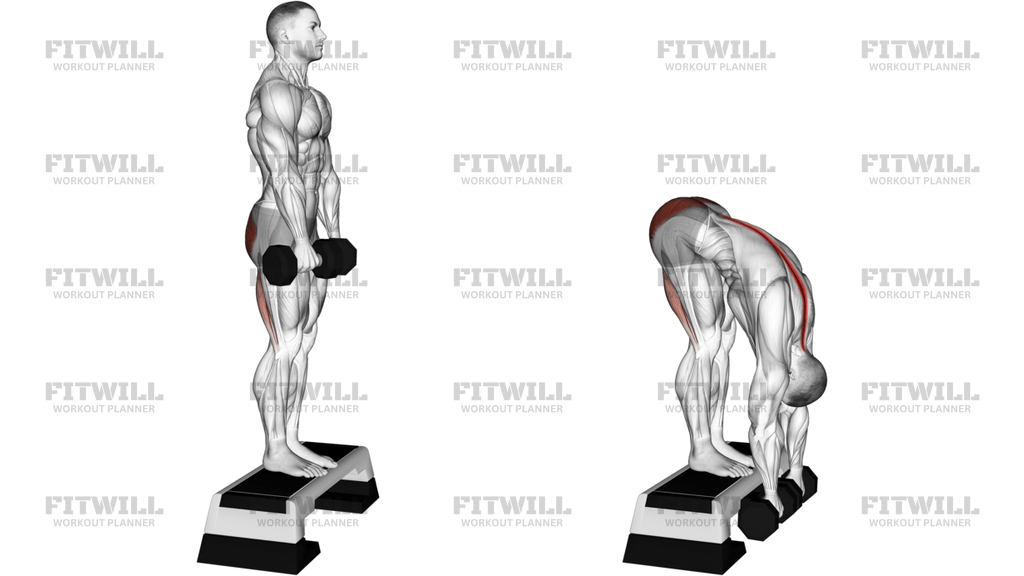
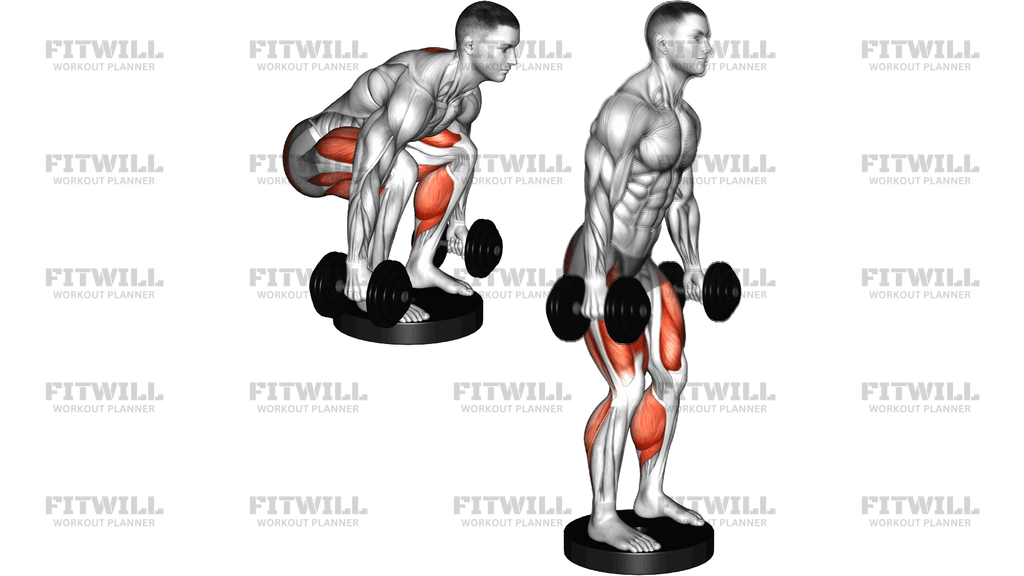
Dumbbell Jefferson Curl is a slow loaded forward roll through the spine and hips, performed with a dumbbell in each hand while you stand on a stable surface and lower under control. It is used to build posterior-chain mobility, segmental spinal control, and hamstring length under load rather than chasing a big stretch with loose form.
The movement asks the body to flex one section at a time instead of collapsing all at once. As you round forward and then stack back to standing, the hamstrings, glutes, spinal erectors, abdominals, and grip all contribute to a clean rep. That makes the exercise useful when you want mobility work that still feels like training.
The setup matters because the dumbbells hang close to the legs and the balance demand increases quickly as you lower. Stand hip-width with soft knees, tall posture, and the weight centered over the midfoot before you begin. If the load pulls you forward, the feet shift, or the knees lock hard, the range is usually too aggressive for the weight you chose.
On the way down, let the chin tuck slightly and roll the spine forward in a smooth sequence from the upper back through the mid-back and hips. Keep the dumbbells close to the thighs and shins, and stop before the position turns into a sharp lumbar collapse or an unstable reach. The return should be just as deliberate: reverse the curve, keep tension through the abdomen and hamstrings, and stand back up one segment at a time.
Dumbbell Jefferson Curl works well as accessory work after a warm-up, especially on lower-body days or sessions focused on mobility, hamstring control, or posture under load. It should feel precise, not rushed, and the best sets usually come from light to moderate resistance, slow tempos, and repeatable range. If you feel pinching in the low back or lose control of the descent, reduce the load or shorten the range before continuing.
[ Workout Log & Planner ]
Put your next workout in Fitwill
Keep your plan and training log ready when you are.


Instructions
- Stand on a low, stable surface or flat floor with feet about hip-width apart and a dumbbell in each hand at your sides.
- Keep your knees softly bent, your arms long, and your weight balanced over the midfoot before you start the descent.
- Take a breath and brace your trunk, then tuck your chin slightly to begin the fold.
- Roll forward one section at a time, starting with the upper back, then the mid-back, then the hips.
- Let the dumbbells slide close to your thighs and shins as you lower, without letting them swing away from the body.
- Descend only as far as you can keep the curve smooth and controlled without a sharp pinch in the low back.
- Reverse the motion by stacking the spine back up in the same controlled sequence until you are tall again.
- Exhale near the top, reset your stance, and repeat for the planned reps.
Tips & Tricks
- Start very light; this exercise rewards control far more than heavy loading.
- Keep the dumbbells brushing close to the legs so they do not pull you forward.
- A low step can help you find more range, but only if balance stays solid.
- Do not lock the knees; a soft bend keeps the hamstrings and spine easier to manage.
- Move slowly enough that each vertebra can feel like it is contributing to the curl.
- Stop the descent when the pelvis tucks hard or the low back starts to collapse.
- Use a calm exhale as you reverse the rep so the trunk stays organized.
- If your heels shift or the weights swing, the set is too heavy or too fast.
- Treat the return to standing as a control drill, not a yank from the hips.
- Finish the set before your posture gets sloppy; this movement is not worth grinding.
Frequently Asked Questions
What does a Dumbbell Jefferson Curl train?
It emphasizes hamstring length under load, spinal control, glutes, erectors, and trunk stability.
Is this more of a stretch or a strength exercise?
It is both, but the dumbbells make it a loaded control drill rather than a passive stretch.
Do I need to stand on a step or box?
No, but a low platform can give you more room if the dumbbells would otherwise hit the floor too early.
How low should I go?
Lower only as far as you can keep the curve smooth, the dumbbells close, and the balance steady.
Should my knees stay straight?
Keep them softly bent. Locked knees usually make the descent harsher and less controlled.
What is the most common mistake?
Most lifters go too heavy and collapse forward instead of rolling down and back up with control.
Can beginners use this exercise?
Yes, if they start very light and shorten the range until they can reverse the rep cleanly.
When is the best time to program it?
Use it after you are warm, usually as accessory work or mobility-focused training.