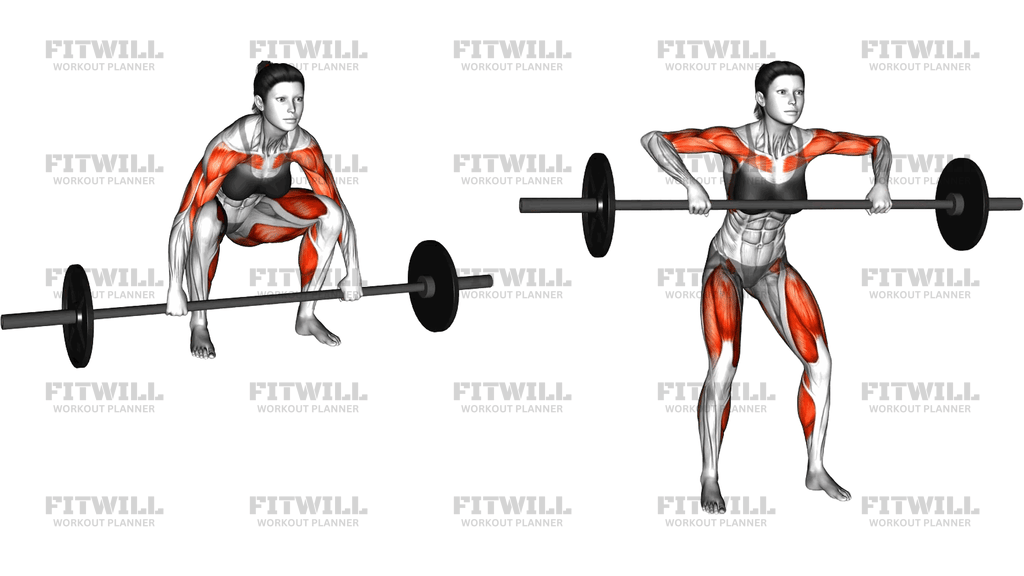
Barbell Standing Snatch-Grip Shrug
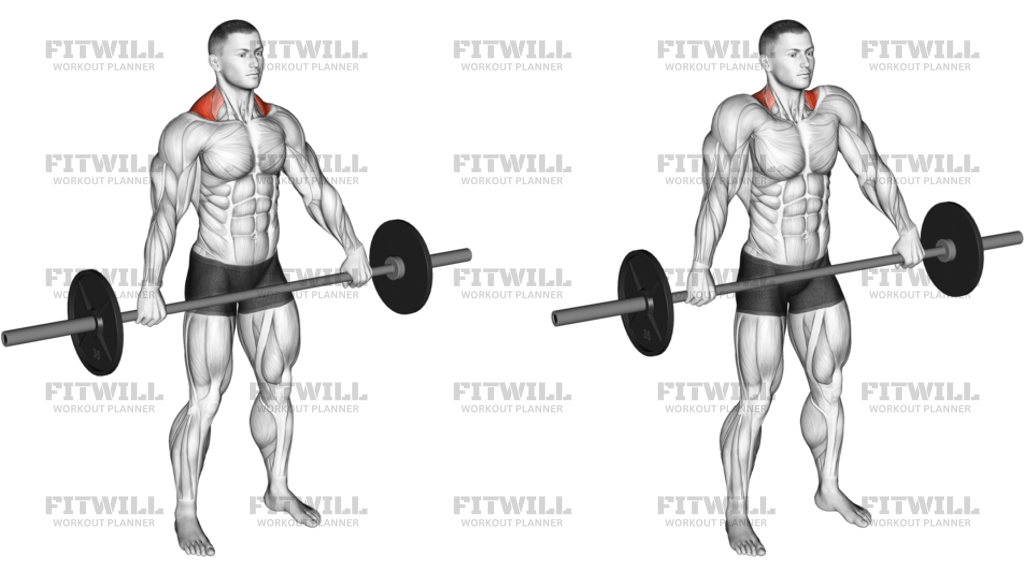
Barbell Standing Snatch-Grip Shrug is a standing barbell shrug performed with a very wide snatch-style grip and the bar held in front of the thighs. The wide hand position shortens the arm leverage and changes how the upper back has to stabilize the bar, making this a useful variation when you want strict trap work without turning the set into a row or an upright pull.
This exercise is most commonly used to build the upper trapezius and the postural strength needed to keep the shoulders organized under load. Because the arms stay straight, the movement should come from lifting the shoulders straight up, not from bending the elbows, leaning back, or bouncing through the legs. The image shows a tall stance with the bar resting at thigh level, which is the safest and most repeatable starting point for clean reps.
The setup matters. Stand with your feet about hip-width apart, grip the bar wider than shoulder width, and let it hang against the front of the thighs with the chest tall and the ribs stacked over the pelvis. Before each rep, settle the shoulders down just enough to start from a controlled base, then shrug vertically until the traps are fully shortened. At the top, the bar should rise mainly from shoulder elevation, not from a jump or a body swing.
A good set is smooth, brief at the top, and controlled on the way down. Exhale as you shrug, then let the shoulders lower under control until the traps are stretched again. Keep the neck long, the arms straight, and the bar close to the body path shown in the image. This variation fits well as an accessory lift after pulls, deadlift work, or overhead training when you want direct upper-trap loading without complex technique.
Use conservative loading and stop the set when the shrug height starts to shorten or the torso begins to sway. If the bar drifts forward, the elbows bend, or the lower back takes over, the set has become too heavy or too fast. With strict reps and a stable stance, this movement gives you a clean way to train trap elevation, grip control, and upper-back rigidity together.
[ Workout Log & Planner ]
Put your next workout in Fitwill
Keep your plan and training log ready when you are.


Instructions
- Stand tall with the barbell in front of your thighs and take a snatch-width grip so your hands are well outside shoulder width.
- Place your feet about hip-width apart, keep your knees soft but straight enough that the legs do not turn the movement into a dip-and-drive.
- Let the bar settle against the front of the thighs, chest lifted, ribs stacked, neck long, and arms fully straight.
- Take a breath and brace your torso before the first rep so the torso stays vertical while the shoulders do the work.
- Shrug the shoulders straight up toward your ears without bending the elbows or leaning back.
- Keep the bar close to the same vertical line as it travels and avoid letting it swing forward away from the body.
- Squeeze briefly at the top of the shrug, then lower the shoulders under control until they reach the starting hang.
- Repeat for the planned reps, keeping every repetition crisp and symmetrical.
- Finish by lowering the bar fully under control and resetting your stance before setting it down.
Tips & Tricks
- A true snatch grip is wide enough that the bar sits lower in the hands than on a normal shrug, so do not narrow it just to make the lift feel easier.
- Think "shoulders up" rather than "pull with the arms"; if the elbows bend, the set is turning into a different lift.
- Keep the bar brushing the front of the thighs instead of drifting away in front of you, which usually means the torso is leaning back.
- Use a controlled pause at the top, but do not roll the shoulders in circles; the lift should be straight up and straight down.
- If the neck tenses up, relax the jaw and keep the head stacked over the ribcage instead of craning forward.
- Choose a load that still gives you visible shoulder elevation on every rep; partial shrugs from an overloaded bar are not the goal.
- Lower the bar slowly enough to feel the traps lengthen, since the eccentric phase is where many people rush and lose position.
- Stop the set when you have to bounce through the knees or hitch the torso to finish the shrug.
Frequently Asked Questions
What muscles does the Barbell Standing Snatch-Grip Shrug train most?
It primarily targets the upper trapezius, with the upper back and grip muscles working to stabilize the bar.
Why use a snatch-width grip instead of a normal shrug grip?
The wider grip changes the leverage and keeps the lift honest, making it a strict trap-focused variation rather than a heavier-looking but looser shrug.
Should my elbows bend during the rep?
No. Keep the arms straight so the shoulders elevate the bar instead of turning the exercise into a row or upright pull.
How high should I shrug the bar?
Lift the shoulders as high as you can without leaning back or bouncing. The goal is a vertical shrug, not a full-body heave.
Is this a good beginner exercise?
Yes, if you keep the load light and learn the straight-up shrug pattern first. Beginners should avoid turning it into a fast power movement.
Where should the bar stay during the lift?
It should stay close to the front of the thighs and follow a short vertical path. If it swings forward, the setup or load needs to be adjusted.
What is the most common mistake with this exercise?
Using too much weight and turning the shrug into a knee dip, torso lean, or arm pull instead of pure shoulder elevation.
When does this fit best in a workout?
It works well as accessory work after deadlifts, pulls, or overhead training when you want direct upper-trap loading without complex technique.