Glute Ham Raise With Extended Arms
Glute Ham Raise With Extended Arms is a bodyweight posterior-chain exercise performed on a glute-ham developer, with the ankles anchored and the torso moving from a long, horizontal position up toward a tall finish. The extended arms make the movement feel longer and harder because they shift your center of mass farther from the machine, so every rep demands more control from the hamstrings, glutes, and trunk.
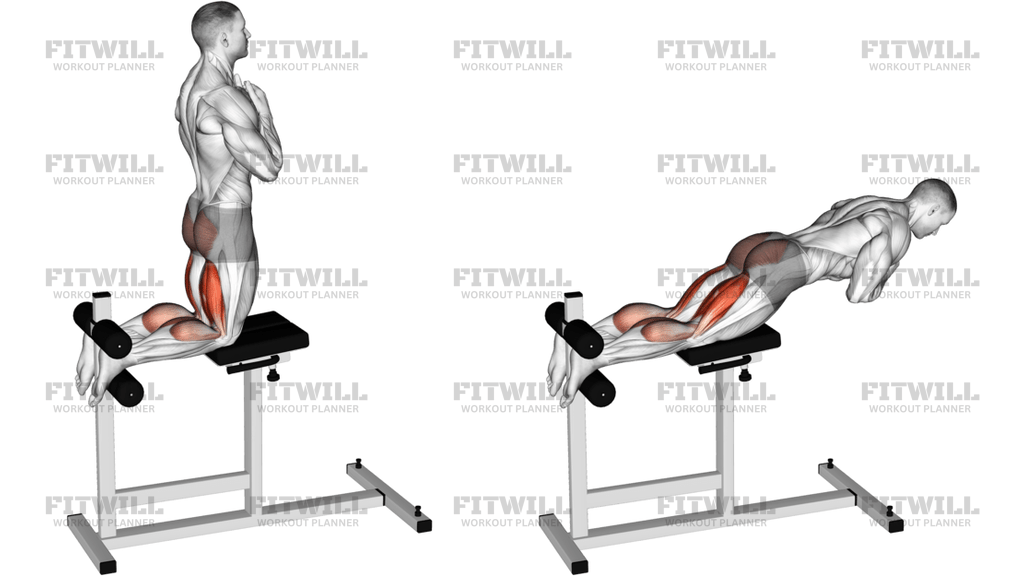
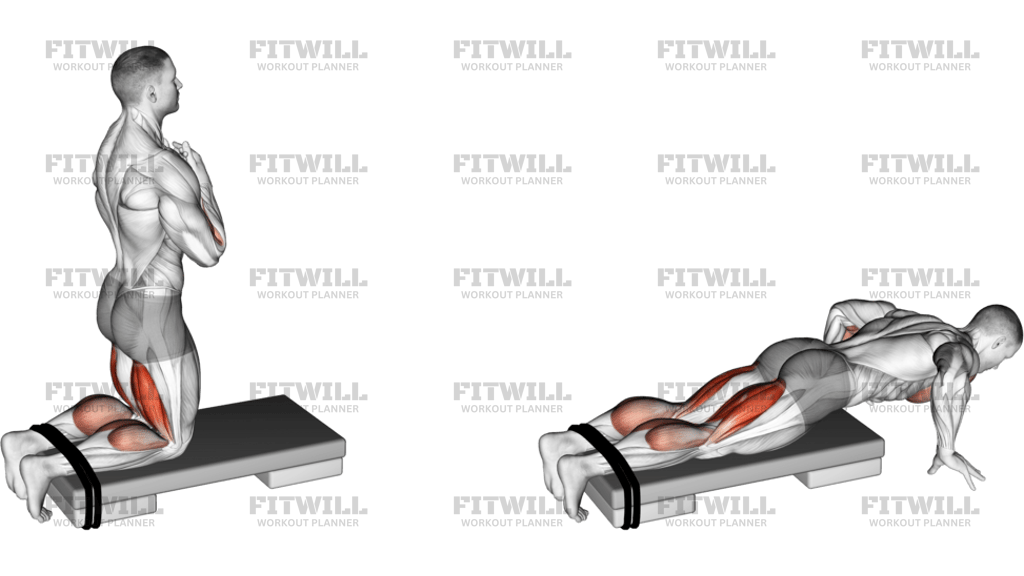
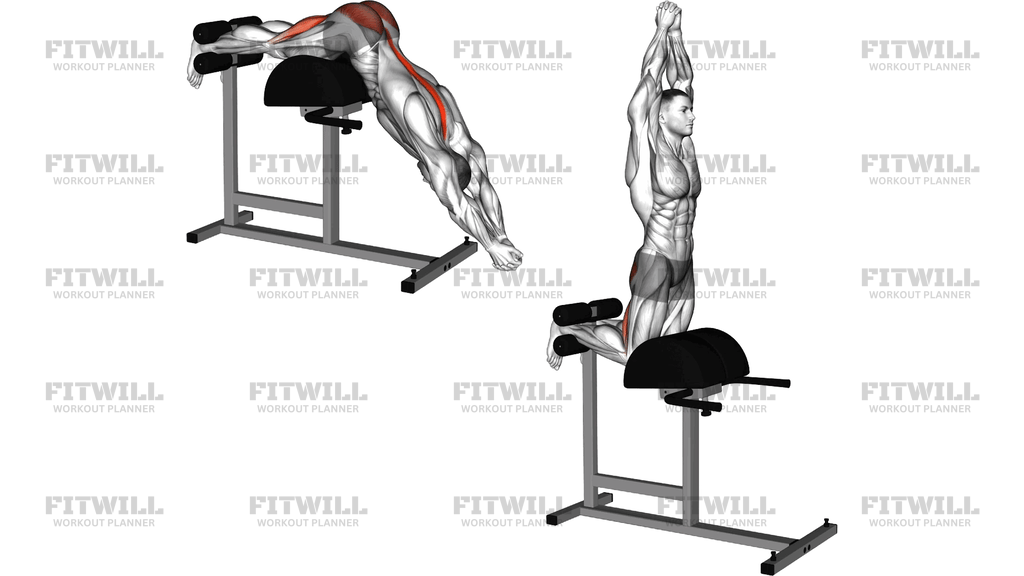
The exercise is most useful when you want a strict hamstring and glute movement that is harder to cheat than a regular back extension. The image shows the body supported at the lower legs while the hips stay on the pad, which is the key setup: if the knees slide out of position or the hips drift off the pad, the rep turns into a loose swing instead of a controlled raise. The goal is to keep tension on the back of the legs while the torso stays organized.
Because the arms are reaching overhead, the lever is longer and the start position is more demanding. That makes body position important from the first second. Lock the ankles in place, place the thighs and hips on the pad so you can hinge without collapsing, and keep the ribcage stacked so the lower back does not take over. The movement should feel like a strong pull from the hamstrings as you bring the torso up, not like you are throwing the chest upward.
On the way up, drive through the hamstrings and glutes until the body is tall and aligned with the pad, then pause briefly if your setup stays clean. On the way down, resist the descent instead of dropping back into the bottom. The eccentric portion is where this exercise is usually most effective, and it is also where loss of control shows up first. Smooth breathing helps you keep the trunk braced without overextending the neck or lower back.
Use this exercise as a strength accessory, posterior-chain builder, or advanced bodyweight hinge pattern when you can keep the machine setup consistent rep to rep. It is not a place for fast, sloppy repetitions. If you cannot keep the hips planted, the neck neutral, and the body moving in one controlled line, shorten the range and clean up the setup before chasing more reps.
Fitwill
Log Workouts, Track Progress & Build Strength.
Achieve more with Fitwill: explore over 9600 exercises with images and videos, access built-in and custom workouts, perfect for both gym and home sessions, and see real results.
Start your journey. Download today!




Instructions
- Set the glute-ham developer so your ankles are secured under the rollers and your thighs rest on the pad without your hips hanging off the front.
- Start with your body fully extended and nearly horizontal, arms reaching straight overhead to lengthen the lever.
- Brace your trunk, keep your ribs down, and maintain a long line from head to heels before you move.
- Drive through your hamstrings and glutes to raise your torso toward upright while keeping the hips in contact with the pad.
- Keep the movement smooth and avoid snapping your lower back or throwing your chest upward to finish the rep.
- At the top, finish tall with the body controlled and the neck neutral rather than cranking the head back.
- Lower yourself slowly from the top until your torso returns to the horizontal start position under tension.
- Inhale on the way down if that helps you stay braced, then exhale as you raise back up.
- Repeat for the planned number of repetitions and reset the ankles if your position starts to shift.
Tips & Tricks
- Keep your hips on the pad; if they slide forward, the rep turns into a swing instead of a hamstring raise.
- The extended-arm version is harder than a hands-by-the-chest version, so start with fewer reps than you would use on a regular GHR.
- Think about pulling your heels back into the rollers as you rise; that cue helps the hamstrings stay engaged.
- Do not let the low back arch to finish the rep. A clean lockout is tall and stacked, not hyperextended.
- Lowering slowly matters more here than chasing speed on the way up, because the eccentric work is the main training stimulus.
- Keep the chin slightly tucked so the neck does not lead the movement.
- If you cannot control the bottom position, shorten the range and stop before you collapse into the pad.
- Use this as a high-quality strength accessory, not a high-rep burnout, because form breaks down quickly when fatigue builds.
Frequently Asked Questions
What muscles does Glute Ham Raise With Extended Arms train most?
It mainly challenges the hamstrings and glutes, with the trunk and upper body working hard to keep the long lever under control.
Why are the arms extended overhead in this version?
The overhead reach lengthens the body lever and makes the exercise harder, so the hamstrings and glutes have to work against more torque.
How should my body be positioned on the machine?
Your ankles should be locked under the rollers and your thighs supported on the pad so the hips can hinge without sliding forward.
Should I let my hips come off the pad at the top?
No. Keep the hips in contact with the pad as much as possible so the movement stays anchored and the lower back does not take over.
Is this exercise beginner friendly?
Only if you can control the machine and range well. Most beginners need a shortened range or an assisted regression before using the full extended-arm version.
What is the most common mistake on this movement?
People usually rush the descent, arch the lower back to finish, or lose position at the ankles once fatigue builds.
How should I breathe during reps?
Stay braced, breathe in as you lower if that helps maintain position, and exhale as you drive back up.
What can I do if I cannot control the full range?
Shorten the bottom range, slow the lowering phase, or use a less demanding variation until you can keep the torso and hips aligned.