Alternate High Hop
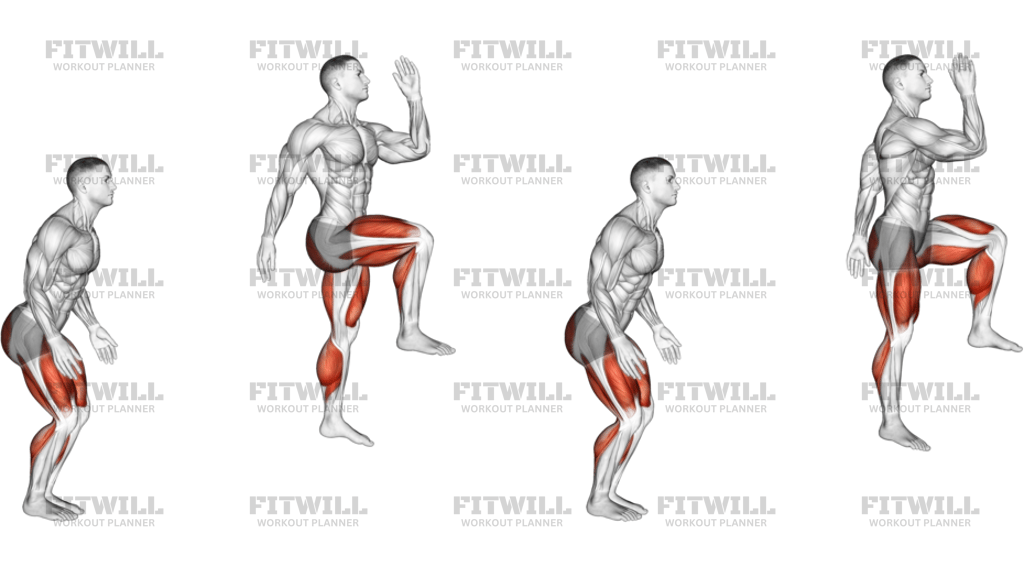
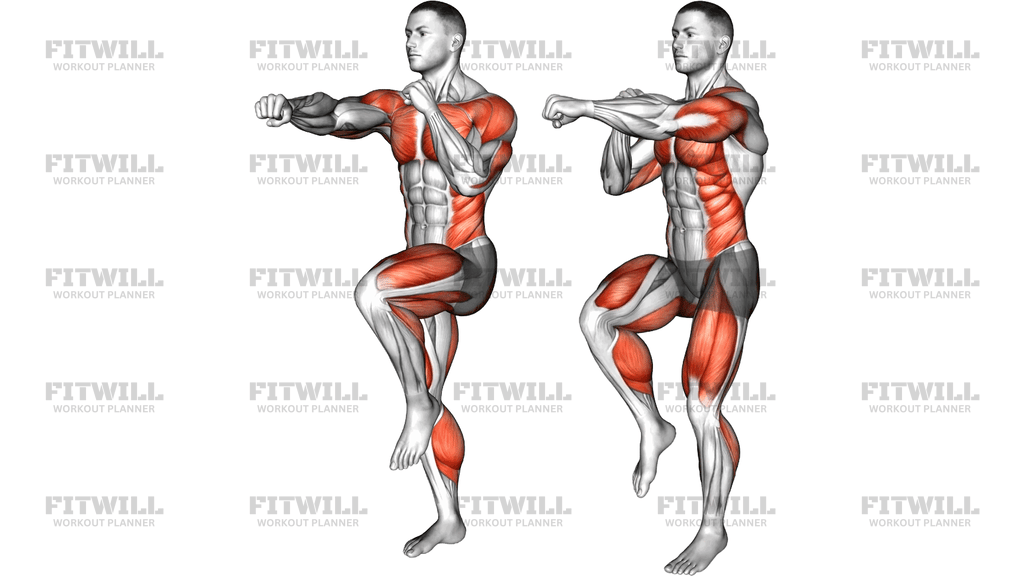
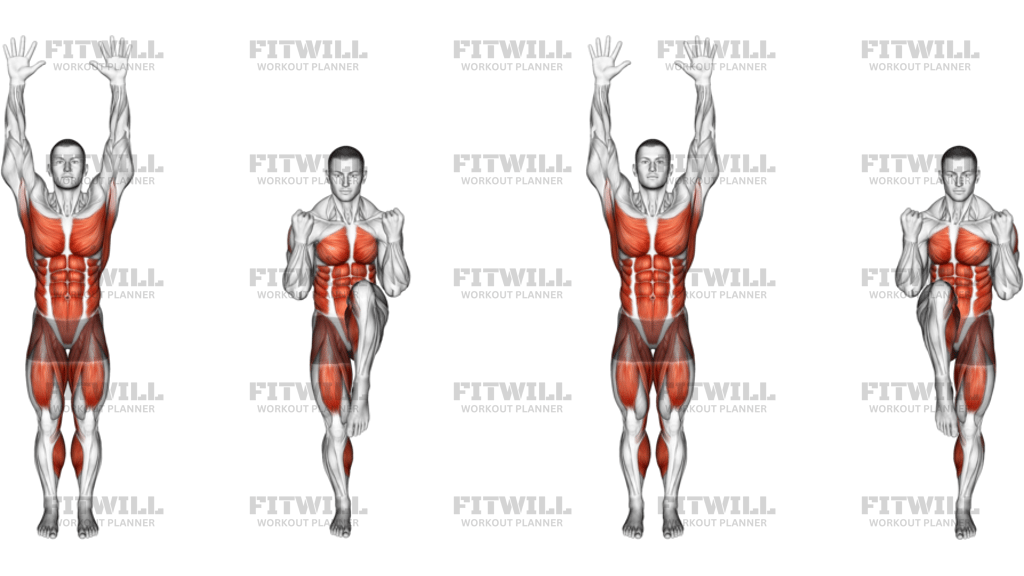
Alternate High Hop is a bodyweight plyometric drill built around quick alternating hops and a strong knee drive. Each rep asks you to leave the floor lightly, switch sides in the air, and land in a controlled athletic stance before repeating on the other leg. The exercise looks simple, but the real training effect comes from staying springy without losing balance, trunk position, or rhythm.
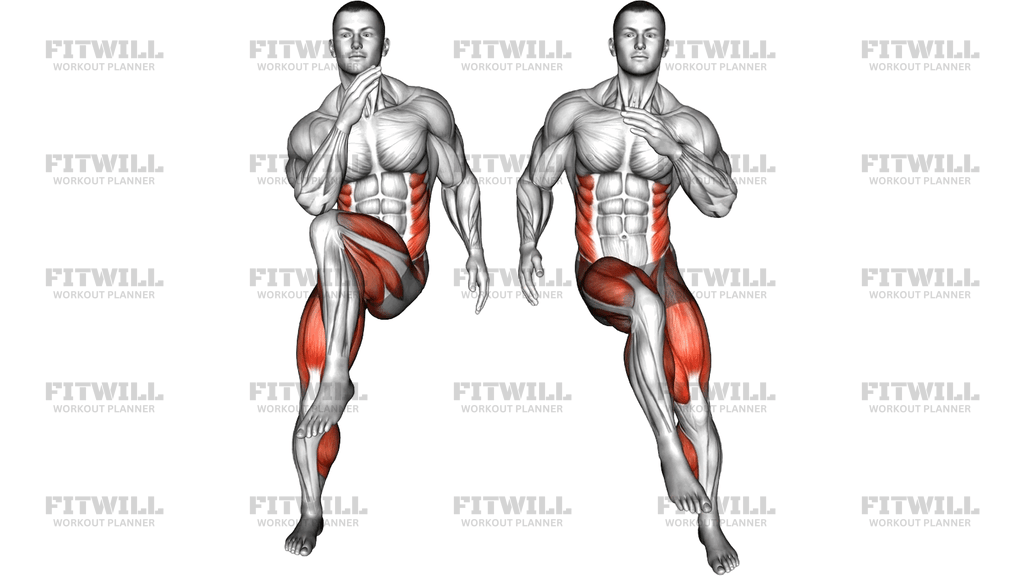
This movement emphasizes the lower body in a single-leg pattern, with the calves, quads, glutes, hip flexors, and core all contributing to the hop and landing. Because one knee is driving upward while the other leg absorbs force, the drill also challenges coordination and side-to-side control. That makes Alternate High Hop useful for athletes and general trainees who want a more elastic, reactive lower-body pattern than a standard squat or march.
The setup matters because the quality of the landing decides whether the drill builds power or just turns into noisy bouncing. Start on a flat surface with enough room to hop in place, keep your chest tall, and let the arms move naturally to match the alternating knee drive. A compact torso, a stacked ribcage and pelvis, and a soft forefoot landing help you stay quick without collapsing into the hips or knees.
On each rep, drive one knee up as the opposite foot pushes the floor away, then switch legs as soon as you land. The goal is a crisp takeoff and a short, controlled contact, not a maximal jump. If the hop gets too high, the landing will slow down and the drill will stop feeling reactive; if it gets too low, you lose the athletic intent and turn it into a shuffle.
Alternate High Hop fits well in a warm-up, plyometric block, or conditioning session when you want to wake up the ankles and hips before heavier work. Keep the volume modest and the quality high, especially on hard floors or when fatigue starts to flatten the hop. If your landings get loud, your knees cave inward, or your torso starts drifting, reduce the height and reset before continuing.
[ Workout Log & Planner ]
Put your next workout in Fitwill
Keep your plan and training log ready when you are.


Instructions
- Stand on a flat, non-slip surface with your feet about hip-width apart, arms bent, and your weight centered over the balls of your feet.
- Set your chest tall, keep your ribs stacked over your pelvis, and soften your knees into a small athletic dip.
- Load one leg and drive the opposite knee up toward hip height while the arm on that side swings forward.
- Push the floor away with the standing foot so you hop upward and switch legs in the air.
- Land softly on the ball of the opposite foot with the knee slightly bent and the hip under control.
- Immediately drive the new free knee upward and repeat the hop on the other side.
- Keep the hops quick and light, using a short ground contact instead of a long pause between reps.
- Maintain a steady breathing rhythm and stop the set if the landings become loud or unstable.
- Step down to both feet and regain balance before ending the set.
Tips & Tricks
- Think of this as a quick rebound drill, not a max-height jump. Higher hops usually make the landing sloppy.
- Let the opposite arm drive forward with the knee so the torso stays balanced instead of twisting.
- Land under your hips, not out in front of you. Overstriding turns the hop into a braking step.
- Keep the knee of the landing leg tracking in line with the second toe so the ankle and knee absorb force evenly.
- If the floor gets noisy, lower the hop height and shorten the airtime until the contacts sound quiet again.
- Stay on the forefoot through most of the drill and only let the heel kiss down if you need it for balance.
- Use a small number of high-quality reps; once the rhythm slows, the plyometric benefit drops quickly.
- Start with marching high knees if you cannot keep the alternating hop smooth or symmetrical.
Frequently Asked Questions
What muscles does Alternate High Hop work?
It mainly trains the calves, quads, glutes, and hip flexors, with the core helping you stay upright and balanced during each landing.
Is Alternate High Hop more of a cardio drill or a strength drill?
It is a plyometric conditioning drill with a power focus. The repeated hops raise your heart rate, but the real goal is quick, controlled force production.
How high should I hop during Alternate High Hop?
Only high enough to switch legs cleanly and land softly. The best reps are quick and springy, not big jumps.
Can beginners do Alternate High Hop safely?
Yes, if they start with a small hop or even a marching knee drive first. Beginners should keep the amplitude low until they can land quietly and stay balanced.
How is Alternate High Hop different from high knees?
High knees are usually a fast run-in-place pattern. Alternate High Hop adds a clearer takeoff and landing on one leg before you switch to the other side.
Should my foot land flat during Alternate High Hop?
No, aim to land softly on the forefoot first with a small knee bend. Let the heel settle only if you need it for balance and control.
Can I travel forward with Alternate High Hop?
You can, but the in-place version is easier to control and is usually the better starting point. Add forward travel only after your landings stay quiet and stable.
What should I do if my knees cave inward or the hops feel heavy?
Reduce the hop height, slow the pace slightly, and make sure your knee tracks over the middle toes on each landing. If that still feels unstable, switch to the marching version for a few sets.