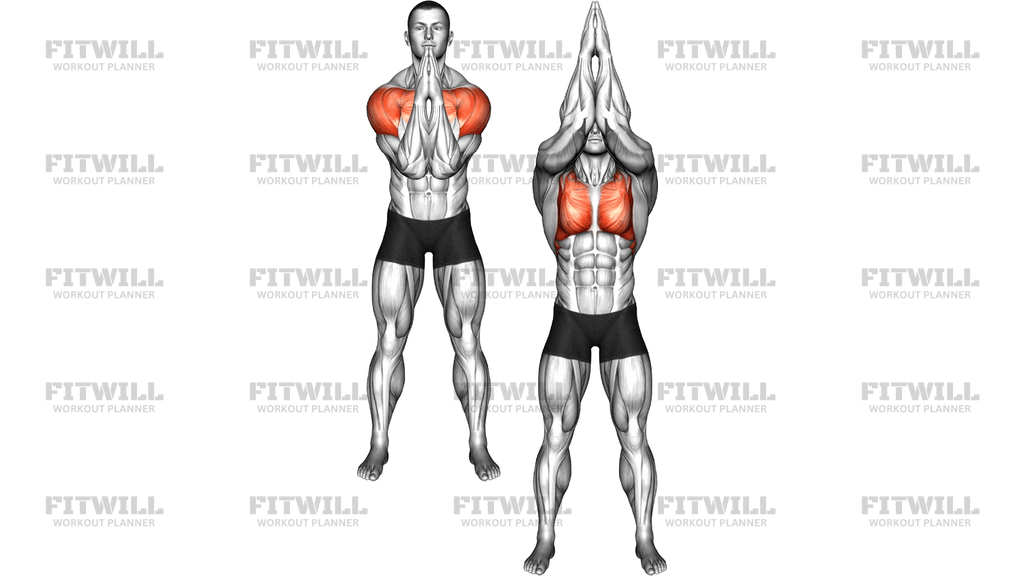
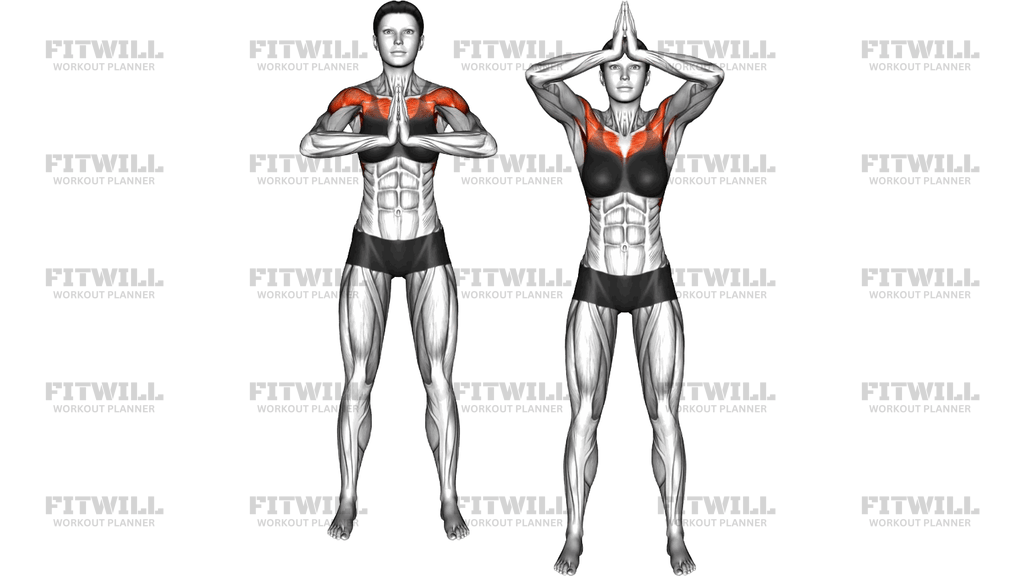
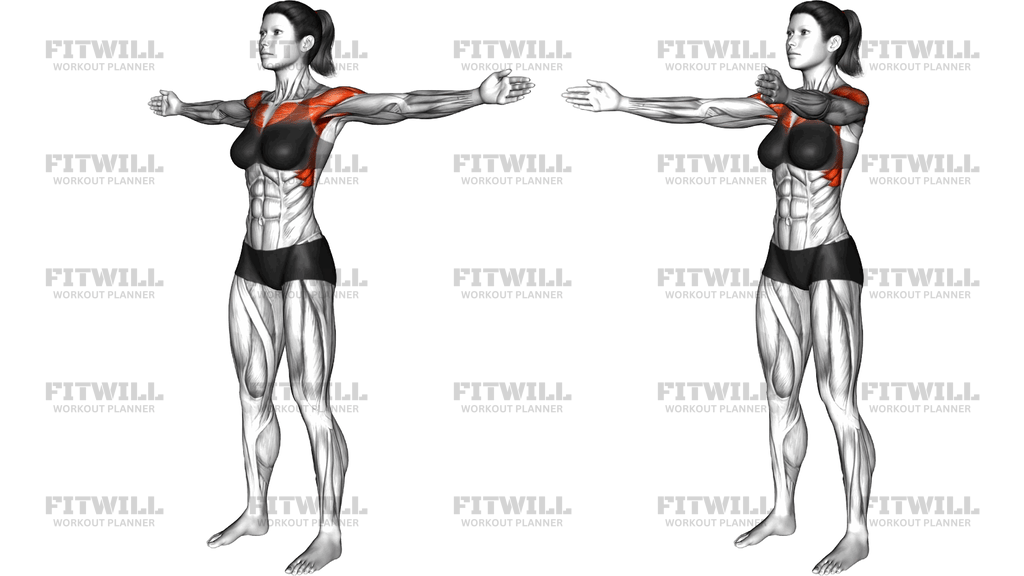
Chest Out Hands Behind Hold
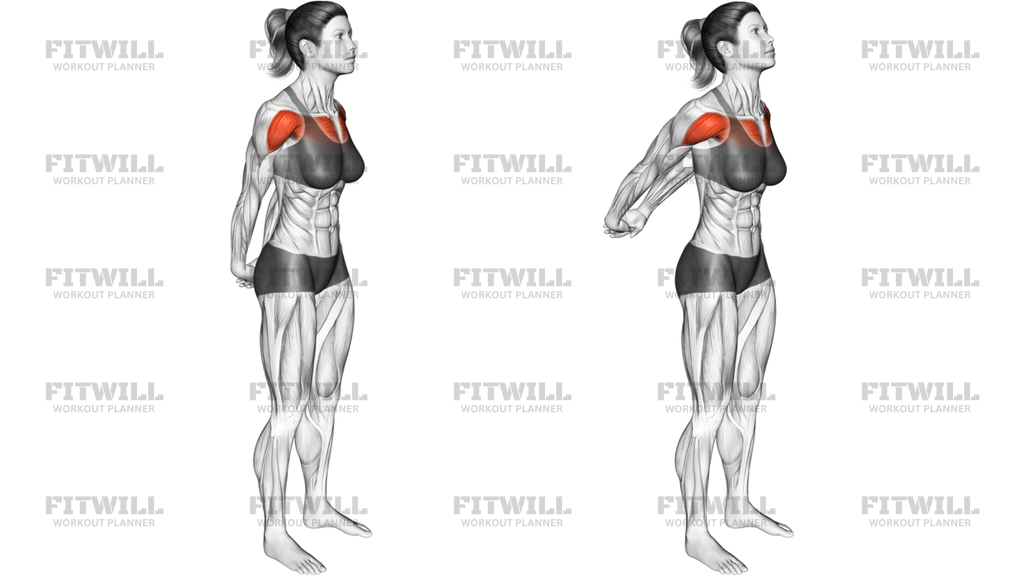
Chest Out Hands Behind Hold is a standing posture drill that opens the front of the body while teaching you to keep the shoulders set back and down. It is less about moving a weight and more about holding a strong alignment: tall spine, lifted sternum, long neck, and hands taken behind the body without shrugging.
The exercise places the greatest emphasis on the front of the shoulders and the chest, with the upper back, traps, and arms helping hold the position cleanly. Because the arms stay behind the torso, the position also highlights how much control you have through the shoulder girdle and how well you can keep the ribs from flaring as you breathe.
A good hold starts by standing evenly on both feet and lengthening through the crown of the head before the arms move back. From there, the shoulders should gently retract and depress so the chest can open without the neck tensing up. If the hands are clasped, keep the grip light and let the posture do the work instead of forcing the shoulders into an aggressive crank.
This is useful as a warm-up, a posture reset between harder sets, or a controlled accessory drill when you want to reinforce better upper-body positioning. It can also help lifters who spend a lot of time pressing, typing, or rounding forward understand what a more open chest and stacked torso feel like. The hold should feel active but not sharp, and the range should stay within what your shoulders can own comfortably.
The key is to keep the ribs down, the chin relaxed, and the shoulder blades controlled while you breathe steadily. You are training position, not speed, so the quality of the hold matters more than how far the arms drift behind you. If the shoulders pinch, shorten the reach behind the body and use a smaller chest lift rather than pushing deeper into discomfort.
[ Workout Log & Planner ]
Put your next workout in Fitwill
Keep your plan and training log ready when you are.


Instructions
- Stand tall with your feet about hip-width apart and your weight balanced evenly across both feet.
- Keep your chin level, lengthen your neck, and lift your sternum without leaning backward.
- Take both arms behind your hips and lightly clasp your hands or hold the wrists just behind the glutes.
- Roll your shoulders back and slightly down so the chest opens without shrugging toward the ears.
- Squeeze your shoulder blades together just enough to feel the front of the shoulders and chest open.
- Hold the top position while breathing slowly through the nose and keeping the ribs from flaring up.
- Keep the arms long and still, and avoid arching the lower back to force a bigger chest lift.
- Stay in the hold for the planned time or breath count with steady tension through the upper back and shoulders.
- Release the hands slowly, let the shoulders come forward under control, and reset your stance before repeating.
Tips & Tricks
- Keep the hands low behind the hips; reaching too far back usually forces the shoulders forward and makes the hold feel jammed.
- Think about lifting the breastbone, not throwing the ribs forward. The hold should open the chest without a hard low-back arch.
- If the neck tightens, soften the chin and let the shoulder blades settle instead of trying to pin them harder together.
- A light clasp is enough. Squeezing the hands too hard often creates unnecessary tension through the forearms and upper traps.
- Breathe slowly into the sides of the rib cage so the torso stays stacked while the chest stays open.
- If one shoulder sits higher than the other, reset the shoulders before starting the hold instead of fighting through the imbalance.
- Shorter holds with perfect posture are better than long holds where the ribs flare and the shoulders creep up.
- Stop the set if the front of the shoulder feels pinchy; this drill should feel like controlled opening, not joint compression.
Frequently Asked Questions
What does Chest Out Hands Behind Hold work most?
It mainly trains the front of the shoulders and chest while the upper back helps keep the posture open and controlled.
Is Chest Out Hands Behind Hold a stretch or a strength exercise?
It behaves more like a postural isometric and chest-opening drill than a load-based strength exercise.
How far should my hands go behind my body?
Only far enough to keep the shoulders down and the chest open. If your lower back arches or the shoulders pinch, the hands are too far back.
Should I squeeze my shoulder blades together hard?
No. A gentle retraction is enough; over-squeezing can jam the neck and turn the hold into an upper-trap shrug.
Can beginners do Chest Out Hands Behind Hold?
Yes, as long as the range stays comfortable and the hold is short. Beginners should prioritize a tall spine and relaxed breathing over a big shoulder stretch.
What should I do if my shoulders feel tight in this hold?
Shorten the reach behind your body, soften the clasp, and lift the sternum less aggressively. The hold should open the front of the body without forcing the shoulder joints.
Where does this fit in a workout?
It works well as a warm-up, a posture reset between pressing sets, or a light accessory drill after upper-body training.
What is the most common mistake in Chest Out Hands Behind Hold?
The biggest mistake is flaring the ribs and arching the lower back to fake a bigger chest position.