Seated Sky Look
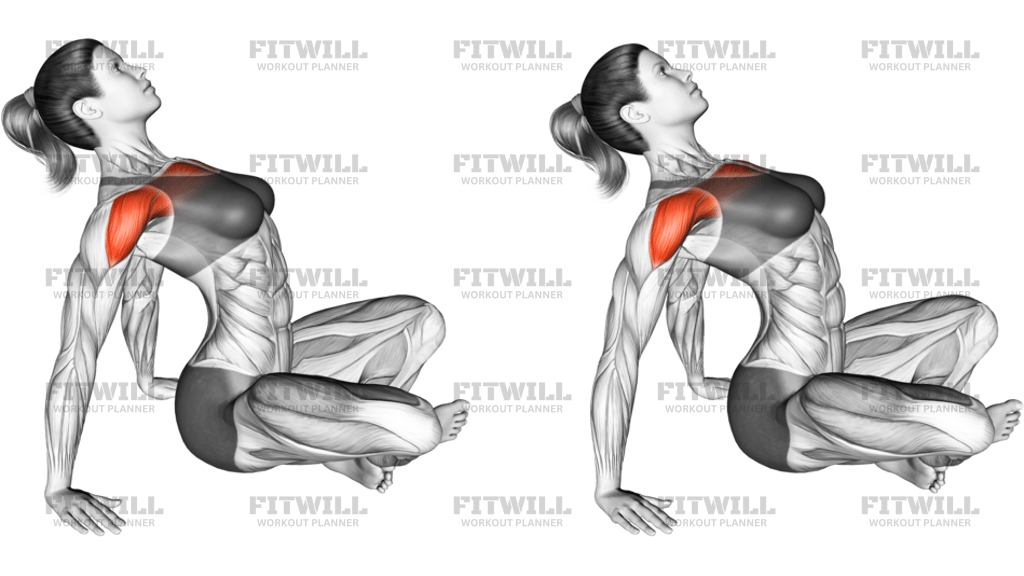
Seated Sky Look is a floor-supported body-weight drill that opens the chest, challenges shoulder position, and asks the upper body to hold an extended posture without collapsing into the hands. The image shows a seated, hands-behind support with the torso lifted and the head angled back toward the ceiling, so this movement is best understood as a controlled posture and mobility exercise rather than a high-force press.
The main emphasis is on the deltoids, especially the front and side of the shoulders, because they help stabilize the arm position while the chest stays open. The traps, rhomboids, and triceps assist by keeping the shoulder girdle organized and the arms firm against the floor. In practical terms, the exercise trains you to support the torso, keep the collarbones broad, and maintain a calm breathing pattern while the chest and shoulders are under an opening stretch.
Setup matters more than effort here. Sit on the floor with the hands placed slightly behind the hips, palms down, and the fingers turned to a comfortable angle that does not irritate the wrists. Keep the knees bent or crossed as shown, press the hands and sit bones into the floor, and lengthen the spine before you lean the chest upward. The goal is not to jam the low back or throw the head back; it is to create a clean, supported opening through the front of the body.
Each repetition should feel like a deliberate reset of posture. Lift through the sternum, keep the shoulders from shrugging into the ears, and let the gaze rise only as far as the neck can stay comfortable. If the position is dynamic, return to a tall seated support before opening again. If it is being used as a hold, keep tension through the hands and upper back while breathing slowly and evenly. The range of motion should stay pain-free and controlled from the first rep to the last.
This exercise fits well in a warm-up, mobility block, or cool-down when you want to open the chest after pressing work, desk posture, or repeated overhead training. It can also help beginners learn how to support the torso with the shoulders without relying on momentum. Keep the effort smooth, the wrists comfortable, and the neck long. If the shoulders pinch or the low back takes over, reduce the lean and make the position smaller until the posture is stable.
[ Workout Log & Planner ]
Put your next workout in Fitwill
Keep your plan and training log ready when you are.


Instructions
- Sit on the floor with your hands slightly behind your hips and your knees bent or crossed as shown in the image.
- Place your palms flat with your fingers at a comfortable angle, then press your hands and sit bones into the floor for support.
- Lengthen your spine first so your chest can lift without dumping into the low back.
- Keep your shoulders down and back, then brace lightly through your midsection before you move.
- Lean the sternum upward and let your gaze travel toward the ceiling without forcing the neck.
- Pause in the open position for a short hold or a slow breath, keeping the shoulders controlled instead of shrugged.
- Return to the tall seated support with steady control if you are doing repetitions.
- Repeat for the planned time or reps, keeping each rep smooth and pain-free.
Tips & Tricks
- Turn the hands only as far as your wrists allow; if the palms feel cranky, angle the fingers out a little more.
- Keep pressure through the fingertips and heel of the palm so the support does not collapse into the wrists.
- The chest should rise before the head does; if you start by cranking the neck back, shorten the range.
- Do not let the shoulders shrug up toward the ears when you open the torso.
- Think about lifting the sternum between the collarbones instead of arching hard through the lower back.
- Use a slow inhale as you open and a longer exhale as you settle back into the support.
- If the position is used as a hold, stop well before the shoulder joint feels pinched or unstable.
- This is usually best as light technique or mobility work, not a heavy fatigue exercise.
Frequently Asked Questions
What does Seated Sky Look train most?
It mainly challenges the shoulders and upper body posture while opening the chest.
Is this more of a strength move or a mobility drill?
It is closer to a posture and mobility drill than a high-force strength exercise.
Where should my hands be in the seated setup?
Place them slightly behind the hips so the shoulders can support the torso without forcing the wrists.
How far back should I lean?
Only far enough to feel the chest open and the shoulders work without pinching the low back or neck.
Why are the shoulders and triceps listed if this is not a press?
They help stabilize the arms and support the torso while you hold the open seated position.
Can I do this if my wrists are sensitive?
Yes, but reduce the load on the hands, change the finger angle, or shorten the hold if the wrists complain.
What is the biggest form mistake with this exercise?
Forcing the head back before the chest lifts usually turns the drill into a neck crunch instead of an open posture position.
When should I use Seated Sky Look in a workout?
It fits well in a warm-up, mobility block, or cool-down after pressing and desk-posture work.