Seated Chest Clam
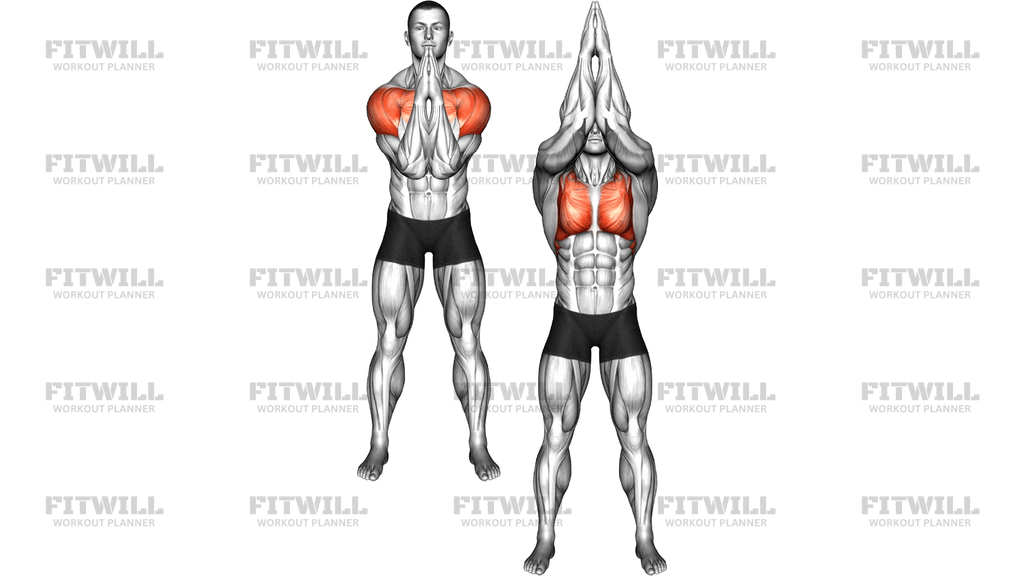
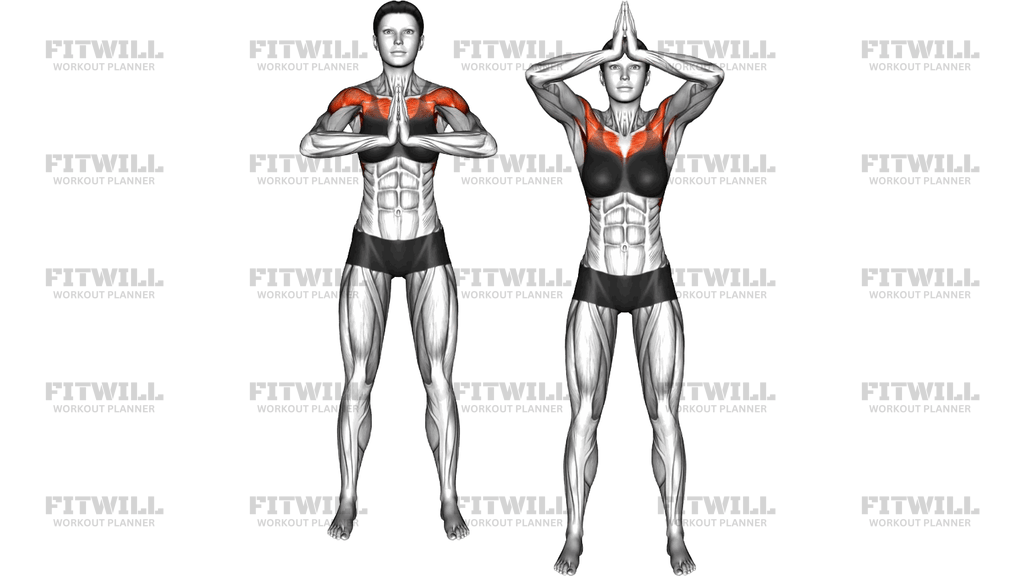
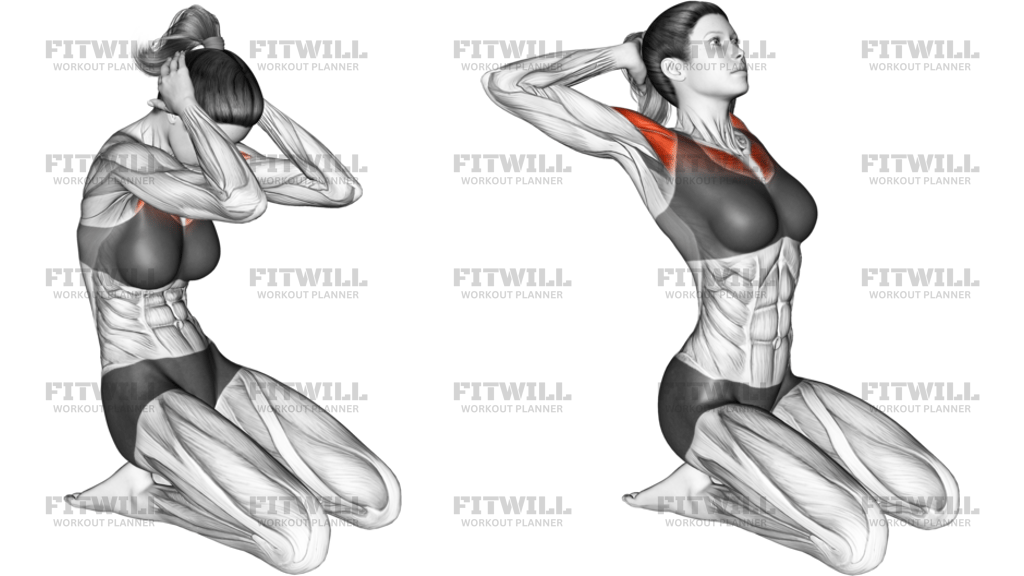
Seated Chest Clam is a bodyweight chest-and-shoulder opening drill built around a controlled elbow open-and-close pattern. The image shows a kneeling version of the movement, but the training idea is the same: stay tall through the torso, keep the hands lightly supporting the head, and let the chest open without turning the rep into a back bend.
The main emphasis is on the delts, with the upper chest, traps, rhomboids, and triceps helping control the position of the elbows and shoulder blades. In anatomy terms, the primary work centers on the Deltoids, with help from Trapezius, Rhomboids, and Triceps brachii. That makes the exercise useful when you want a low-load way to wake up the front of the shoulders while reinforcing cleaner upper-body posture.
Good reps start from a stable setup. Kneel or sit tall, stack the ribs over the pelvis, and keep the neck long before the elbows move. The opening phase should feel like the sternum is lifting and the upper arms are drawing wide, not like the lower back is taking over. If the shoulders shrug or the rib cage flares hard, the range is too big.
Use the pause at the open position to feel the chest and shoulder girdle settle, then close the elbows back under control and reset before the next rep. Smooth breathing matters more than speed: exhale as the chest opens, then inhale as the elbows return. The movement should stay quiet, deliberate, and pain-free from start to finish.
This drill fits best in a warm-up, mobility circuit, or pressing-prep block when you want better shoulder awareness and a little more control through the upper back. It is not meant to be a momentum exercise or a heavy strength lift. Use it to build repeatable movement quality, not to chase load or fatigue.
Fitwill
Log Workouts, Track Progress & Build Strength.
Achieve more with Fitwill: explore over 9600 exercises with images and videos, access built-in and custom workouts, perfect for both gym and home sessions, and see real results.
Start your journey. Download today!




Instructions
- Kneel on the floor with your shins down and sit tall over your hips, placing your hands lightly behind your head or at the sides of your head.
- Bring your elbows forward and narrow first, keeping your ribs stacked over your pelvis and your neck relaxed.
- Brace gently through your torso and lengthen through the crown of your head without leaning back.
- Open your elbows out to the sides while lifting your chest and letting the shoulder blades glide back.
- Stop when your chest feels open but your shoulders still feel settled, not jammed or shrugged.
- Hold the open position for a beat and exhale fully without losing torso position.
- Bring the elbows back in under control, returning to the narrow start shape without collapsing forward.
- Repeat for smooth reps with the same tempo and range each time.
Tips & Tricks
- Keep the motion in the shoulders and upper back instead of turning it into a lower-back arch.
- If your neck feels tense, soften the chin slightly and keep the hands light behind the head.
- Think about spreading the elbows wide rather than yanking them far behind the body.
- Keep the ribs stacked; if they flare, shorten the opening range.
- A brief pause in the open position helps you feel the chest and front shoulder working together.
- Move slowly enough that the shoulder blades can glide without bouncing.
- Use this as a warm-up drill, not a max-effort strength exercise.
- Stop immediately if you feel pinching at the front of either shoulder.
Frequently Asked Questions
What muscle does Seated Chest Clam target most?
The main emphasis is on the delts, with the upper chest and shoulder stabilizers helping control the opening pattern.
Can beginners perform this exercise?
Yes. It is a good low-load drill for beginners as long as the range stays small and the torso stays tall.
Is this exercise really seated?
The name says seated, but the image shows a kneeling version. The key idea is the same: an upright torso with the elbows opening and closing under control.
How far should my elbows open?
Open only as far as you can keep your chest lifted and your shoulders comfortable. Bigger is not better if the ribs flare or the neck tightens.
Should I feel my lower back working?
No. If the lower back takes over, you are leaning back or losing ribcage position.
What is the most common mistake?
The usual error is shrugging or arching the torso instead of letting the chest and shoulder girdle do the work.
Where should my hands go?
Place them lightly behind the head or beside the head so they guide the position without pulling on the neck.
When should I use this exercise?
It fits best in a warm-up, mobility circuit, or pressing-prep block before heavier upper-body work.