Bodyweight Forward Lunge Smaller Stance Upright Torso
Bodyweight Forward Lunge Smaller Stance Upright Torso is a single-leg bodyweight lunge variation that keeps the torso tall and the step short enough to load the front leg without turning the movement into a long-stride glute lunge. The shortened stance and upright chest shift more of the work toward the quads while still demanding balance, hip control, and clean foot pressure on both legs.
This variation is useful when you want a controlled lunge that teaches leg drive without a large forward lean. Because the torso stays upright, the front knee travels forward more than it would in a long step lunge, so the front foot, ankle, and knee need to stay organized as you descend and stand back up. That makes the exercise practical for general lower-body strength, accessory work, warmups, and movement prep before heavier split-squat or lunge training.
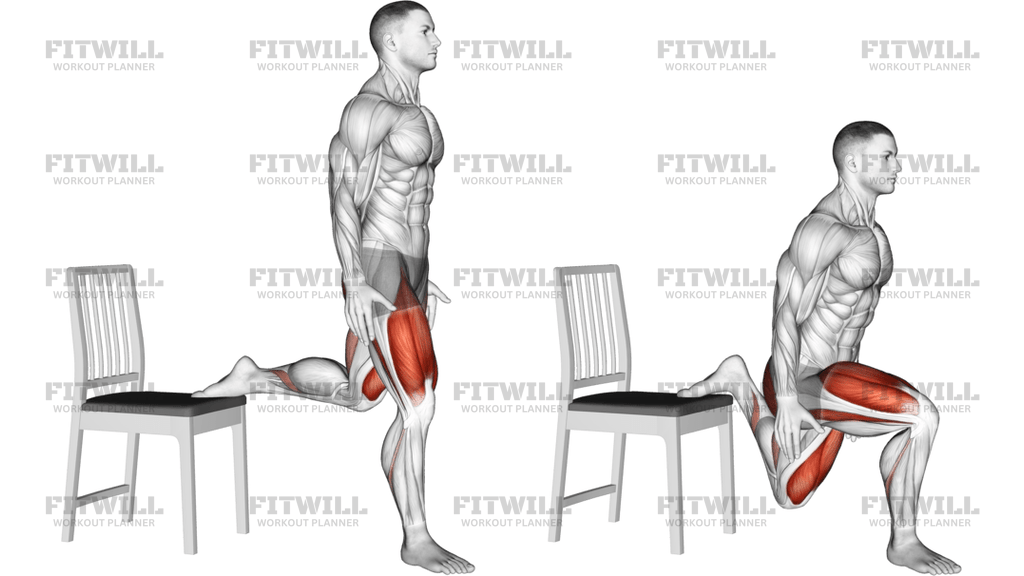
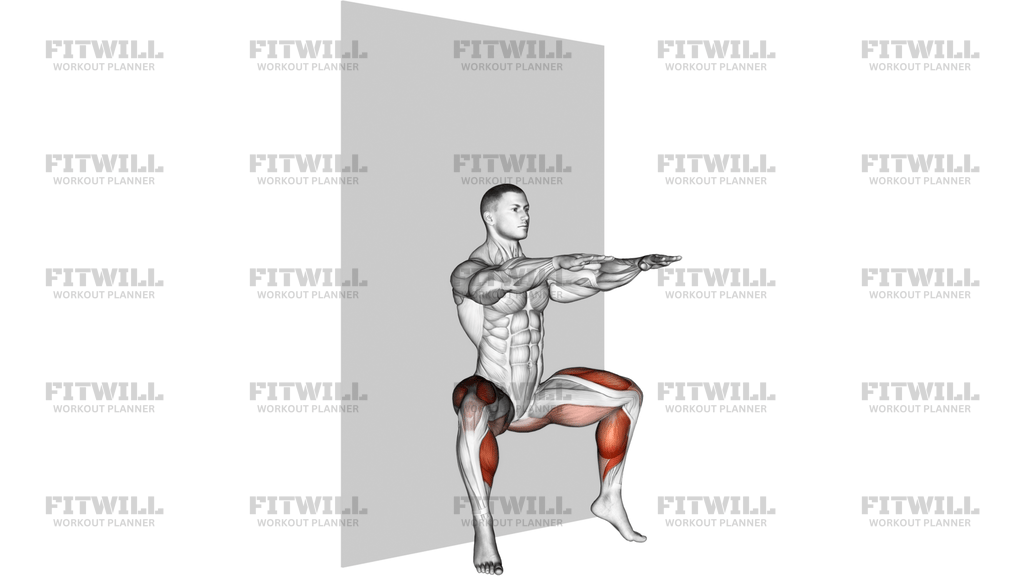
The setup matters more here than in many bodyweight drills. Start tall with your feet about hip-width apart, then step forward only far enough that you can lower straight down between your legs while keeping the chest stacked over the hips. The front foot should stay planted from heel to toe, the back heel should lift naturally, and the pelvis should stay square instead of twisting toward the front leg.
On each rep, lower under control until the back knee comes close to the floor or lightly touches it, then drive through the full front foot to return to standing. Keep the ribcage down, the gaze level, and the shoulders relaxed so the torso does not fold over the front thigh. The shorter step should help you maintain a vertical trunk and a smooth path rather than chasing a big range that changes the exercise.
Bodyweight Forward Lunge Smaller Stance Upright Torso is a strong choice if you want a repeatable lunge pattern that is easy to scale, easy to coach, and easy to feel in the front thigh. It works well on its own, in circuits, or as a primer before loaded lunges and squats. If the front heel pops up, the knee caves inward, or the torso starts leaning hard forward, shorten the step again and make the rep cleaner before adding speed, depth, or volume.
[ Workout Log & Planner ]
Put your next workout in Fitwill
Keep your plan and training log ready when you are.


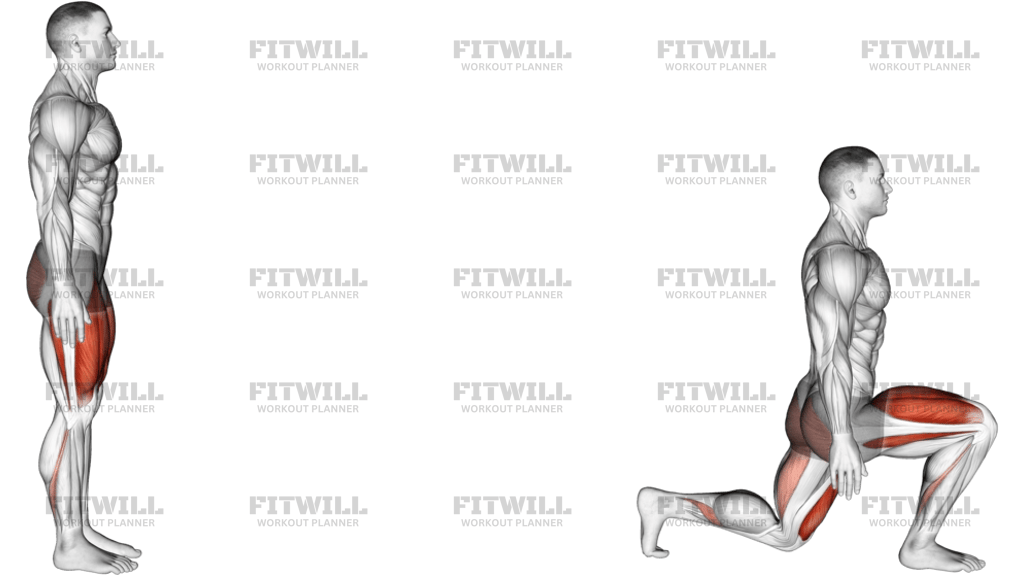
Instructions
- Stand tall with your feet hip-width apart and take a short step forward so you can stay upright at the bottom of the rep.
- Plant the front foot flat from heel to toe and let the back heel rise naturally as you prepare to lower.
- Keep your chest stacked over your hips, square your pelvis to the front, and look straight ahead.
- Lower straight down by bending both knees until the back knee is close to the floor and the front thigh is working hard.
- Keep the front knee tracking over the middle toes instead of collapsing inward.
- Pause briefly at the bottom without bouncing off the floor.
- Drive through the full front foot to stand back up, keeping the torso tall as you return.
- Reset your stance between reps if needed, then repeat for the planned number of repetitions.
- Breathe in on the way down and exhale as you press back to standing.
Tips & Tricks
- Take a shorter step than you would for a glute-biased lunge; a long stride will make it harder to keep the torso upright.
- If the front heel lifts, bring the step back a little so the whole foot can stay grounded.
- Let the back knee travel down rather than reaching forward with the chest.
- Think about pushing the floor away with the front leg instead of pulling yourself up with the back leg.
- Keep the front knee in line with the second and third toes to avoid inward collapse.
- Use the light touch of the back knee on the floor as a depth check, not a bounce point.
- Keep the ribcage from flaring so the upright torso comes from position, not from arching the lower back.
- Slow the lowering phase if you start wobbling side to side or twisting the pelvis toward the front leg.
Frequently Asked Questions
What does Bodyweight Forward Lunge Smaller Stance Upright Torso train most?
It mainly trains the quads, with the glutes, adductors, calves, and core helping to control the descent and drive back to standing.
Can beginners perform this exercise?
Yes. The bodyweight version is beginner-friendly if you keep the step short, stay tall, and use a controlled range of motion.
Why is the stance smaller in Bodyweight Forward Lunge Smaller Stance Upright Torso?
A shorter step helps keep the torso upright and places more of the load on the front leg. It also makes it easier to control knee tracking and balance.
Should my back knee touch the floor?
It can come very close or lightly touch, but it should not slam into the floor. Use the floor as a depth reference and keep the rep smooth.
What are the most common mistakes with this lunge?
Taking too long of a step, leaning the chest forward, letting the front knee cave inward, and bouncing off the bottom are the biggest ones.
Does Bodyweight Forward Lunge Smaller Stance Upright Torso work the glutes too?
Yes, but the shorter stride and upright torso shift more emphasis toward the quads than a longer forward lunge would.
How is this different from a reverse lunge?
A forward lunge asks the front leg to catch and absorb more of the step, while a reverse lunge usually feels easier on balance and often less demanding on the knee.
What should I do if I lose balance during the rep?
Shorten the step, slow the lowering phase, and keep your feet on the same line of travel. If needed, hold a rack post or wall lightly for balance while you learn the pattern.