Press Under
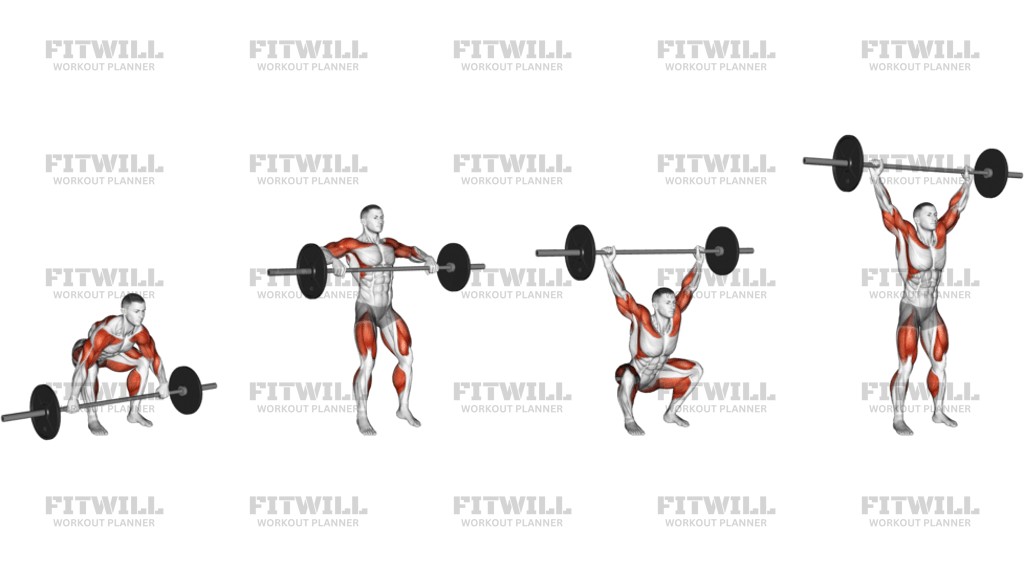
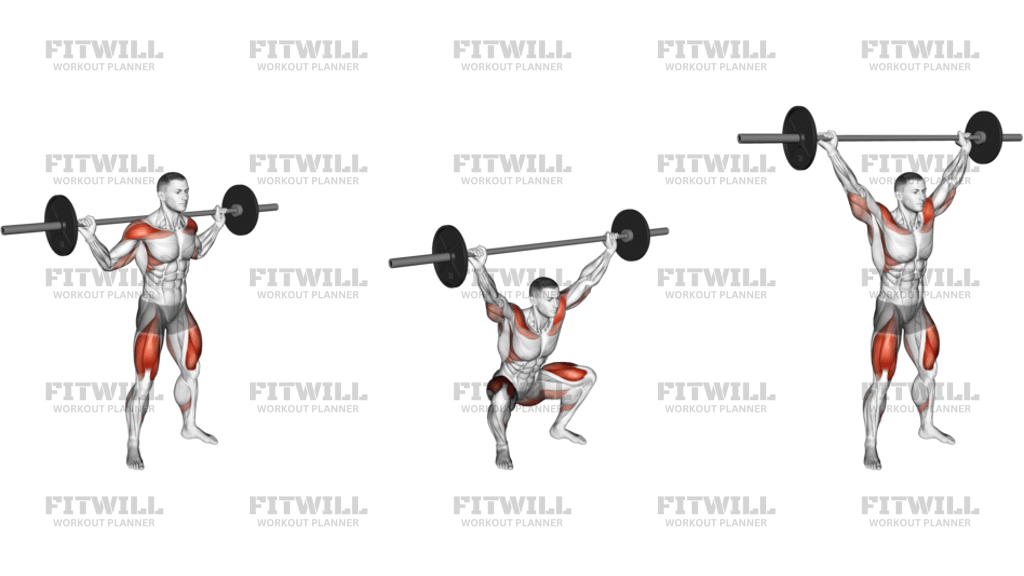
Press Under is a barbell weightlifting drill that teaches you to move from a behind-the-neck rack into a stable overhead catch. It combines a short dip, an explosive drive, and a fast drop under the bar so you can receive it with locked elbows and an upright torso. The goal is not to press the bar to lockout with the arms. The goal is to create enough upward speed that you can get underneath it and finish in a balanced overhead squat.
This movement develops shoulder stability, upper-back control, leg drive, and confidence in the receiving position. Because the bar starts behind the neck, shoulder mobility and thoracic extension matter more here than in a standard front-rack press. If the shoulders are tight, the bar drifts forward, or the rib cage flares hard, the rep becomes unstable very quickly. A good Press Under looks crisp and vertical, with the bar traveling straight up while the body moves straight down and then stands back up under control.
Set up with the feet about hip-width apart and the bar resting across the upper traps. Take a grip wide enough that the wrists stay comfortable and the elbows can stay controlled. Dip only a few inches, keep the heels rooted, and drive through the floor before dropping under the bar into a deep squat. Catch the bar overhead with straight elbows, active shoulders, and the bar stacked over the midfoot. When the catch is secure, stand up smoothly without letting the torso fold or the elbows soften.
Use Press Under as a technique drill, warm-up variation, or light accessory for Olympic lifting and overhead stability work. It is especially useful when you want to reinforce timing, receiving mechanics, and confidence in the bottom position without loading the press heavily. Start light, prioritize clean positions, and stop the set if the bar path, depth, or shoulder position breaks down. The best reps feel fast, precise, and controlled from the first dip to the final stand.
Beginners can learn it with a PVC pipe or empty bar, but only if they can maintain the behind-the-neck rack and overhead lockout without pain. It is not a max-strength test. It is a position-and-timing exercise. If the bar crashes forward, the knees cave, or the lower back arches to save the rep, reduce the load and shorten the range until the receive position stays solid.
[ Workout Log & Planner ]
Put your next workout in Fitwill
Keep your plan and training log ready when you are.


Instructions
- Place a barbell across the upper traps in a behind-the-neck rack, then set your feet about hip-width apart.
- Grip the bar a little wider than shoulder width so the wrists stay comfortable and the bar feels secure on the back.
- Stand tall with the ribs stacked over the pelvis, eyes forward, and the bar centered over the midfoot.
- Take a short dip by bending the knees and hips a few inches while keeping the torso upright and the heels down.
- Drive forcefully through the floor and extend the hips, knees, and ankles so the bar rises straight up.
- As the bar passes the head, drop under it quickly instead of trying to finish the rep by pressing harder with the arms.
- Catch the bar overhead in a deep squat with locked elbows, active shoulders, and the bar stacked over the middle of the foot.
- Stand up smoothly from the squat, then lower the bar back to the upper back under control before the next repetition.
Tips & Tricks
- Keep the dip short; if you sink too far, the movement turns into a squat before the bar has enough speed.
- Think straight up and straight down. Any forward drift usually means the grip is too narrow or the drive is too soft.
- Use a grip wide enough to avoid shoulder pinching behind the neck, but not so wide that the catch feels loose.
- Once the bar leaves the shoulders, think about dropping under it rather than pressing it to lockout with the arms.
- Keep the bar over the midfoot in the catch. If it lands in front of the toes, the receive position will feel unstable.
- If the elbows bend in the bottom, the load is too heavy or you are not getting under the bar fast enough.
- Treat light loads and crisp timing as the goal. This drill teaches positions better than it builds max strength.
- Stop the set if the neck, shoulders, or lower back need to compensate to save the rep.
Frequently Asked Questions
What does Press Under work most?
It trains shoulder stability, upper-back control, leg drive, core bracing, and the overhead receiving position.
Is Press Under the same as a behind-the-neck press?
No. A behind-the-neck press is a slower pressing movement, while Press Under is a quick dip-and-drop drill that teaches you to get under the bar.
How wide should my grip be on the barbell?
Wide enough that the wrists stay comfortable and the bar can stay stable overhead, but not so wide that you lose control in the catch.
Do I need to catch this in a full squat?
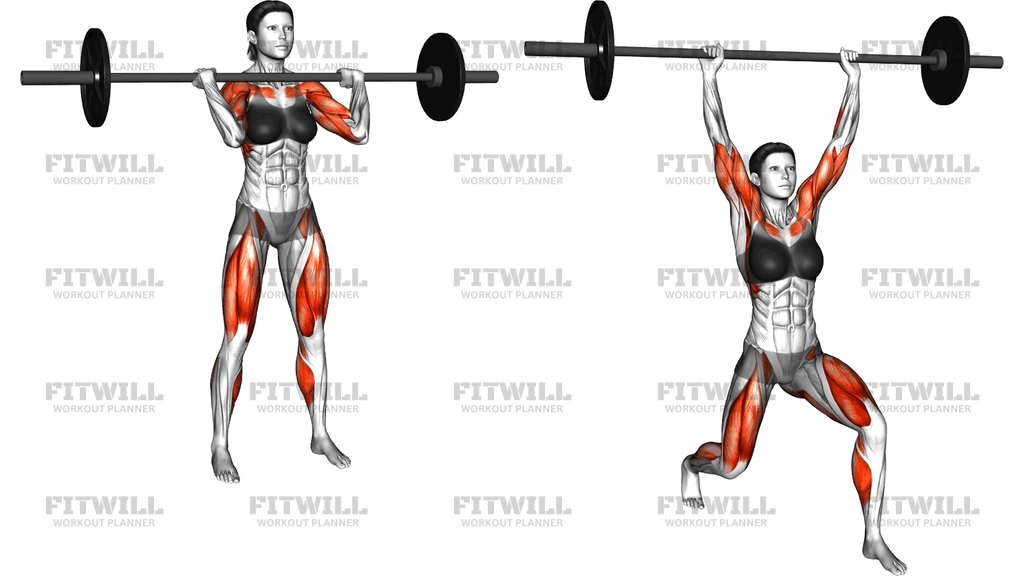
The image shows a deep overhead squat catch, but you can work lower or slightly higher only if you still keep the bar stacked over the midfoot and the elbows locked.
What is the most common mistake with Press Under?
People try to press the bar up with the arms instead of driving it high enough to move under it. That usually sends the bar forward and ruins the catch.
Can beginners do this exercise safely?
Yes, if they start with an empty bar or PVC pipe and can hold the behind-the-neck rack and overhead position without pain.
Should my lower back arch during the catch?
No. Keep the ribs stacked and the torso braced. A hard arch usually means the bar is too heavy or the shoulders do not have enough mobility yet.
Where should I put Press Under in my workout?
Use it early as technical work, a warm-up drill, or a light accessory before heavier overhead or Olympic lifting work.