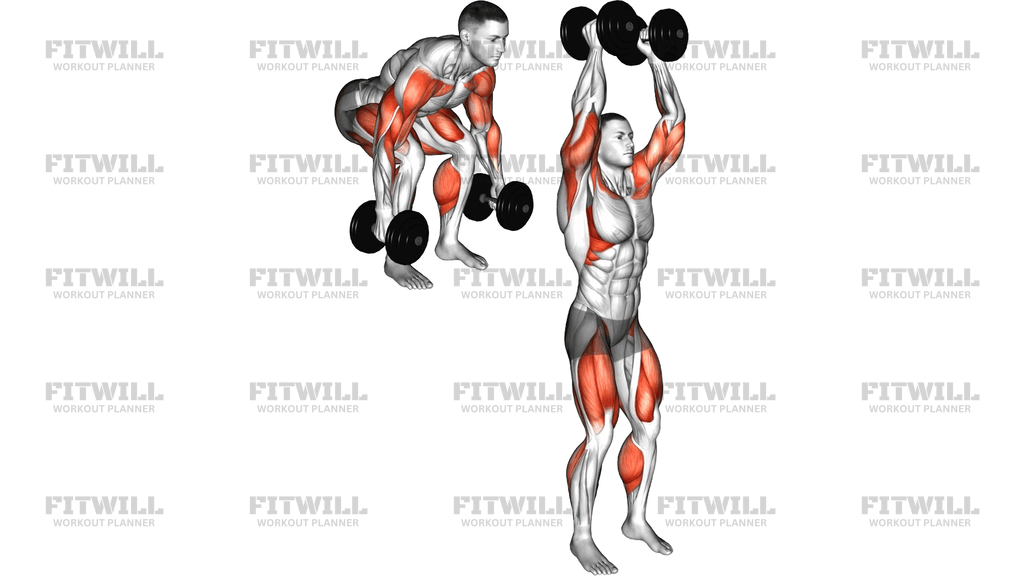
Dumbbell Hang Power Clean And Jerk
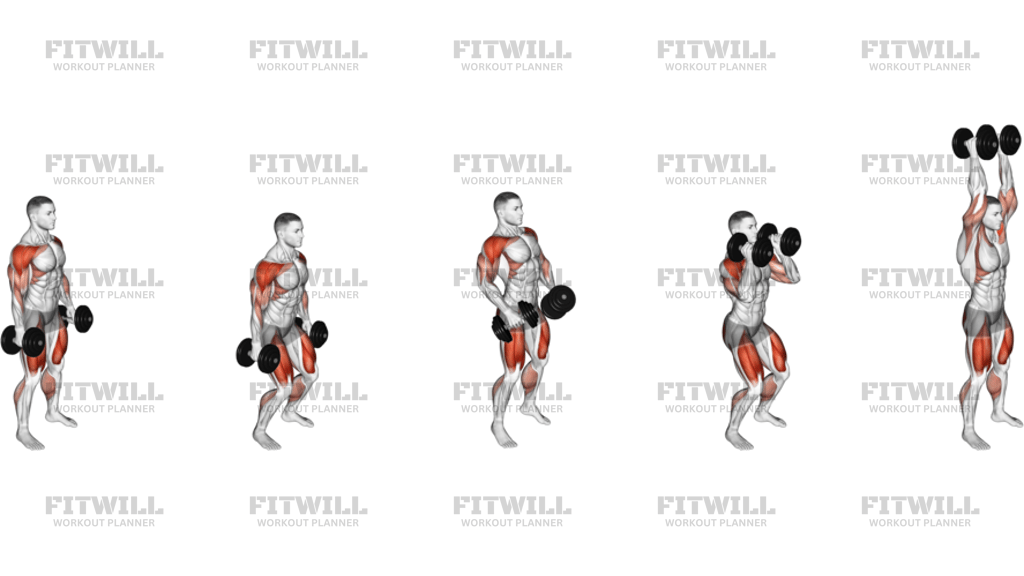
Dumbbell Hang Power Clean And Jerk is a fast, full-body weightlifting drill built around a short hang position, an explosive pull, a quick front-rack catch, and an overhead drive. With dumbbells, each arm has to work independently, so the exercise challenges coordination, timing, and shoulder control as much as raw power. It is especially useful when you want a dynamic movement that still rewards crisp positions instead of sloppy speed.
The hang start changes the emphasis of the lift. Instead of pulling from the floor, you begin with the dumbbells just above the knees or around mid-thigh, which forces you to hinge correctly, load the hips, and keep the bells close to the body before the violent extension. That setup makes the clean portion more efficient and helps you feel whether the power is coming from the legs and hips rather than from the arms yanking early.
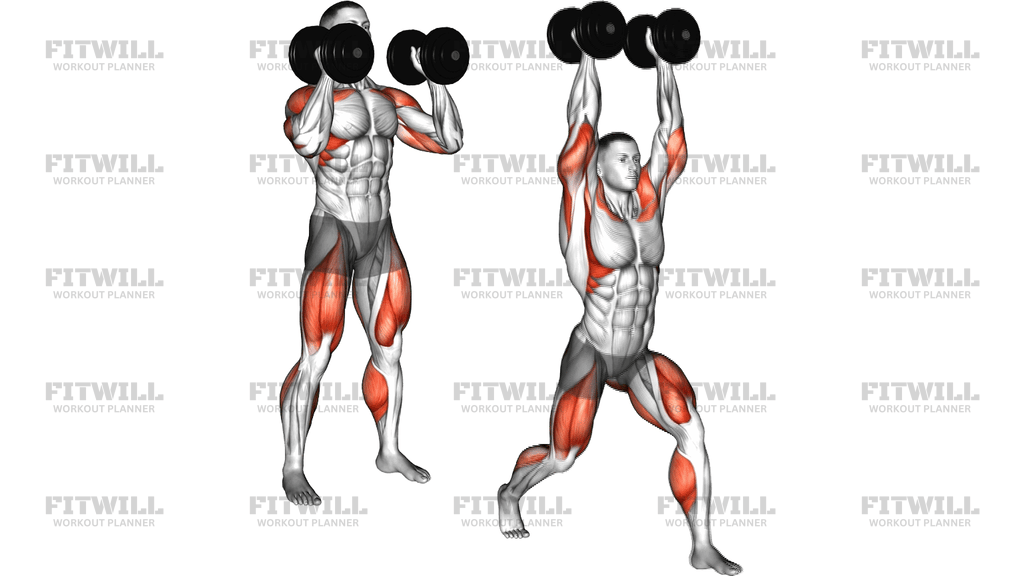
After the clean, the jerk turns the movement into a true lower-body-to-upper-body transfer. A small dip, a strong vertical drive, and a stable overhead catch finish each rep, so the body has to stay stacked from the feet through the hands. The movement trains the legs, glutes, upper back, shoulders, triceps, and core together, but the quality of the rep depends on how well you control the path and keep the dumbbells close during the pull and stable overhead.
Because the exercise is explosive, setup details matter. Use a stance that feels balanced, keep the ribs down, and avoid overextending the lower back when you stand tall. The catch should be quick and controlled, not a wild swing of the bells, and the jerk should finish with the elbows locked, shoulders active, and the dumbbells directly over the midfoot. If the load pulls you off balance or forces you to press instead of drive, it is too heavy for the quality this lift requires.
Dumbbell Hang Power Clean And Jerk fits well in power-focused sessions, athletic training, or conditioning blocks where you want force production without spending long on each rep. It can be a good option for intermediate lifters who already understand hinging, front-rack position, and overhead stability, while beginners should start light and learn the clean, rack, and overhead finish separately before linking the pieces together. The best sets look snappy, balanced, and repeatable from the first rep to the last.
[ Workout Log & Planner ]
Put your next workout in Fitwill
Keep your plan and training log ready when you are.


Instructions
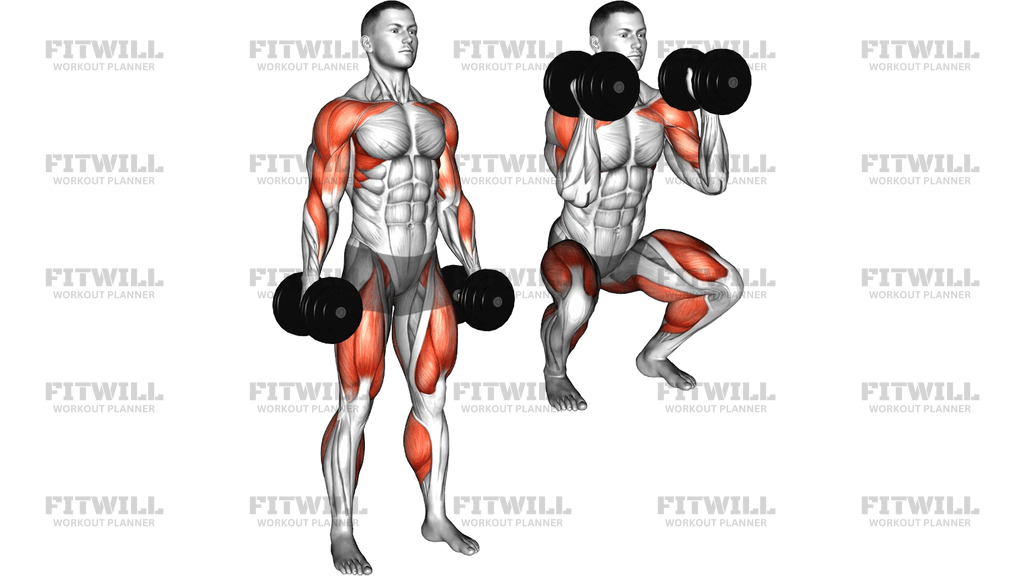
- Stand with a dumbbell in each hand and hinge until the bells hang just above your knees, with your chest angled forward, back flat, and feet about hip width.
- Keep the dumbbells close to your thighs, soften your knees, and brace before you start the pull.
- Drive powerfully through your feet, extend your hips and knees, and let the dumbbells rise straight up along your torso.
- Shrink the pull under the bells by pulling your elbows up and around, then catch them in a front-rack position at shoulder height with a slight quarter squat.
- Stand up fully from the catch and reset your feet so you are balanced before the jerk.
- Dip straight down a few inches by bending the knees while keeping your torso tall and the dumbbells stacked over midfoot.
- Explode upward, drive the dumbbells overhead, and finish with straight elbows, active shoulders, and the weights over the middle of your body.
- Lower the dumbbells with control back to the shoulders, then guide them down to the hang position with a soft hinge before the next repetition.
Tips & Tricks
- Keep the dumbbells brushing close to the thighs on the way up; if they swing away, the clean turns into an arm pull.
- Think 'jump, then shrug' instead of yanking early with the arms.
- Catch the clean with the bells near the front of the shoulders, not drifting in front of the chest.
- Use a small dip for the jerk; a deep knee bend usually turns the rep into a push press.
- Keep the front-rack position compact so the elbows do not flare excessively and the wrists stay stacked under the bells.
- Lock the jerk overhead with the biceps near the ears and the ribs down so the lower back does not take over.
- If one dumbbell climbs faster than the other, lower the load and slow the transition between the clean and jerk.
- Reset your feet after the clean if you lose balance; rushing straight into the jerk usually makes the overhead finish unstable.
Frequently Asked Questions
What does Dumbbell Hang Power Clean And Jerk train the most?
It trains explosive hip drive, shoulder stability, coordination, and overhead lockout strength, with the legs and core doing a lot of the work behind the scenes.
Why start from the hang instead of the floor?
Starting from the hang puts more emphasis on the hip hinge and the explosive second pull. It also makes it easier to keep the dumbbells close and control the transition into the rack.
Should the dumbbells touch my shoulders in the catch?
They should land close to the shoulders in a front-rack position, but not smash into the collarbone. Think of receiving them softly with the elbows forward and the torso tall.
Is Dumbbell Hang Power Clean And Jerk a beginner exercise?
It can be learned by beginners, but only with very light dumbbells and a focus on the hinge, clean, and overhead finish. Most beginners should learn each piece separately before linking them together.
What is the most common mistake with this lift?
The biggest mistake is muscling the dumbbells with the arms instead of driving from the hips and legs. Another common error is letting the bells drift away from the body on the clean.
How heavy should I go on Dumbbell Hang Power Clean And Jerk?
Use a load you can move quickly without losing the front-rack catch or the overhead lockout. If the jerk turns into a grind, the weight is too heavy for this variation.
Can I use this instead of a barbell clean and jerk?
Yes, but the dumbbells usually limit loading and demand more shoulder stabilization. They are a good substitute when you want a similar pattern with less setup and more unilateral control.
Where should I feel the overhead finish?
You should feel the legs and glutes drive the rep, then the shoulders and triceps finish the lockout. The lower back should not be the main limiter if the ribs stay down.