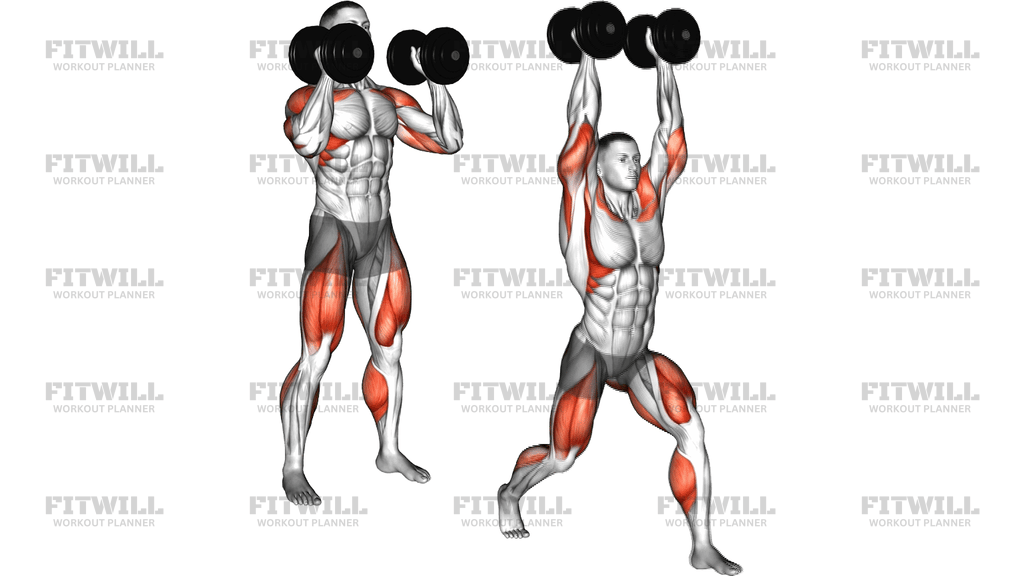
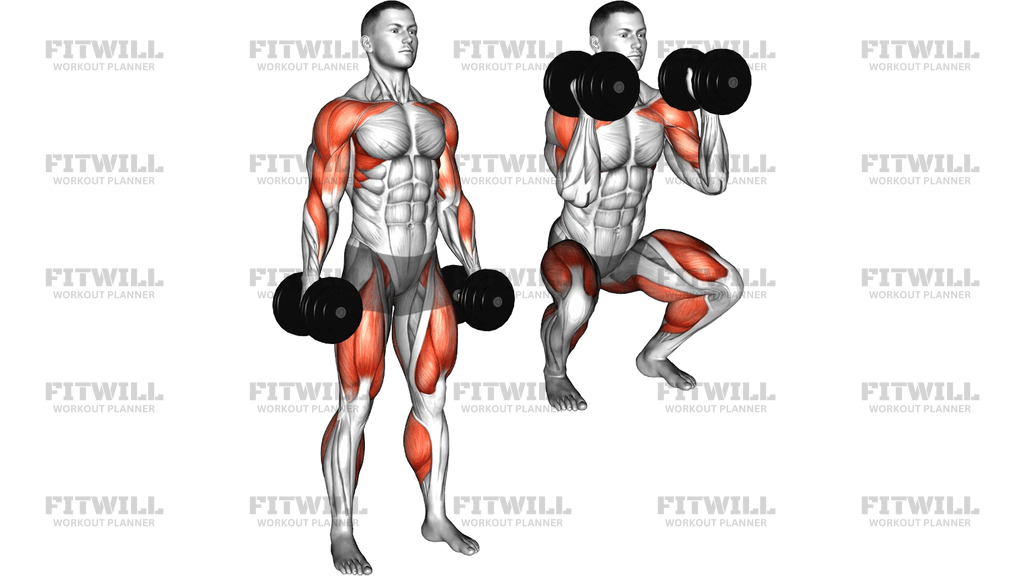
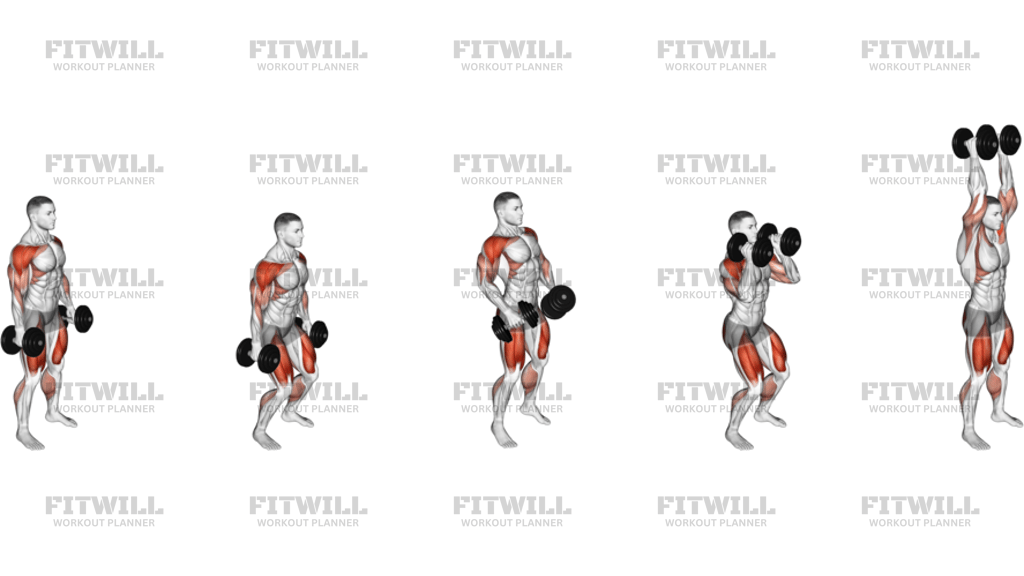
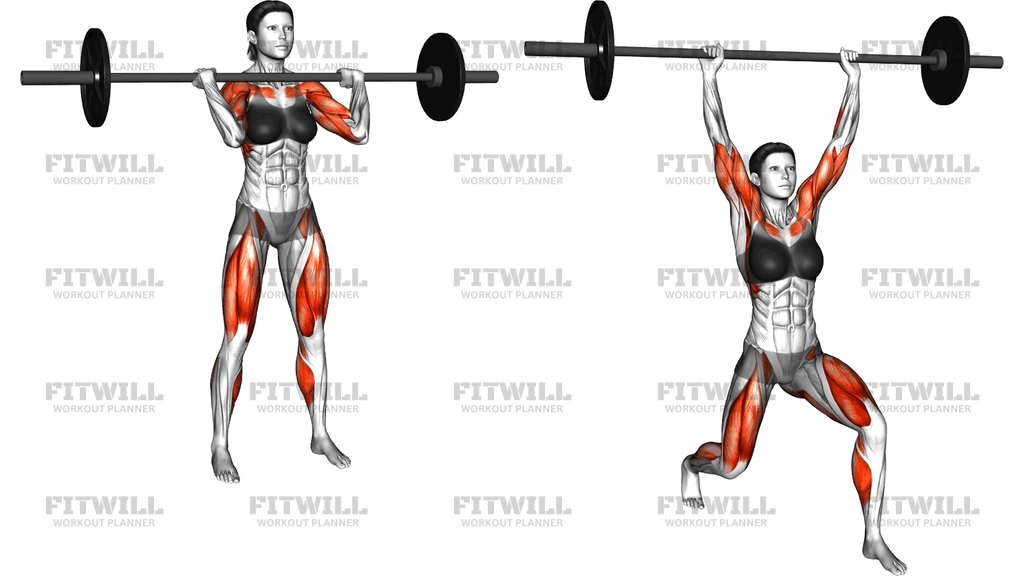
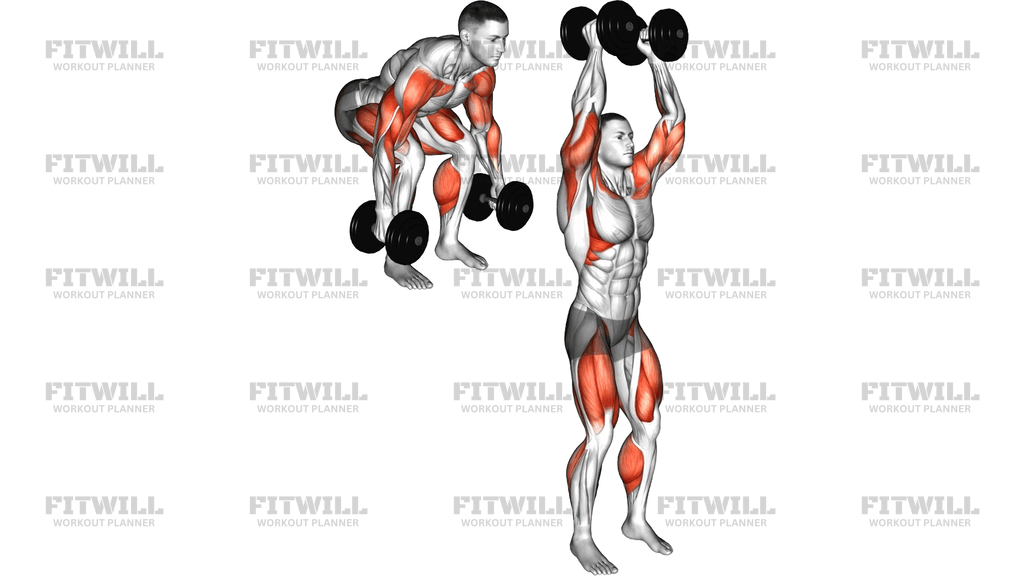
Dumbbell One-Arm Snatch Left Side
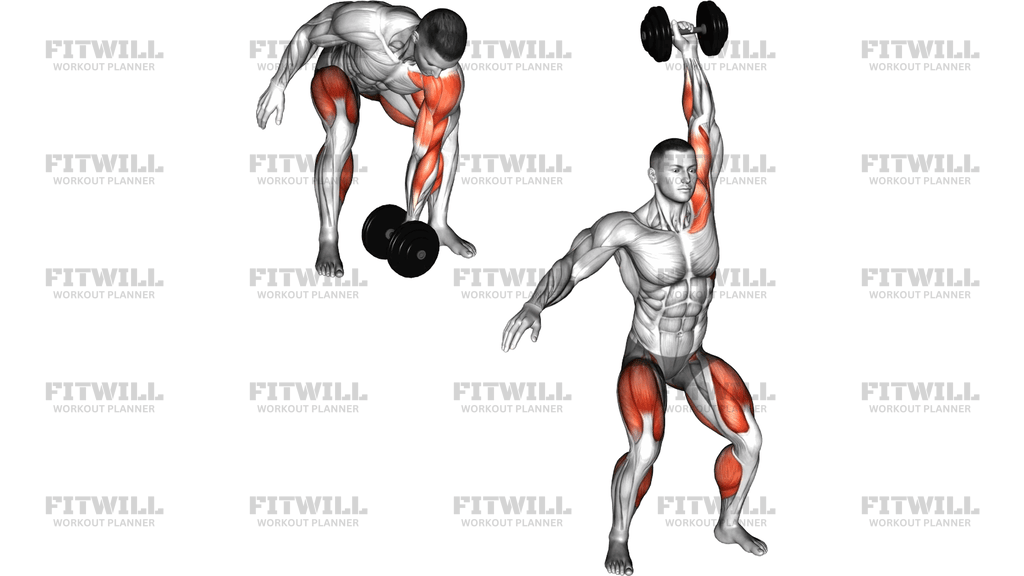
Dumbbell One-Arm Snatch Left Side is a unilateral power exercise that takes the dumbbell from the floor to a locked-out overhead position in one smooth, explosive rep. The left arm does the lifting, but the movement is really a full-body sequence: the legs create the drive, the hips finish the extension, the trunk resists rotation, and the shoulder stabilizes the load overhead.
Because this is a snatch, the path matters as much as the finish. The dumbbell should stay close to the body on the way up, then travel quickly under control as you punch the left arm straight overhead. When the catch is crisp, the rep feels fast but organized, with the torso stacked and the bell fixed above the shoulder rather than drifting forward.
The floor start makes setup important. A balanced stance, a neutral spine, and a clean hinge position give you room to generate force without yanking the weight with the arm. The non-working arm usually reaches out for balance, while the working side keeps the shoulder packed until the pull becomes the punch overhead.
This exercise is common in power, athletic conditioning, and strength circuits because it trains speed, coordination, and whole-body tension in a compact pattern. It can also help reinforce hip drive and overhead control for lifters who need explosive single-arm work. Light to moderate loads are usually more useful than heavy grinding weight, since the rep should stay sharp from the first inch off the floor to the final lockout.
Use it when you want a technical, unilateral lift that rewards timing and posture more than brute force. If the dumbbell drifts away from the shin, the torso twists hard, or the catch lands soft and unstable, the load is probably too heavy or the setup is off. Clean reps should finish with the left elbow fully extended, ribs controlled, and the weight stacked over the shoulder, hip, and foot.
[ Workout Log & Planner ]
Put your next workout in Fitwill
Keep your plan and training log ready when you are.


Instructions
- Stand with the dumbbell on the floor just inside or slightly in front of your left foot, feet about hip-width apart, left hand reaching down between the legs, and the right arm free for balance.
- Hinge at the hips, bend the knees, and keep your chest over the dumbbell with a flat back, neutral neck, and the weight centered over mid-foot.
- Grip the handle firmly, set your shoulders, and brace your trunk before the first pull so the torso does not twist open early.
- Drive through the floor to lift the dumbbell close to your left shin and thigh, keeping it tight to the body instead of swinging it forward.
- As the bell passes the hip, extend the ankles, knees, and hips aggressively so the left elbow rises and the dumbbell accelerates upward.
- Pull yourself under the weight, then punch the left arm to full lockout overhead with the wrist stacked over the shoulder and the bell directly above the mid-foot.
- Catch in a slight squat or athletic stance with the ribs down, glutes tight, and the left arm straight while the right arm stays out for balance.
- Stand tall to finish the rep, then lower the dumbbell under control back to the floor or to the hang position before repeating.
- Reset your feet and posture before the next repetition so each snatch starts from a stable, repeatable position.
- Breathe in before the pull, exhale through the drive and catch, and regain a steady breath before the next rep.
Tips & Tricks
- Keep the dumbbell close to your left leg on the way up; a looping path makes the catch harder and usually means the arm is doing too much work.
- Let the hips create the speed. If the weight feels like a front raise, the pull is starting too early and the leg drive is not finishing.
- Use the right arm as a counterbalance, not as an active lifter. Reaching it slightly out to the side can help keep the torso from spinning.
- Punch to lockout aggressively. A soft elbow at the top makes the overhead catch unstable and puts more stress on the shoulder.
- Keep the bell over the shoulder, hip, and foot at the top. If it finishes in front of you, the torso is probably leaning back to save the rep.
- A lighter dumbbell often works better here because speed and precision matter more than load. Choose a weight you can catch cleanly every time.
- Reset after each rep if you are doing singles from the floor. This keeps the left-side setup consistent and reduces sloppy fatigue reps.
- If your lower back feels the lift, check the hinge and keep the chest over the bell longer before you explode upward.
- Finish with the ribs down, not flared. Overextending the low back is a common way to fake the overhead position.
- Stop the set when the pull turns into a swing, the catch gets noisy, or the dumbbell starts drifting away from the body.
Frequently Asked Questions
What does the left-arm dumbbell snatch train?
It trains full-body power, coordination, overhead stability, and left-right unilateral control.
Where should the dumbbell start before each rep?
Set it on the floor near your left foot so you can hinge down with a neutral spine and pull it close to the shin.
Should I keep the weight in front of my body or close to it?
Keep it close. The dumbbell should skim up the leg and then travel directly overhead, not swing out in front.
Do I need to squat under the dumbbell?
A small dip or athletic catch is normal, but you do not need a deep squat unless your mobility and technique allow it.
What muscles work hardest in this snatch?
The legs, glutes, hips, upper back, shoulder, and core all contribute, with the left arm responsible for the final overhead lockout.
What is the most common mistake with the left-side snatch?
The most common mistake is muscling the dumbbell with the arm instead of finishing the hip drive and pulling under quickly.
Can beginners learn this exercise?
Yes, but start very light and practice the hinge, pull, and overhead catch before trying to move fast.
How do I know if the load is too heavy?
If the dumbbell swings away from your body, the torso twists hard, or the catch bends the elbow, the weight is too heavy.
Can I alternate sides in a workout?
Yes. Many workouts use one arm at a time, then switch sides so both arms get the same amount of work.