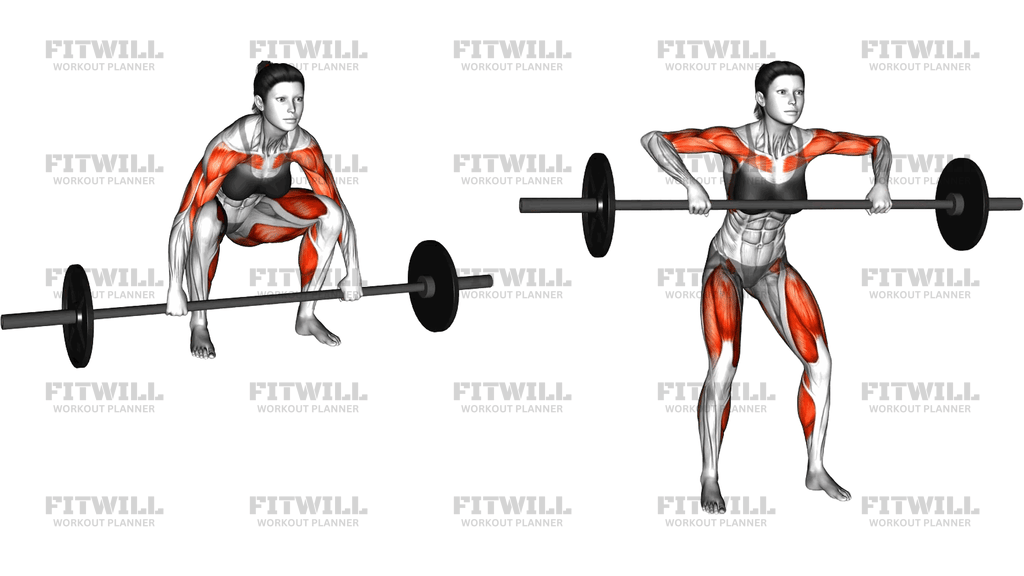
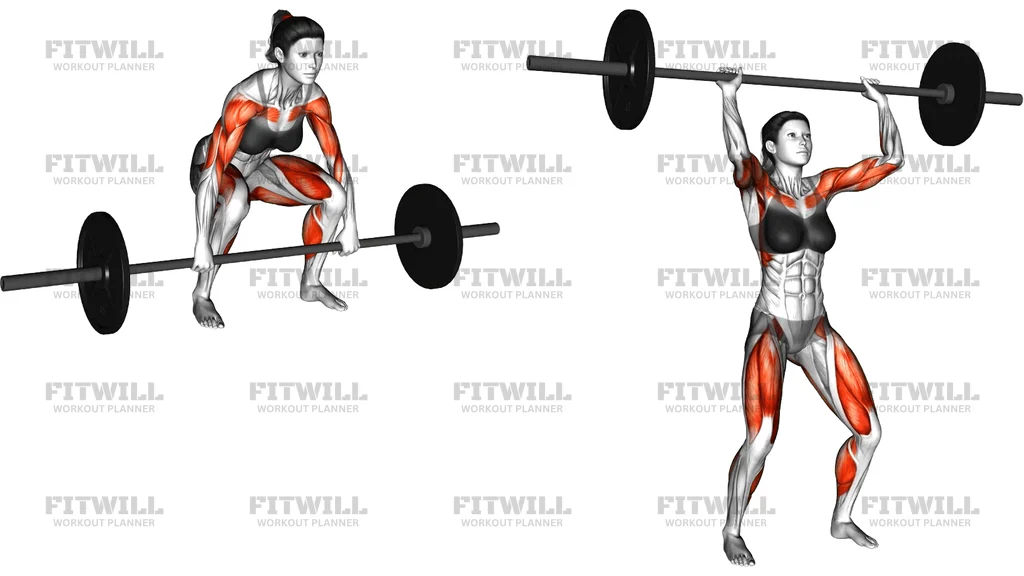
Barbell Pause Deadlift
Barbell Pause Deadlift is a dead-stop hinging exercise that builds posterior-chain strength while forcing you to keep the bar, spine, and brace organized through the hardest part of the pull. The pause removes the usual rebound you get from a touch-and-go deadlift, so every rep has to be earned from a stable start and a controlled mid-pull position. That makes the movement especially useful for lifters who want better starting strength, cleaner position off the floor, and more confidence holding posture under load.
The exercise places the biggest demand on the hips, hamstrings, glutes, and spinal erectors, with the lats, grip, and core working hard to keep the bar close and the torso from drifting out of position. Because the bar must stay tight to the legs, small setup errors show up quickly: if your hips rise too early, your back rounds, or the bar drifts forward, the pause becomes much harder than it should be. Barbell Pause Deadlift rewards a patient pull more than a fast one.
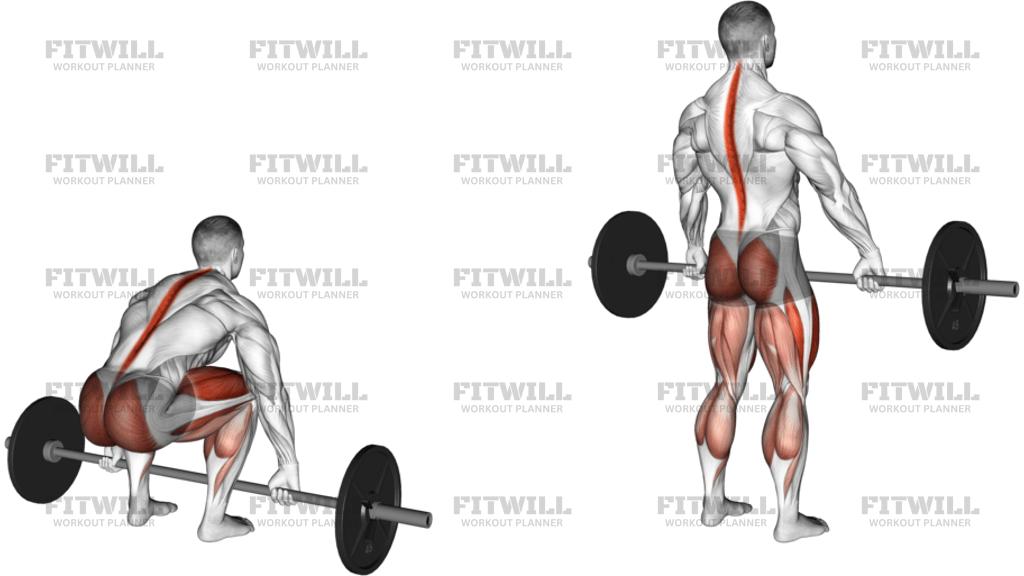
Your setup matters before the bar ever leaves the floor. Stand with the bar over midfoot, feet about hip-width, and shins close enough that the bar can travel in a straight line. Hinge down, take a firm grip just outside the legs, pull the chest long, and set the shoulders slightly in front of the bar while keeping the back flat and the ribs stacked. A strong lat squeeze helps keep the bar from swinging away when the pause begins.
On each repetition, brace before the plates break from the ground, then drive the floor away and keep the bar brushing the shins and thighs as it rises. Most lifters pause just below the knees or around the knee line, depending on the program and leverages, but the key is that the bar should stop where you can still hold a rigid torso. Do not relax on the pause; stay wedged into the floor, keep pressure through the whole foot, and finish the pull by standing tall and squeezing the glutes at lockout rather than leaning back.
Barbell Pause Deadlift is useful in strength blocks, technique work, and accessory sessions when you want to sharpen the deadlift pattern without relying on momentum. It is also a practical way to build discipline off the floor for lifters whose conventional deadlift stalls just below the knee or who lose position when the bar gets heavier. Start lighter than your regular deadlift load, keep every rep identical, and stop the set if the pause turns into a shrug, hitch, or back extension. Done well, the movement trains power, control, and position at the same time.
[ Workout Log & Planner ]
Put your next workout in Fitwill
Keep your plan and training log ready when you are.


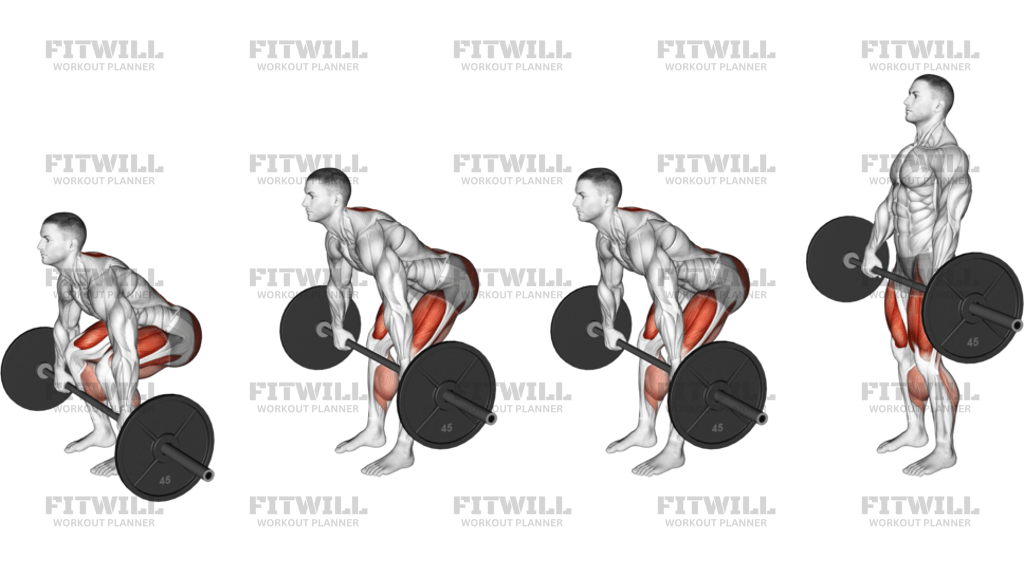
Instructions
- Stand with the bar over your midfoot, feet about hip-width apart, and the bar close enough that it sits just over your shoelaces.
- Hinge down to the bar, take a grip just outside your legs, and set your shins so they lightly touch or nearly touch the bar.
- Pull your chest long, set your shoulders slightly in front of the bar, and flatten your back before the first pull.
- Take the slack out of the bar, brace your torso hard, and keep your weight centered through the whole foot.
- Drive the floor away and pull the bar straight up, keeping it close to your shins and thighs as it leaves the floor.
- Bring the bar to the programmed pause point, usually just below or at the knees, and stop there without losing your back angle.
- Hold the pause for the required count while keeping tension in your lats, legs, and midsection.
- Continue the pull from the paused position, stand tall at lockout, and finish by squeezing the glutes without leaning back.
- Lower the bar along the same path under control, let it settle fully on the floor, reset your breath and position, and repeat.
Tips & Tricks
- Choose a lighter load than your touch-and-go deadlift so you can hold the pause without your hips shooting up.
- Keep the bar in contact with, or extremely close to, the legs on the way up; drifting forward makes the pause much harder on the lower back.
- Think about pushing the floor away rather than yanking the bar, especially in the first inch off the floor.
- Freeze the rep at the pause point instead of softening into a bounce; the plates should not keep moving.
- If your torso folds at the knees, pause slightly lower and use that position to rebuild tension before adding load.
- Keep your neck in line with your spine and look at the floor a few feet in front of you instead of cranking the head up.
- Use a double-overhand or mixed grip that lets you hold the bar without shrugging the shoulders.
- Exhale only after the bar has passed the pause point and you are moving smoothly toward lockout.
Frequently Asked Questions
What does the Barbell Pause Deadlift work most?
It mainly trains the glutes, hamstrings, spinal erectors, and upper-back muscles that keep the bar close and the torso braced.
Where should I pause the bar in the Barbell Pause Deadlift?
Most lifters pause just below the knees or right at the knee line, as long as they can keep their back angle and lats locked in.
Can beginners do the Barbell Pause Deadlift?
Yes, if they already know how to hinge and keep a neutral spine. Start with a very light barbell and use the pause to learn position before adding weight.
Why use a pause instead of a regular deadlift?
The pause removes momentum and forces you to control the bar through the hardest part of the pull, which helps build cleaner starting strength.
Should the bar touch my shins during the Barbell Pause Deadlift?
Yes, light contact or a very close bar path is normal. If the bar swings away from your legs, your back and hips usually lose position.
What is the most common mistake on the pause?
Relaxing at the pause point. Stay tight through the whole foot, lats, and abdomen so the bar can restart without a hitch.
Can I use straps for the Barbell Pause Deadlift?
Yes, if grip is limiting the set before your hips and back are. Straps let you keep the focus on position and posterior-chain work.
How is the Barbell Pause Deadlift different from a Romanian deadlift?
A Romanian deadlift starts from the top and keeps constant tension on the way down, while this movement starts from the floor and includes a deliberate stop in the pull.