Prone Cervical Extension
Prone Cervical Extension is a body-weight neck exercise performed face down on a flat bench with the chest and abdomen supported and the head free to move past the edge. It trains the muscles that extend the neck and helps build control in a very small range of motion that matters for posture, head positioning, and neck strength. Because the movement is short and the cervical spine is sensitive, the setup matters more than speed or load.
With the torso fixed, the neck moves from a lightly flexed start to a gentle extended finish by lifting the chin and looking slightly forward, not by arching the upper back or pushing the shoulders up. The goal is a smooth, deliberate lift through the neck while the rib cage stays quiet and the shoulder blades stay relaxed on the bench.
This exercise is useful for athletes or lifters who need stronger neck endurance, better head control, or more resilience in contact and overhead positions. It also works well as light accessory work or as part of a rehab-style progression when it is performed pain free and under control. Beginners can use it as a small-range, body-weight drill before adding any external resistance.
Good reps stay conservative. The head should move only through a comfortable arc, and the bottom position should not feel like a hard hang. If you feel pinching, dizziness, tingling, or sharp pain, stop and shorten the range or skip the movement. The safest version is the one where the torso stays still, the neck moves smoothly, and the rep ends before the form starts to change.
Over time, progress by making the motion slower, holding the top briefly, or adding very small resistance only if the neck remains stable. For most people, the best results come from repeatable, low-noise reps rather than chasing a large range or a heavy load. Think control, alignment, and calm breathing from start to finish.
[ Workout Log & Planner ]
Put your next workout in Fitwill
Keep your plan and training log ready when you are.


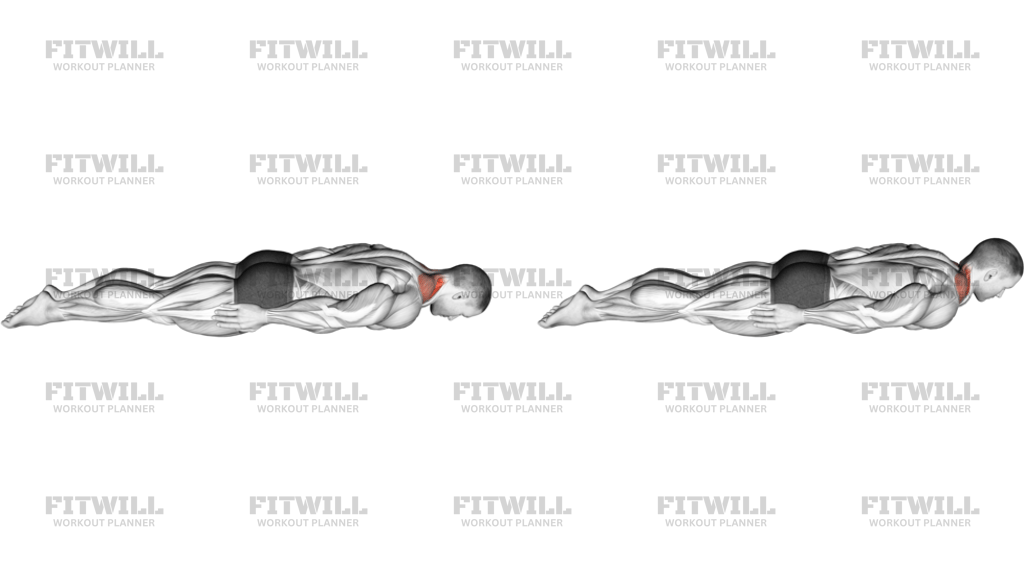
Instructions
- Lie face down on a flat bench with your chest and stomach supported and your head hanging just past the edge.
- Let your arms rest alongside the bench or hold the sides lightly so your shoulders stay relaxed.
- Start with your neck long and neutral, eyes toward the floor, and your chin slightly tucked.
- Brace your midsection and keep your rib cage and upper back still.
- Slowly extend your neck by lifting your chin and looking a little forward.
- Stop when you reach a comfortable end range without cranking the head back.
- Pause briefly, then lower your head back down under control until the neck returns to neutral or slight flexion.
- Breathe out as you lift and inhale as you lower, keeping the motion smooth for each rep.
Tips & Tricks
- Keep the movement in the neck, not by arching the thoracic spine or pushing through the shoulders.
- Use a small, pain-free range; a modest lift is better than forcing the head high.
- Keep your jaw relaxed and avoid clenching, which can make the neck tense unnecessarily.
- If the bench is too high or too low, adjust so the head can move freely without scraping the floor or bench edge.
- Slow eccentrics help more than swinging into the lowered position.
- Stop the set if you feel dizziness, pressure, or a sharp pull at the base of the skull.
- A brief top hold is useful only if the torso stays quiet and the chin does not jut forward.
- Add resistance very cautiously; neck exercises should usually stay light and precise.
Frequently Asked Questions
What muscles does Prone Cervical Extension work?
It mainly works the muscles that extend the neck along the back of the cervical spine, with smaller stabilizing work from the upper back and trunk.
Is the head supposed to hang completely off the bench?
Yes, the head should be free to move just past the edge so the neck can extend without the torso shifting.
Should I feel this in my upper traps?
You may feel some support work around the shoulders, but the main effort should stay in the neck.
How far should I lift my head?
Only as far as you can keep the movement smooth and pain free, usually a modest raise rather than a full crank back.
Can beginners do this exercise?
Yes, beginners can use it as a small-range body-weight drill if they keep the torso stable and avoid forcing range.
What is the most common mistake?
People usually turn it into a back extension by lifting the chest or shrugging the shoulders instead of moving only the neck.
Can I add weight to this exercise?
Very small resistance can be used later, but only after you can control the body-weight version without neck strain.
When should I stop the set?
Stop if the reps get jerky, the head starts to whip, or you feel pain, tingling, or dizziness.