Seated Chin Tuck
Seated Chin Tuck is a low-load neck control drill that trains the ability to draw the head straight back without collapsing the chest or jutting the chin forward. The goal is not to make a bigger neck bend, but to cleanly retract the head and keep the skull, neck, ribs, and pelvis organized while the deep neck flexors do the work.
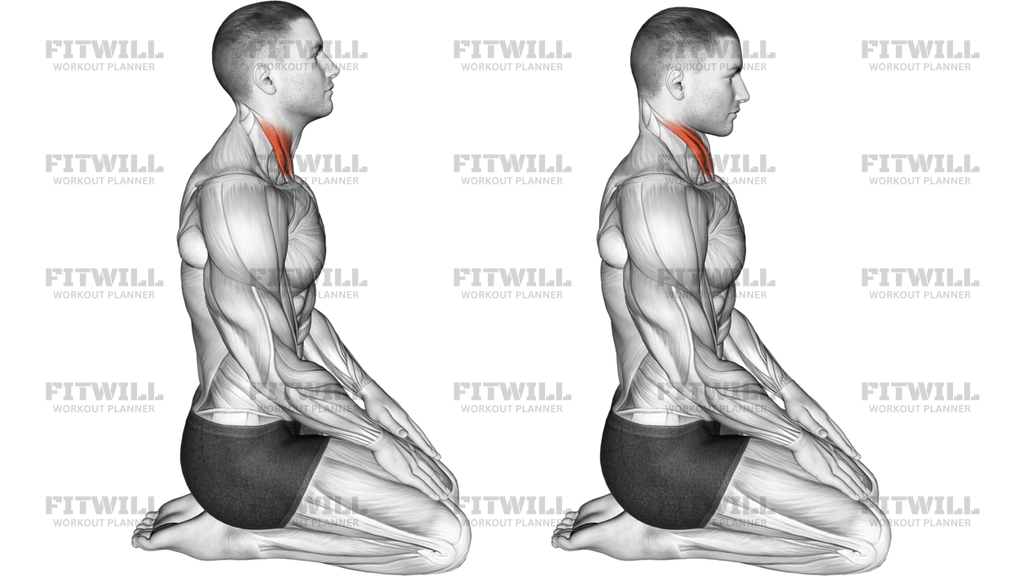
This exercise is especially useful for posture, desk-work stiffness, and any program that needs better head-and-neck position under light, precise control. The image shows the torso stacked tall with the hands resting on the thighs and the neck working through a small, deliberate range. That setup matters because the movement should come from the neck, not from rounding the upper back or leaning the whole torso backward.
Set up in a tall seated position, or a tall kneeling variation if that is the position you are using. Keep the eyes level, jaw relaxed, shoulders down, and ribcage stacked over the pelvis. From there, the chin travels straight back as if you are making a small double chin, while the back of the neck stays long. The head should glide, not tilt down hard or poke forward first.
At the top of each repetition, the neck should feel gently engaged, not jammed. Hold the retracted position briefly, breathe without bracing too hard, and return to neutral under control. The range is intentionally small, so a clean repetition is more important than a large one. If you lose the stacked posture or start recruiting the shoulders and upper traps, the set is usually too fast, too hard, or too big.
Use Seated Chin Tuck as a warm-up, posture reset, or accessory drill when you want better cervical control before lifting, pressing, running, or long periods of sitting. It should feel precise and repeatable. Stop if you feel sharp pain, dizziness, tingling, or symptoms that spread away from the neck.
[ Workout Log & Planner ]
Put your next workout in Fitwill
Keep your plan and training log ready when you are.


Instructions
- Sit tall on a bench or chair, or kneel upright with your hands resting lightly on your thighs.
- Stack your ribs over your pelvis, keep your chest relaxed, and let your shoulders drop away from your ears.
- Keep your eyes level and your jaw loose before you start the first repetition.
- Draw the chin straight back to make a small double chin without looking down.
- Keep the back of your neck long and avoid letting the head drift forward as you tuck.
- Hold the tucked position for a brief pause while breathing smoothly.
- Return to the neutral head position slowly and under control.
- Repeat for the planned number of reps without increasing the range to the point that posture changes.
Tips & Tricks
- Think about sliding the head straight back rather than dropping the chin toward the chest.
- Keep the jaw unclenched so the neck muscles do the work instead of the face.
- A small range of motion is correct here; if the chest caves or the ribs flare, the tuck is too big.
- Use a wall behind the head as feedback if you have trouble keeping the motion straight back.
- Exhale gently as you tuck, then inhale as you return to neutral.
- Keep the shoulders quiet so the upper traps do not take over the drill.
- Hold each rep for only a moment; turning this into a long isometric squeeze usually changes the quality of the movement.
- Stop the set if the movement turns into a neck crunch, a forward-head shove, or a shrug.
Frequently Asked Questions
What does Seated Chin Tuck train most?
It mainly trains deep neck control by teaching the head to retract cleanly instead of jutting forward.
Can beginners do Seated Chin Tuck?
Yes. It is usually a beginner-friendly drill because the range is small and the effort should stay light and precise.
Should I feel Seated Chin Tuck in my front neck?
A gentle effort in the front and sides of the neck is normal, but you should not feel a hard strain, pinching, or jaw tension.
What is the most common mistake with the chin tuck?
Most people either look down too much or push the head forward first, which turns the drill into the wrong neck position.
Can I do Seated Chin Tuck against a wall?
Yes. A wall can help you feel whether the head is sliding straight back instead of tipping down.
Do I need to brace hard for this exercise?
No. The torso should stay stacked and stable, but the movement itself should stay smooth and controlled rather than aggressively braced.
When is Seated Chin Tuck useful in a workout?
It fits well in a warm-up, posture reset, neck-control block, or as light accessory work before upper-body training.
What should I do if the movement causes dizziness or pain?
Stop the exercise and do not push through it. Neck drills should feel controlled and calm, not sharp, dizzy, or symptomatic.