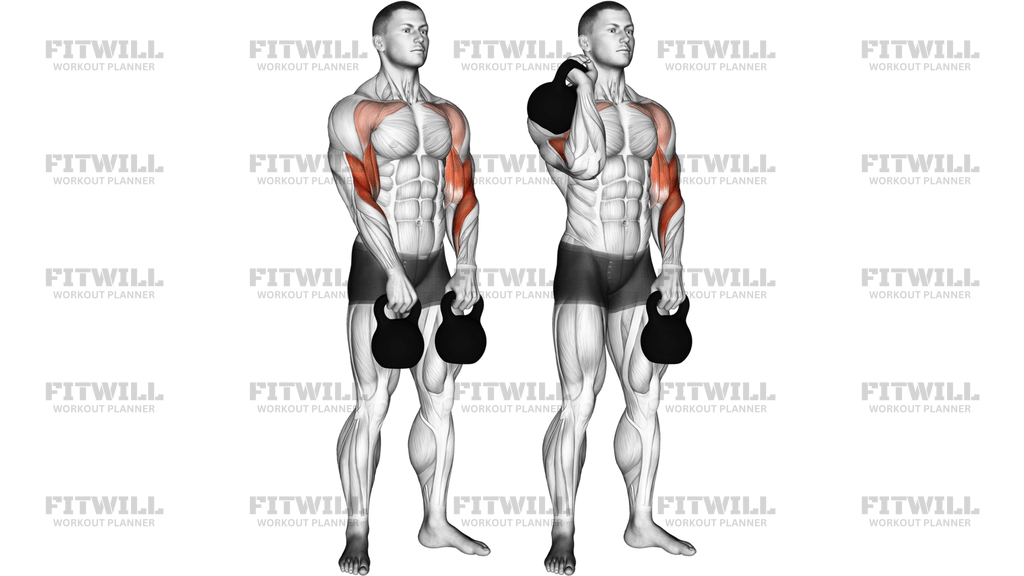
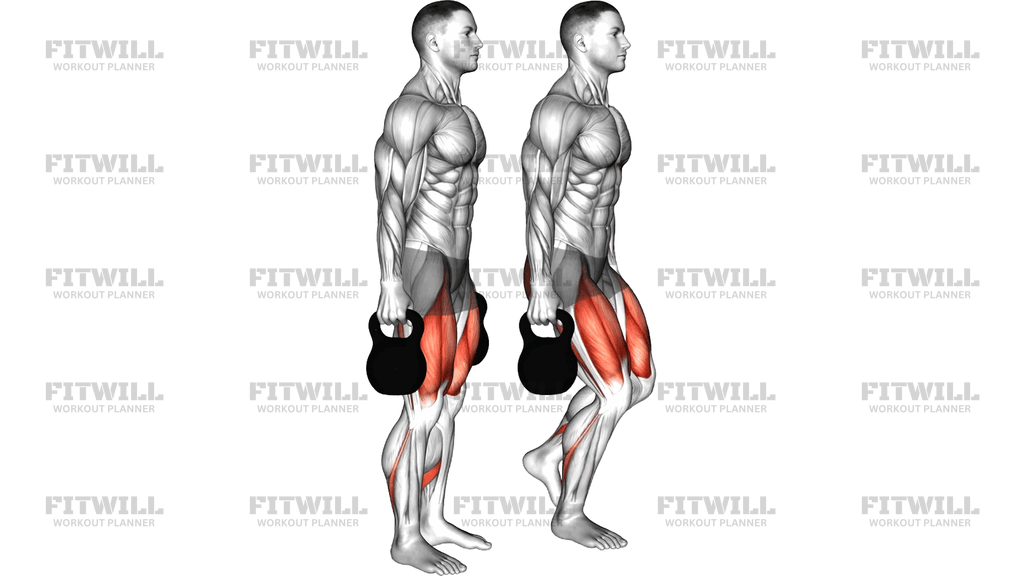
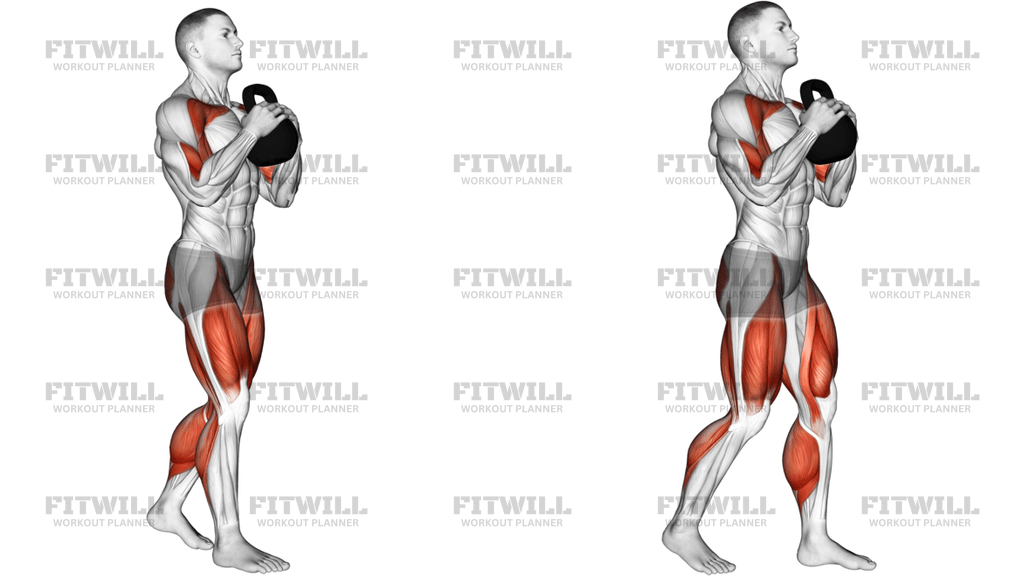
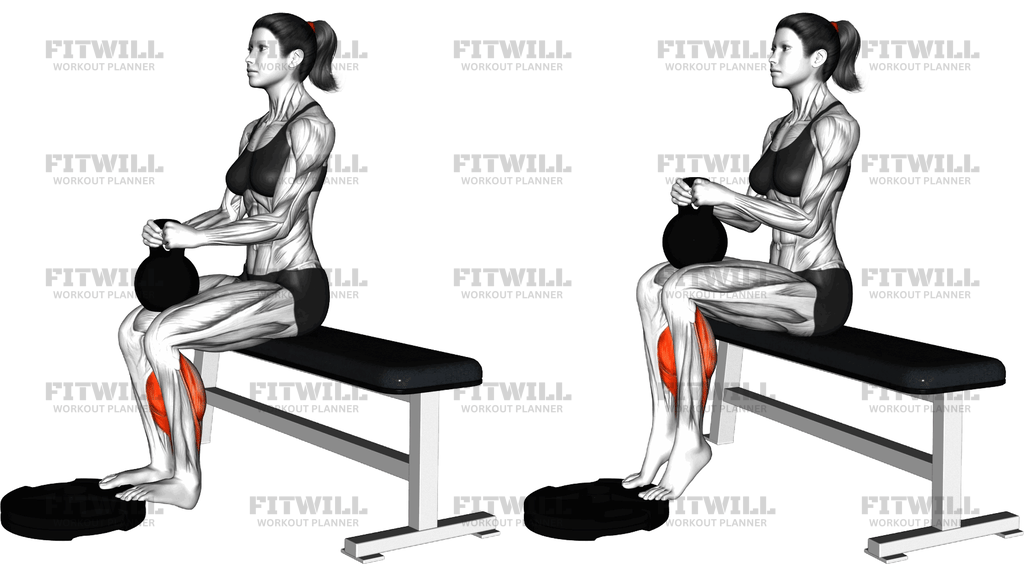
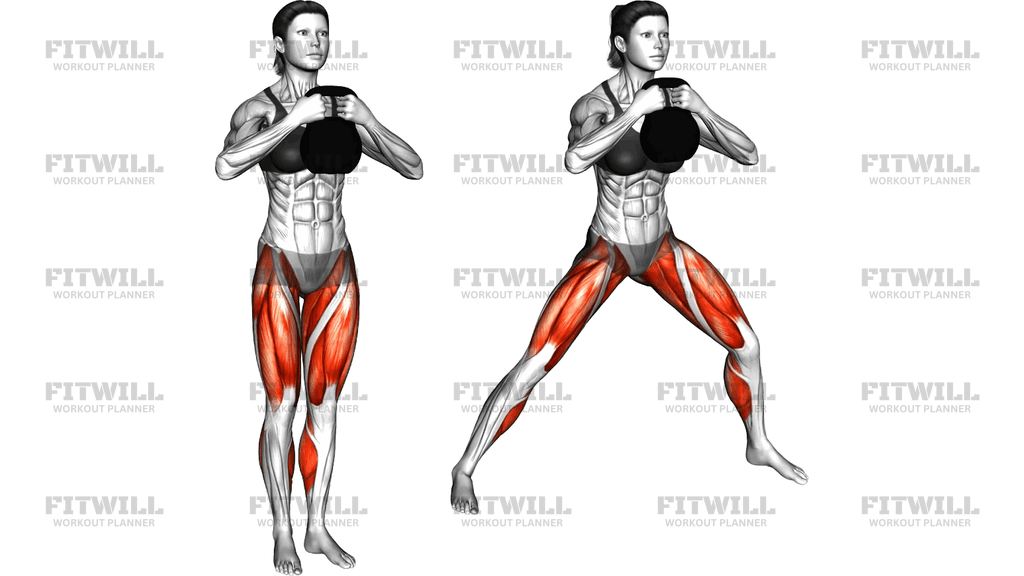
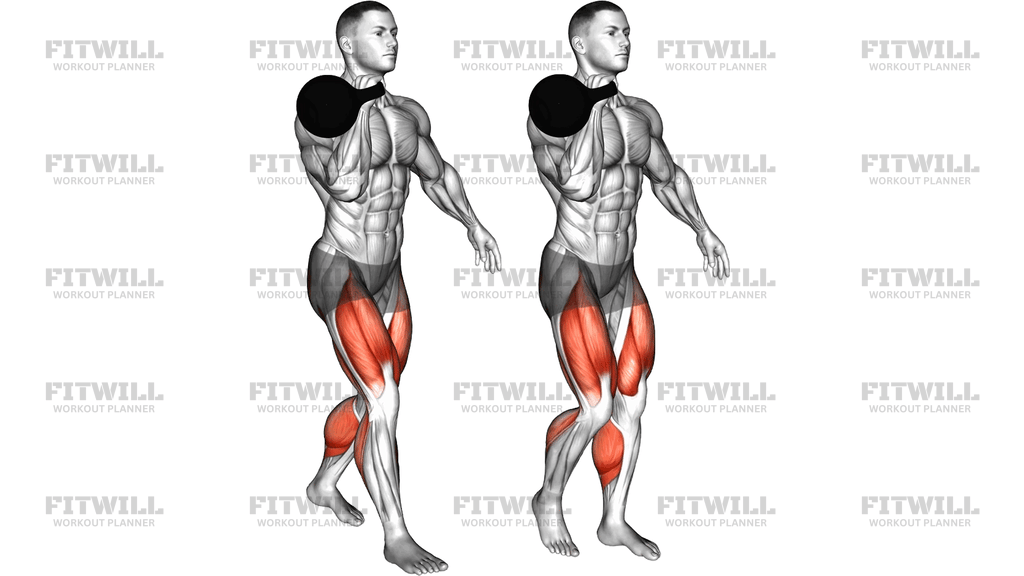
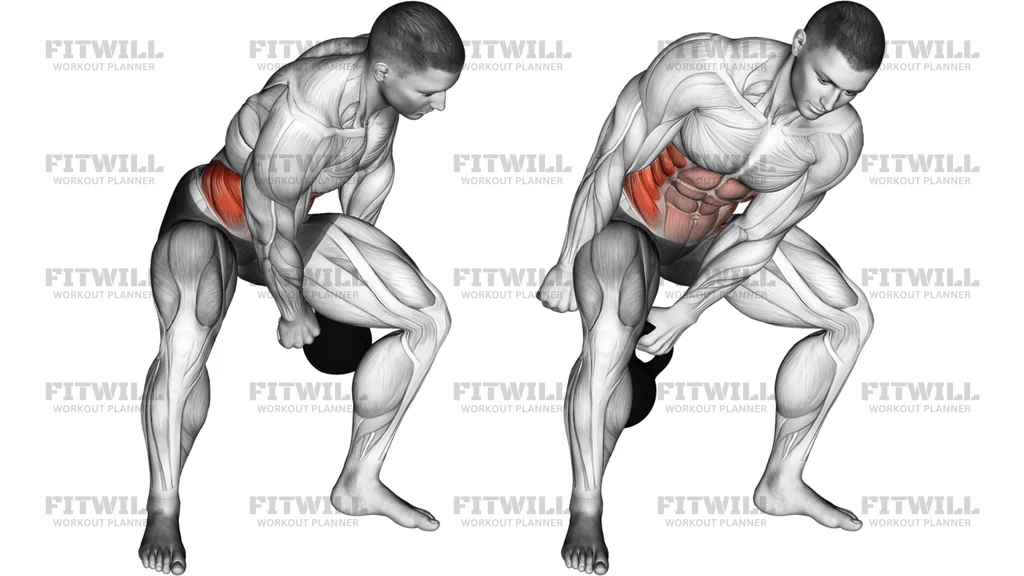
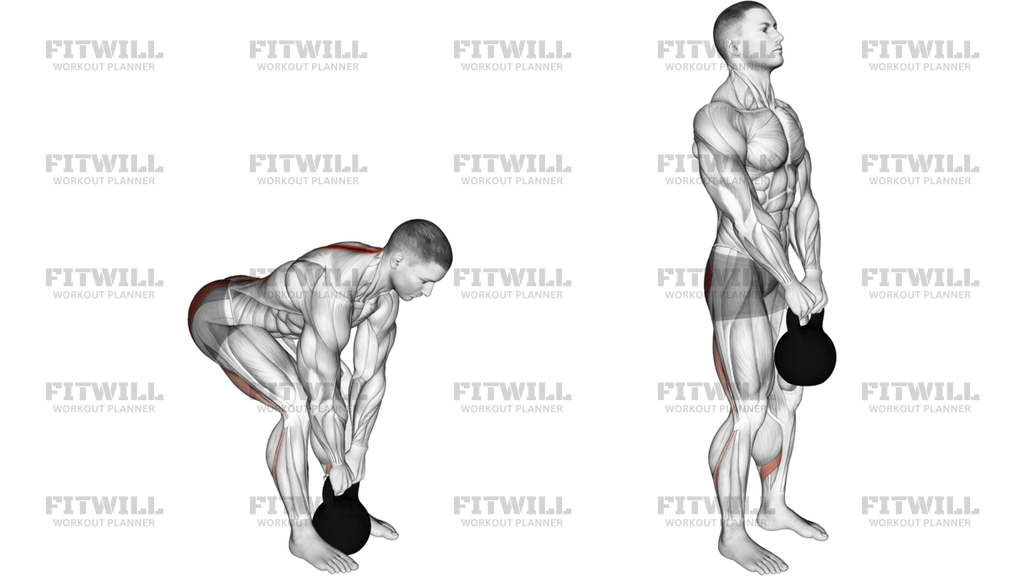
Kettlebell Single-Arm Overhead Lunge
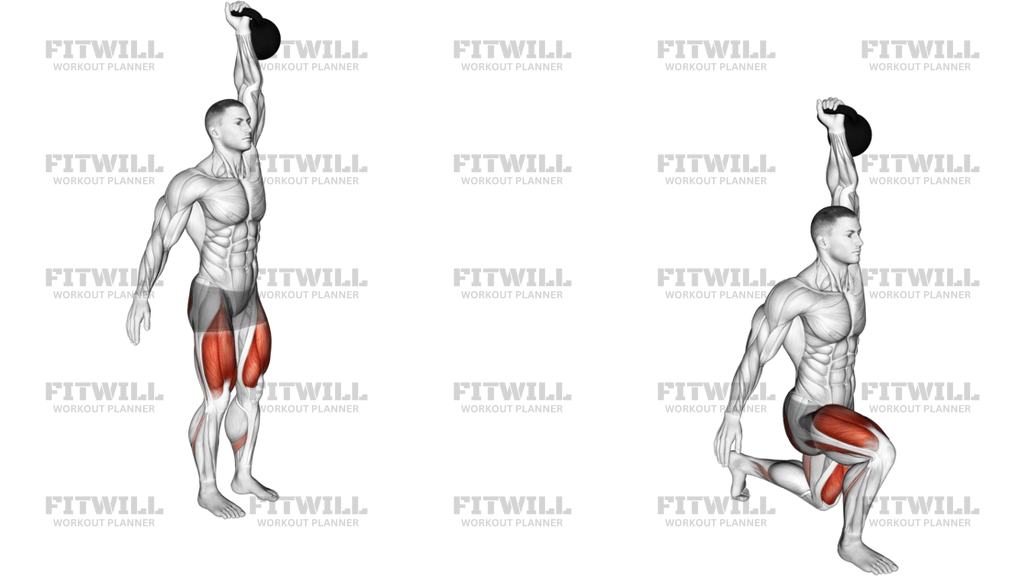
Kettlebell Single-Arm Overhead Lunge is a loaded split-stance lunge that challenges the legs and trunk while the kettlebell stays fixed overhead. It is especially useful for building quad and glute strength alongside shoulder stability, anti-rotation control, and balance. The overhead arm makes the movement more demanding than a standard lunge because the rib cage, pelvis, and working shoulder all have to stay stacked while the body lowers and rises.
The setup matters because the bell sits directly above the shoulder and midfoot before the first rep begins. If the kettlebell drifts forward or the torso arches back, the lunge turns into a balance drill instead of a clean strength pattern. A good repetition looks tall at the top, then controlled on the way down, with the front leg and back leg sharing the load without the spine folding or twisting.
Use a stance that lets you step back and lower straight down rather than reaching too far forward. As you descend, keep the front heel planted, the front knee tracking in line with the toes, and the back knee moving toward the floor. The overhead arm should stay long and quiet, with the wrist, elbow, shoulder, ribs, and pelvis organized so the bell finishes each rep in the same vertical line.
This exercise is a strong fit for athletes and lifters who need single-leg strength with upper-body position under load. It often appears in accessory blocks, unilateral leg work, or core training because it reveals side-to-side differences quickly. Start with a lighter kettlebell than you would use for a regular lunge, since the overhead position reduces leverage and punishes sloppy bracing.
If mobility or balance is limited, reduce depth first and then reduce load. The goal is not to force a deep lunge at any cost, but to keep the rep crisp, repeatable, and pain-free. When performed well, the movement builds strong legs, a stable trunk, and better control in overhead positions that carry over to other pressing and carrying work.
Fitwill
Log Workouts, Track Progress & Build Strength.
Achieve more with Fitwill: explore over 9600 exercises with images and videos, access built-in and custom workouts, perfect for both gym and home sessions, and see real results.
Start your journey. Download today!




Instructions
- Stand tall with your feet about hip-width apart and press one kettlebell overhead until your arm is straight and the bell is stacked over the shoulder.
- Set your ribs down, tighten your glutes lightly, and keep the free hand relaxed at your side for balance.
- Step one foot back into a split stance with enough length to lower straight down without losing balance.
- Keep the front foot flat and the front knee tracking over the second or third toe as both knees bend.
- Lower the back knee toward the floor while keeping the torso tall and the kettlebell vertical over the shoulder.
- Pause briefly at your controlled depth, just above the floor if your mobility allows.
- Drive through the front heel and midfoot to stand back up, bringing the rear leg forward without swinging the bell.
- Reset at the top before the next rep, then switch sides when your set is complete or as programmed.
Tips & Tricks
- Keep the kettlebell slightly behind the line of your face, not drifting forward in front of the shoulder.
- Think ribs over pelvis to stop the lower back from arching as the arm stays overhead.
- Step back far enough that the front heel stays down and the front shin can stay controlled.
- If the front knee caves inward, shorten the range and reduce the load before chasing depth.
- Lower under control for a steady count instead of dropping quickly into the bottom position.
- Exhale as you drive up and finish tall without shrugging the working shoulder.
- Keep the overhead elbow locked or nearly locked so the bell does not wobble through the rep.
- If the shoulder feels pinched, use a lighter bell or switch to a front-rack lunge until overhead control improves.
Frequently Asked Questions
What muscles does the kettlebell single-arm overhead lunge work?
It mainly trains the quadriceps and glutes while also challenging the core, adductors, calves, and shoulder stabilizers.
Is this more of a leg exercise or a core exercise?
It is both. The legs drive the lunge, but the overhead hold forces the trunk to resist twisting and arching.
How low should I go?
Lower until the back knee is close to the floor and you can still keep the kettlebell stacked over the shoulder without losing posture.
Should my front knee go past my toes?
A small forward travel is normal if the heel stays planted and the knee tracks in line with the toes, but avoid collapsing inward.
What if I cannot keep the kettlebell stable overhead?
Use a lighter load, reduce depth, or regress to a front-rack or bodyweight lunge until the overhead position is solid.
Can beginners do this exercise?
Yes, but they should start light and treat it as a control drill rather than a max-effort strength movement.
Why does my lower back arch during the rep?
Usually because the ribs flare up and the bell moves forward, which breaks the stacked overhead position.
Is a reverse lunge the best version to learn first?
Usually yes, because stepping back is easier to control and often feels kinder on the knees than stepping forward.