Dumbbell Overhead Lunge
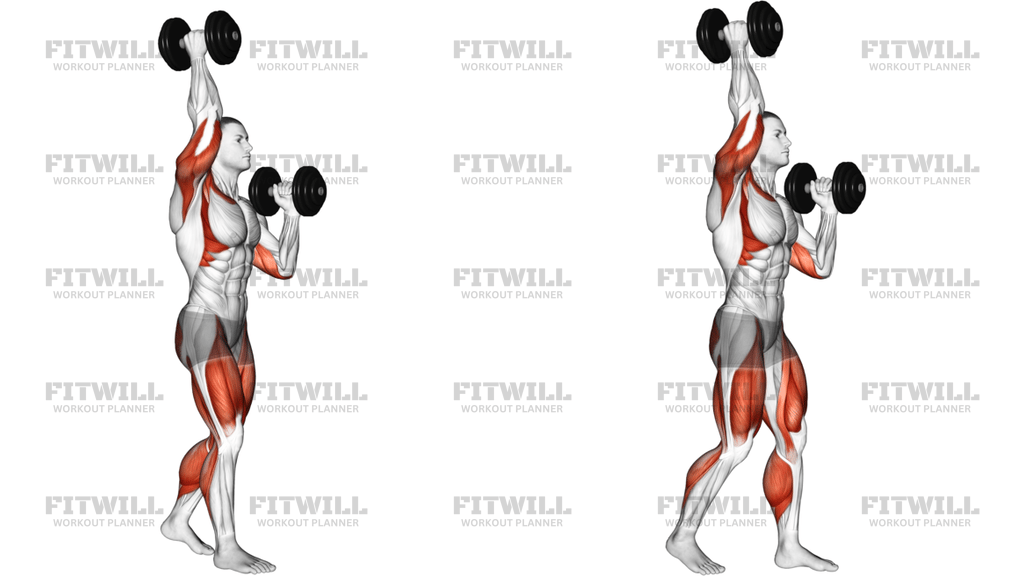
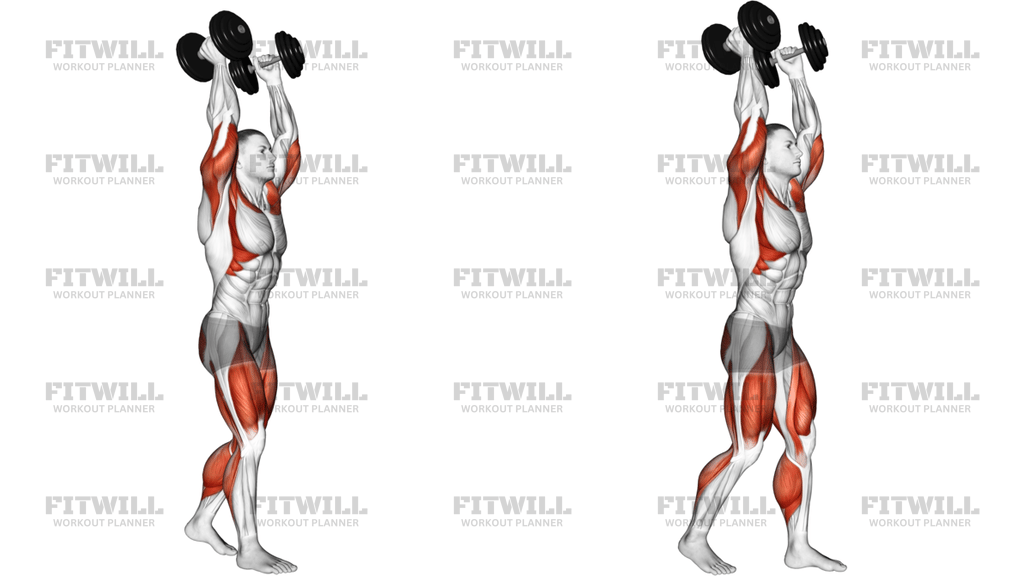
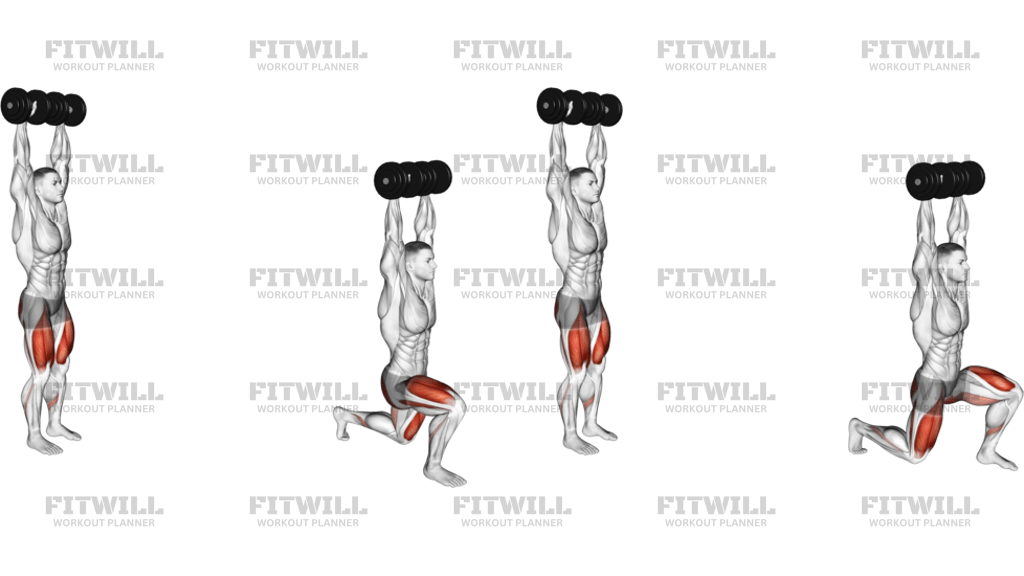
The Dumbbell Overhead Lunge is a loaded stability exercise that combines a lower-body lunge with an overhead dumbbell hold. It challenges the thighs and glutes through the lunge itself, while the shoulders, upper back, and trunk work hard to keep the arms stacked over the body and the torso from drifting forward. Because the load is overhead, small posture mistakes show up quickly, which makes this a useful drill for coordination, bracing, and control.
The setup matters more here than on a standard lunge. Each dumbbell should stay directly above the shoulders with the elbows locked or nearly locked, ribs down, and the neck long. From that position, step into a smooth lunge and keep the weight centered over midfoot as the front knee and hip bend together. The goal is not just to reach depth, but to keep the trunk tall and the dumbbells steady while the legs do the work.
A good rep feels organized from top to bottom. The standing leg, stepping leg, and core should all stay connected so the torso does not arch back or lean hard into the front leg. Lower under control, touch the back knee close to the floor if mobility allows, then drive through the front foot to return to standing without swinging the arms or losing the overhead line. For most lifters, this is a coordination and stability exercise before it is a heavy strength exercise.
Use the Dumbbell Overhead Lunge when you want to train unilateral leg strength, overhead stability, and total-body bracing at the same time. It is especially useful in athletic training, accessory lower-body work, and core-focused sessions where posture under load matters. Because the position is demanding, lighter weights usually produce better results than chasing load too early.
If the overhead position causes the ribs to flare, the back to overarch, or the shoulders to lose position, reduce the load or shorten the range until the movement stays clean. The best repetitions look calm and repeatable, with the dumbbells fixed overhead and the lower body controlling the lunge path from start to finish.
[ Workout Log & Planner ]
Put your next workout in Fitwill
Keep your plan and training log ready when you are.


Instructions
- Stand tall with both dumbbells held overhead, arms straight, wrists stacked over shoulders, ribs down, and feet about hip-width apart.
- Set your gaze forward, squeeze the handles firmly, and brace your midsection before you take the first step.
- Step into a lunge with control, letting both knees bend as the torso stays upright and the dumbbells remain directly over the shoulders.
- Lower until the back knee is close to the floor or the front thigh reaches a strong lunge depth you can control.
- Keep the front heel grounded and the front knee tracking in line with the toes instead of collapsing inward.
- Press through the front foot to return to standing while keeping the arms fixed overhead and the torso steady.
- Reset your balance at the top before the next rep or step into the next lunge if you are walking.
- Breathe in on the descent, then exhale as you drive back to standing.
Tips & Tricks
- Keep the dumbbells slightly behind the ears if mobility allows, but do not let the ribs flare to get them there.
- Use a weight that lets you hold the overhead position without shaking or elbow bend on every rep.
- Take a controlled step so the front foot lands far enough forward to keep the front heel down and the torso tall.
- Let the hips and knees lower together instead of dropping straight down and jamming the front knee.
- If the front knee caves inward, reduce the load and slow the descent before adding more depth.
- Think about reaching the crown of the head upward as you lunge to keep the torso long and stacked.
- Avoid twisting the torso toward the front leg; both shoulder heads should stay square to the front.
- Stop the set when the dumbbells start drifting forward or the lower back begins to arch to save the rep.
Frequently Asked Questions
What does the Dumbbell Overhead Lunge train?
It primarily trains the thighs and glutes, while the shoulders, upper back, and core work to keep the dumbbells stable overhead.
Is the overhead position harder than a regular lunge?
Yes. Holding the dumbbells overhead makes trunk control and shoulder stability much more demanding than a normal lunge.
How should my arms and wrists be positioned?
Keep the arms straight, wrists stacked over the shoulders, and the dumbbells directly above the midfoot instead of drifting forward.
What is the most common mistake in this exercise?
The biggest mistake is arching the lower back or leaning forward to keep the dumbbells overhead instead of staying stacked and upright.
Should I step forward, step back, or walk?
Any of those can work if the torso stays tall and the dumbbells stay fixed overhead, but the image here shows a controlled lunge pattern rather than a fast walking drill.
Can beginners use this exercise?
Yes, but start with very light dumbbells or even no load until you can keep the ribs down and the overhead line steady.
What should I do if my front knee hurts?
Shorten the step, reduce depth, and make sure the front heel stays planted so the knee does not collapse inward.
How do I progress the Dumbbell Overhead Lunge?
Progress the load slowly, then increase range or move to walking lunges only after the overhead position stays stable for every rep.