Seated Back Twist
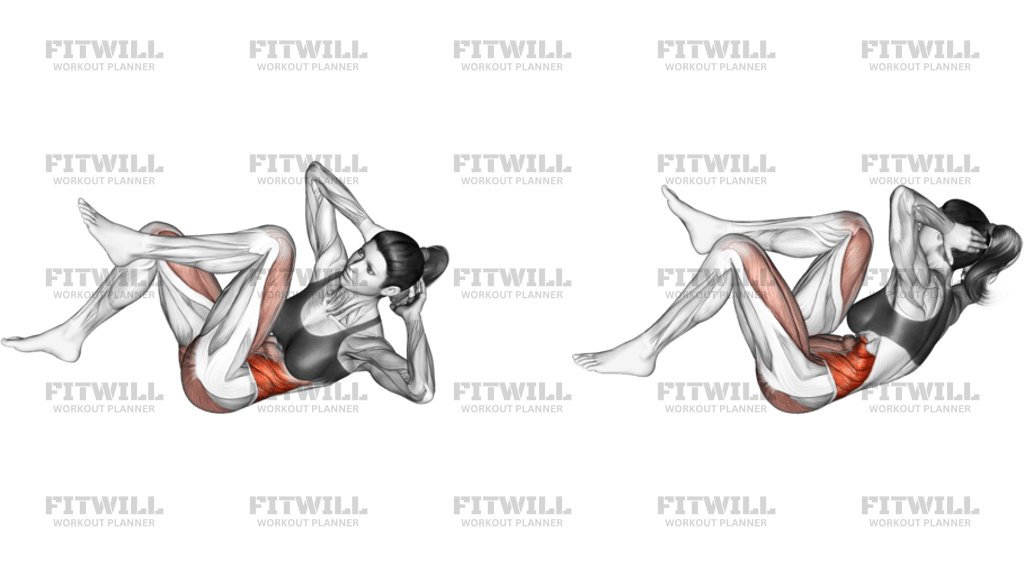
Seated Back Twist is a body-weight trunk rotation exercise that trains the waist, core, and hips while keeping the lower body anchored. It is useful when you want to build control through rotation instead of just flexion or extension, and it fits well in warmups, mobility work, and accessory core sessions. The movement asks you to stay tall, rotate cleanly, and resist the urge to collapse or swing through the rep.
The exercise is most effective when the pelvis stays grounded and the spine stays long. That setup lets the ribcage rotate over a stable base, which is the point of the drill: controlled movement through the torso with the hips quietly supporting the motion. If you let the knees drift, the chest cave in, or the head yank the turn, the twist turns into momentum instead of useful trunk work.
In Seated Back Twist, the hands behind the head position makes it easier to keep the elbows wide and the chest open, but the arms should not be used to force the range. Rotate from the ribcage, breathe into the side you are turning toward, and return to center with control before going the other way. A smaller, slower twist that stays stacked is more valuable than a bigger range that pulls the lower back or lifts the sit bones.
This exercise can help people who need better rotational control for sport, posture work, or general core training. It is also a good option for beginners because the load is just body weight, but the quality of the rep still matters. If the hips feel tight, reduce the range and keep the torso tall rather than chasing the floor or forcing the knees into position.
Treat Seated Back Twist as a precision movement, not a speed drill. The goal is to create smooth spinal rotation while the hips, neck, and shoulders stay organized. Used well, it can improve awareness of how the torso rotates and how to keep the core active without bracing so hard that the movement becomes stiff or jerky.
[ Workout Log & Planner ]
Put your next workout in Fitwill
Keep your plan and training log ready when you are.


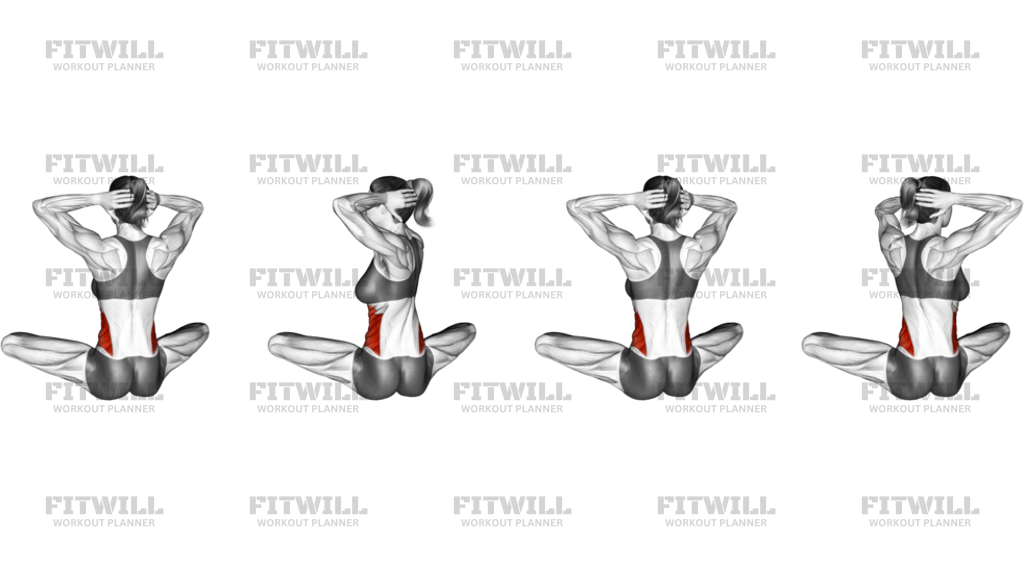
Instructions
- Sit on a mat with your sit bones grounded, your knees bent and opened comfortably, and your chest lifted tall.
- Place your hands lightly behind your head or at your temples, and keep your elbows wide without flaring your ribs forward.
- Stack your ribs over your pelvis and lengthen through the crown of your head before you start the twist.
- Exhale and rotate your ribcage to one side while keeping both hips heavy and your lower body still.
- Turn only as far as you can keep the spine tall and the sit bones planted instead of leaning back or collapsing forward.
- Pause for a brief moment at the end of the twist, then inhale as you return smoothly through center.
- Rotate to the opposite side on the next rep, keeping the same pace and range on both sides.
- Lower your hands and reset your posture before standing up or starting the next set.
Tips & Tricks
- Keep the twist coming from the ribcage, not from pulling the elbows across the body.
- If one sit bone lifts, shorten the range until both hips stay heavy on the mat.
- Think of turning tall first and deeper second; collapsing forward usually steals the rotation from the waist.
- Relax the jaw and neck so the head does not lead the twist.
- Use a slow return through center so the core has to control both directions of the rep.
- Keep the knees quiet; if they swing with the torso, the movement is becoming a hip sway instead of a trunk twist.
- Exhale into the twist and inhale back to center to keep the pace controlled.
- If your hips feel tight, sit on a folded towel or a firmer cushion to make it easier to stay upright.
Frequently Asked Questions
What does Seated Back Twist work most?
It mainly trains the waist and deep core, with the hips helping you stay grounded while you rotate.
Can beginners do Seated Back Twist safely?
Yes, because it is body weight only. Start with a small, controlled twist and keep your sit bones anchored.
Should my hands stay behind my head during Seated Back Twist?
They can, as long as they stay light. The hands should support the head position, not pull the neck through the turn.
Why do my knees move when I twist?
That usually means the twist is coming from the hips instead of the torso. Keep the knees quiet and rotate the ribcage over a stable seat.
How far should I rotate in Seated Back Twist?
Only as far as you can keep both sit bones down and your spine tall. A smaller range with clean control is better than forcing a bigger turn.
What if Seated Back Twist bothers my lower back?
Reduce the range and sit a little taller, or place a folded towel under you. If the discomfort continues, skip the twist and use a gentler core drill.
Is Seated Back Twist more of a stretch or a strength move?
It is both, but the main value comes from controlled trunk rotation and core control rather than passive stretching.
How can I make Seated Back Twist harder without adding weight?
Slow the return to center, pause briefly at each end range, and keep the torso stacked instead of leaning back for momentum.