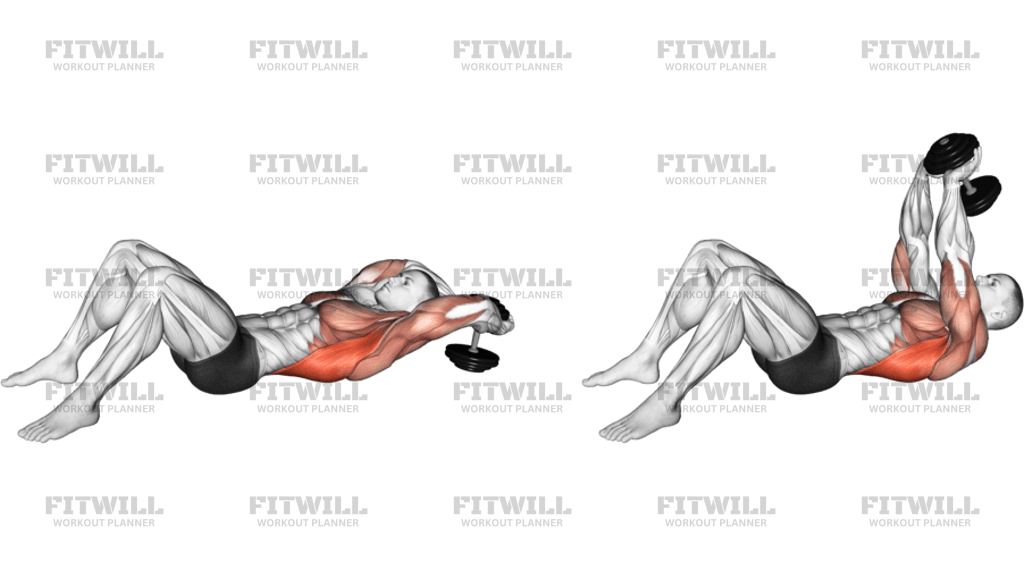
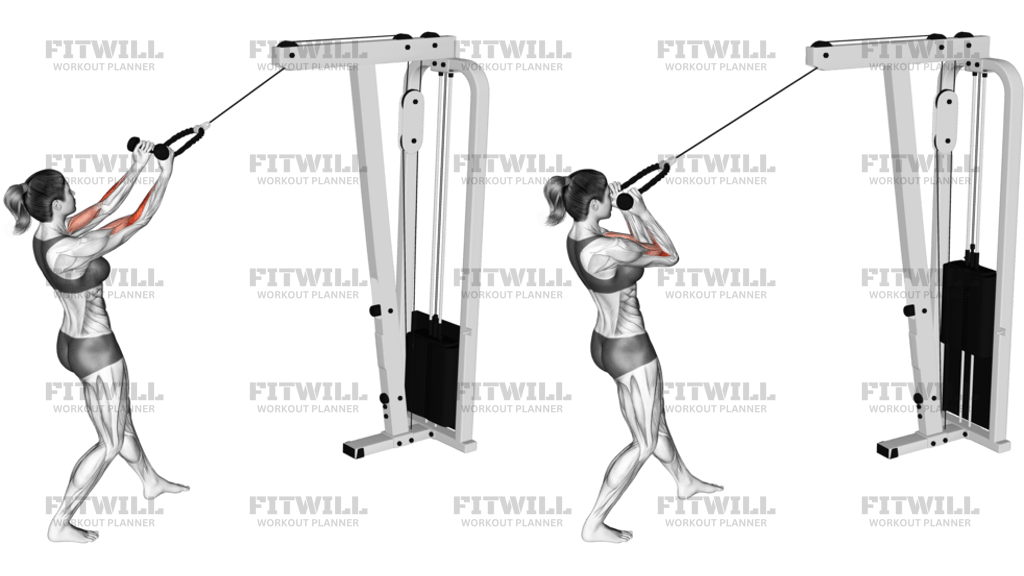
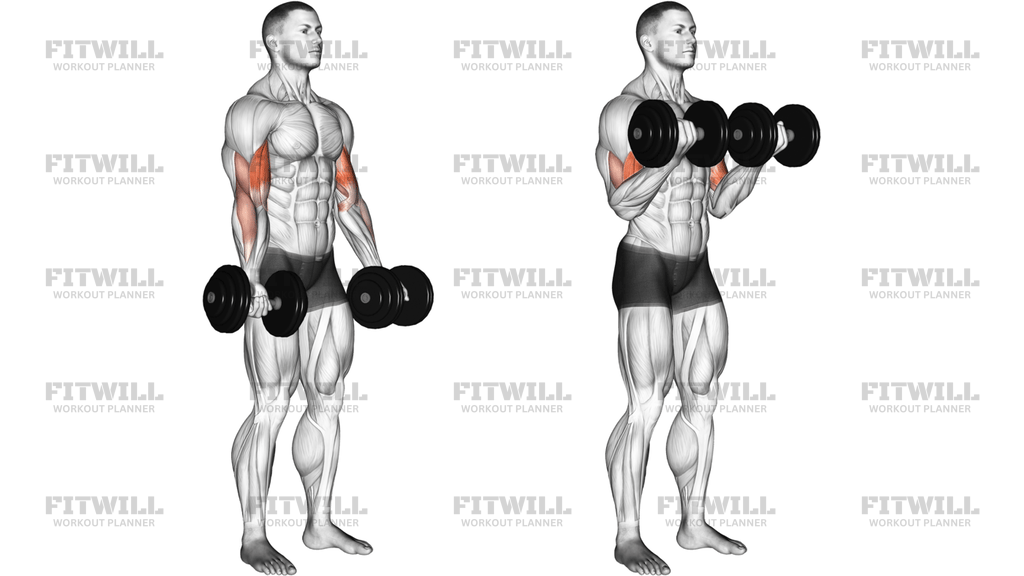
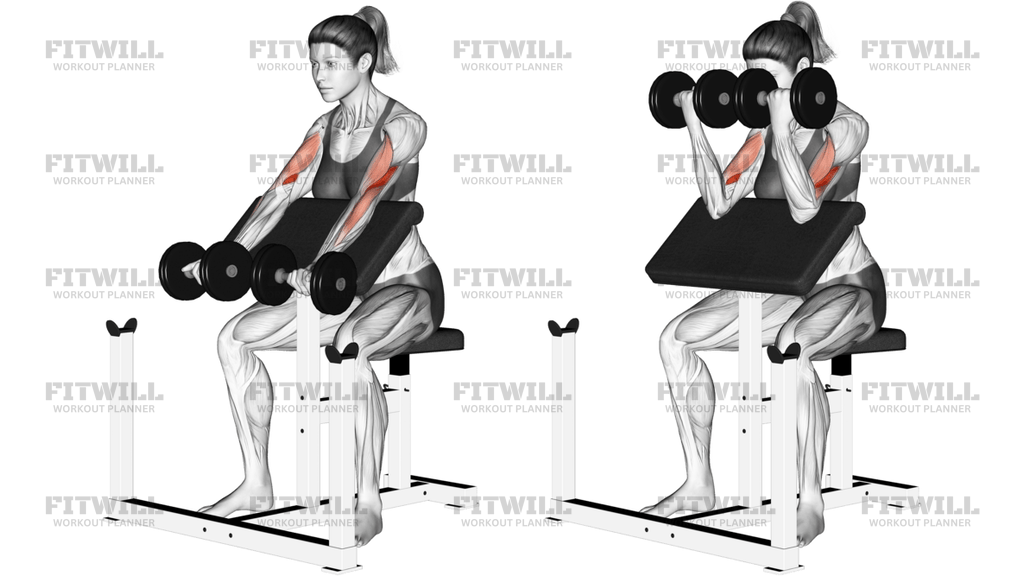
Dumbbell Waiter Biceps Curl
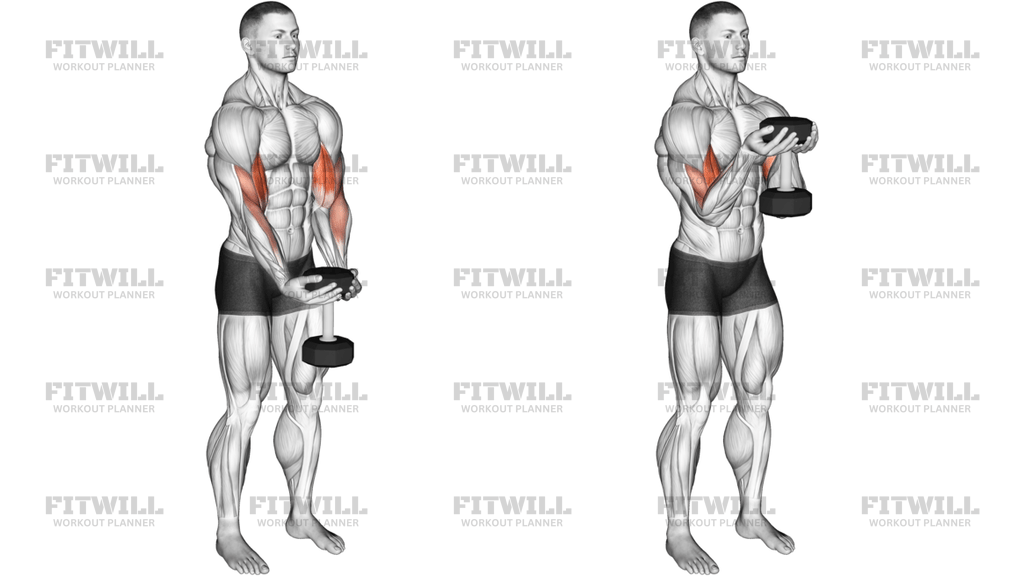
Dumbbell Waiter Biceps Curl is a standing arm isolation exercise that keeps the dumbbell upright while you curl from the elbow. The hand supports the top plate like a waiter tray, so the bell stays vertical instead of hanging from a standard handle. That unusual lever makes the movement a useful test of strict elbow flexion, wrist control, and shoulder discipline.
The exercise is most useful for building the biceps with extra work from the brachialis, brachioradialis, and forearm flexors. Because the dumbbell sits vertically in front of the hand, the wrist and forearm have to stabilize the load while the elbow does the actual lifting. That makes the curl feel cleaner when the setup is honest and much sloppier when you start leaning, shrugging, or twisting to cheat the rep.
A good set begins with a stable stance and a quiet torso. Stand tall with your feet about hip-width apart, hold one dumbbell vertically at your side, and place your palm under the top plate so the weight is balanced over the hand. Keep the elbow close to your ribs, stack your wrist over your forearm, and let the shoulder stay down before the first rep starts.
From there, curl by bending only at the elbow and bring the dumbbell upward toward the front of the shoulder. The upper arm should stay mostly in place while the forearm travels; if the elbow drifts forward, the front of the shoulder starts taking over and the rep stops being a true biceps curl. Lower the dumbbell under control until the arm is straight again, then reset before the next rep instead of bouncing out of the bottom.
Dumbbell Waiter Biceps Curl is a good accessory choice on arm days, after pressing or pulling work, or anywhere you want stricter curl mechanics than a normal dumbbell curl allows. It can also be a practical option for lifters who want to build arm strength without relying on a swinging torso or a heavy supinated grip. Keep the load modest, the tempo deliberate, and the wrist neutral so the biceps do the work instead of momentum or shoulder shrugging.
[ Workout Log & Planner ]
Put your next workout in Fitwill
Keep your plan and training log ready when you are.


Instructions
- Stand tall with your feet about hip-width apart and hold one dumbbell vertically at your thigh with your palm under the top plate.
- Keep the working elbow close to your ribs, let the arm hang straight, and stack your wrist over your forearm before you start.
- Brace your torso and soften your knees so your body stays still when the dumbbell starts moving.
- Curl the dumbbell upward by bending only at the elbow while keeping the upper arm nearly fixed.
- Bring the weight toward the front of your shoulder without letting the wrist bend back or the shoulder roll forward.
- Squeeze the biceps briefly at the top of the rep with the dumbbell still upright.
- Lower the dumbbell slowly until the arm is straight again, stopping before the weight swings away from your side.
- Exhale as you curl up, inhale as you lower, and keep the same breathing rhythm for each rep.
- Set the dumbbell back at your thigh and reset your stance before switching sides or ending the set.
Tips & Tricks
- Use less weight than you would for a regular curl; the upright dumbbell is harder to stabilize.
- If the elbow drifts forward, pin it closer to your side and stop the curl a little lower.
- Keep the knuckles stacked over the wrist so the dumbbell does not fold the hand backward at the top.
- Do not shrug the shoulder to finish the rep; the upper arm should stay quiet while the forearm moves.
- Lower for two to three seconds so the biceps and brachialis stay under tension instead of dropping the weight.
- If your torso starts to rotate, switch to single-arm reps with the free hand resting at your side.
- A brief pause at the bottom removes bounce and makes each rep start from a dead stop.
- Stop the set when the dumbbell starts to wobble or the wrist can no longer stay stacked.
Frequently Asked Questions
What muscles does Dumbbell Waiter Biceps Curl work?
It mainly trains the biceps brachii, with help from the brachialis, brachioradialis, and forearm flexors. The front of the shoulder also works to keep the dumbbell steady.
Why hold the dumbbell upright in Dumbbell Waiter Biceps Curl?
The upright position keeps the load balanced over the hand and makes the wrist and forearm work harder to stabilize it. That makes cheating harder than in a standard curl.
Is Dumbbell Waiter Biceps Curl different from a regular dumbbell curl?
Yes. The bell stays vertical and the hand supports the top plate, so the lift feels more top-heavy and demands stricter elbow control. You usually need a lighter weight than for a normal curl.
Can beginners do Dumbbell Waiter Biceps Curl?
Yes, as long as the weight is light enough to keep the wrist stacked and the elbow still. Start with short sets and clean reps before adding load.
How heavy should the dumbbell be for this curl?
Choose a load you can raise without leaning back, shrugging, or letting the dumbbell tilt. If the wrist bends or the bell shakes, it is too heavy.
Why do my shoulders feel involved in Dumbbell Waiter Biceps Curl?
A small amount of front-shoulder tension is normal because the arm is holding the load in front of the body. If the shoulder feels like the main driver, keep the elbow closer to your ribs and reduce the load.
What is the most common mistake in Dumbbell Waiter Biceps Curl?
Most people let the elbow drift forward and turn the curl into a front-shoulder lift. Keep the upper arm quiet and let the forearm do the work.
What should I do if my wrist bends back during the rep?
Lower the weight and keep the knuckles stacked over the forearm from the start. The dumbbell should feel centered over the hand, not hanging behind it.