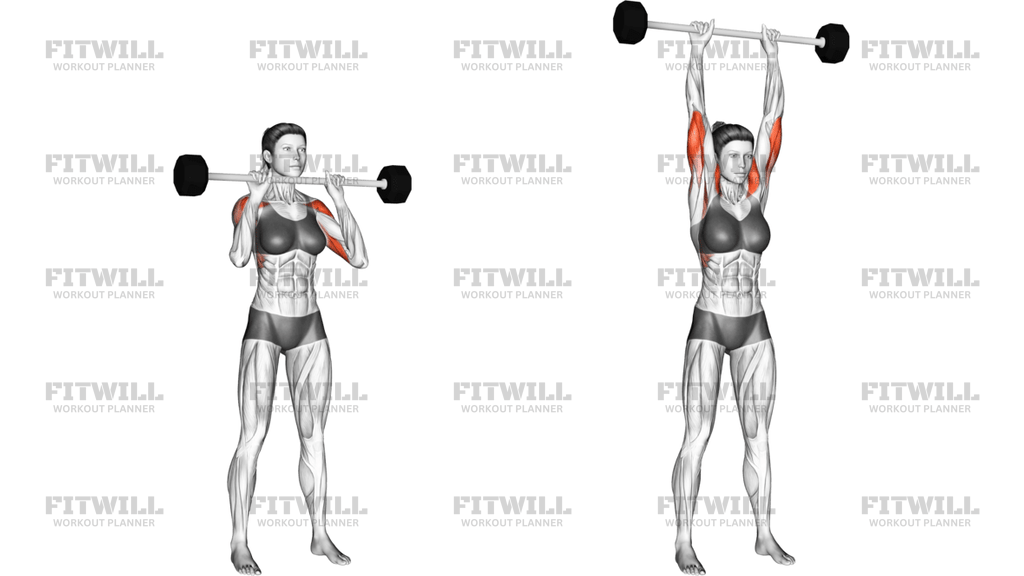
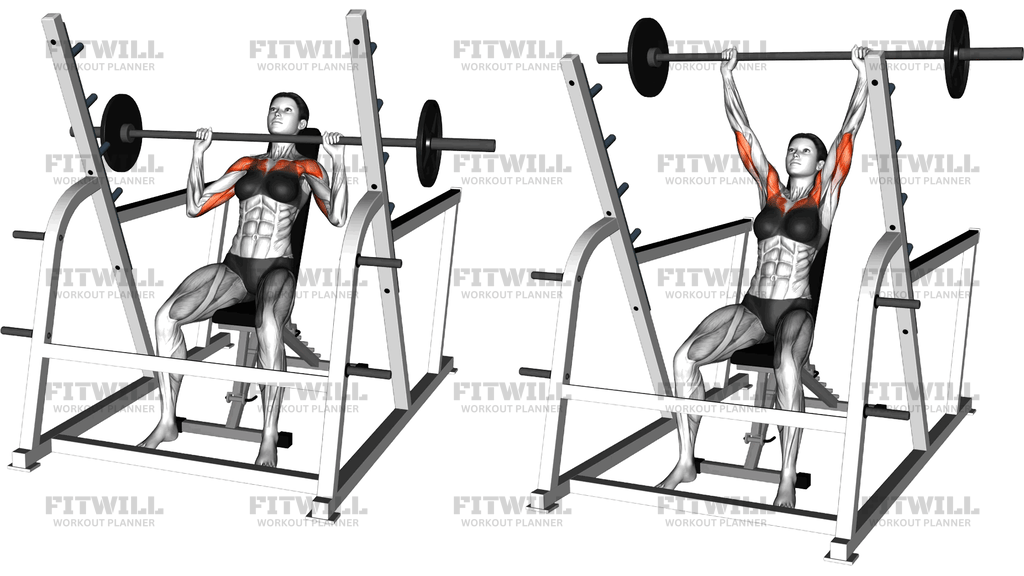
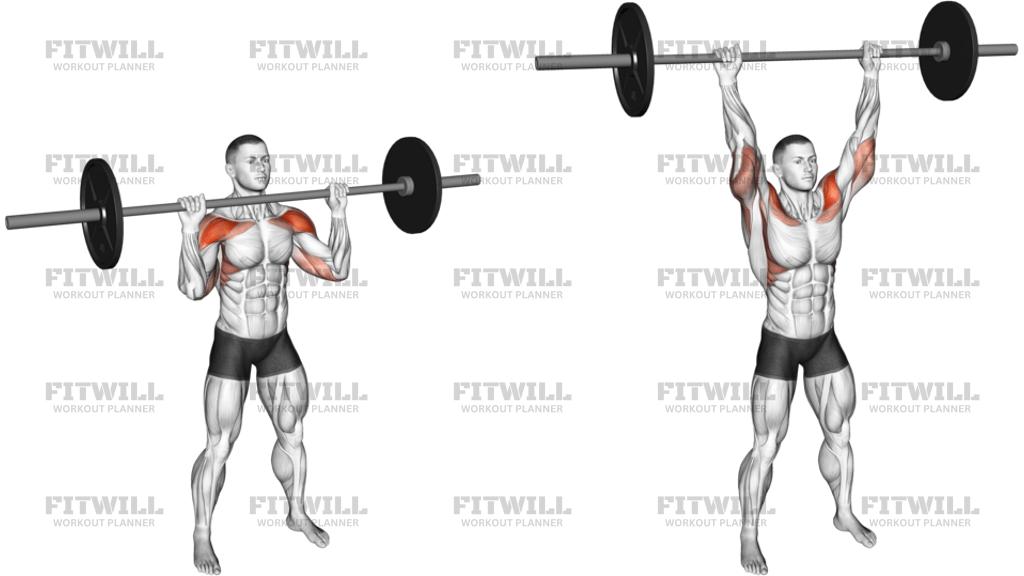
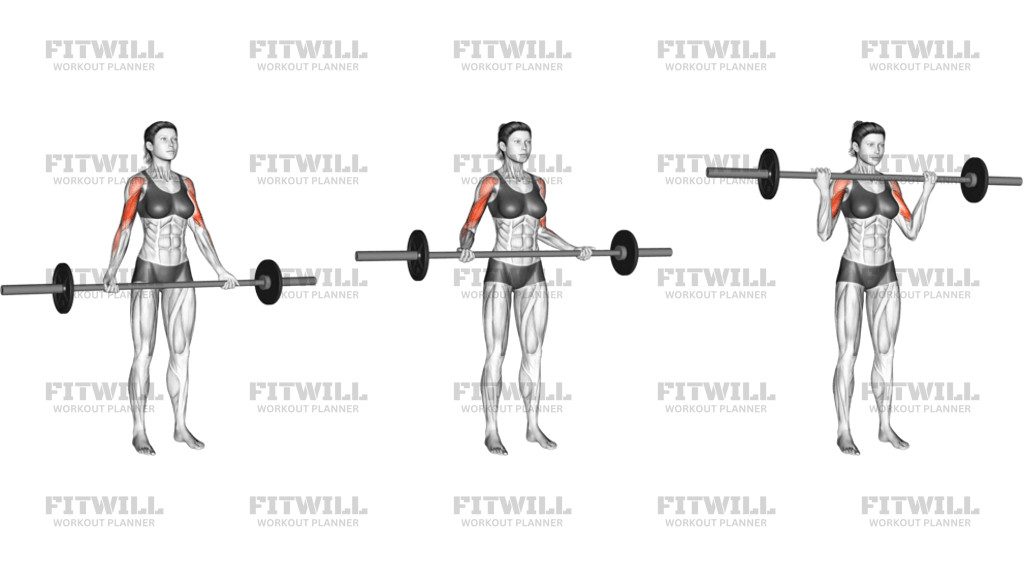
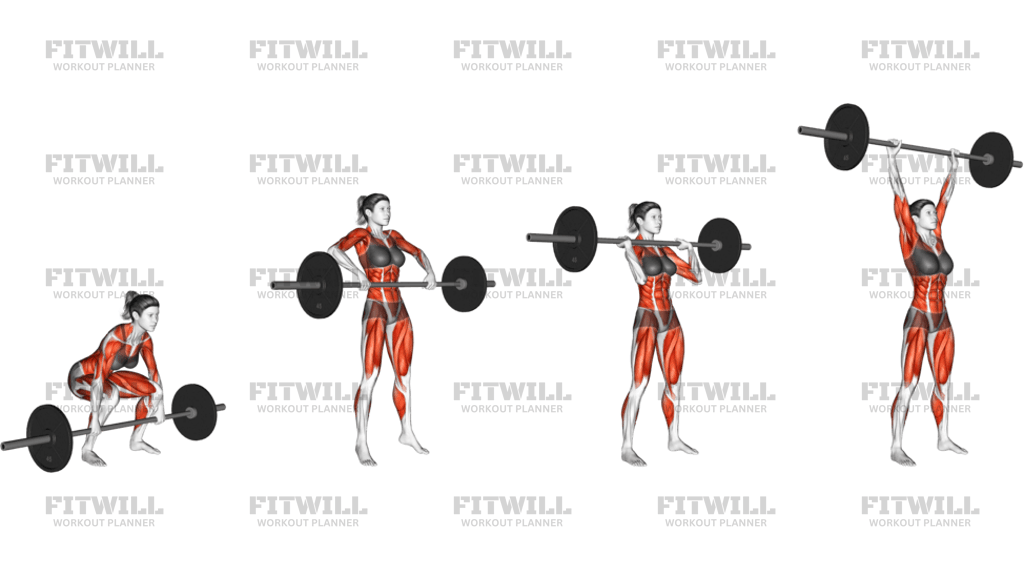
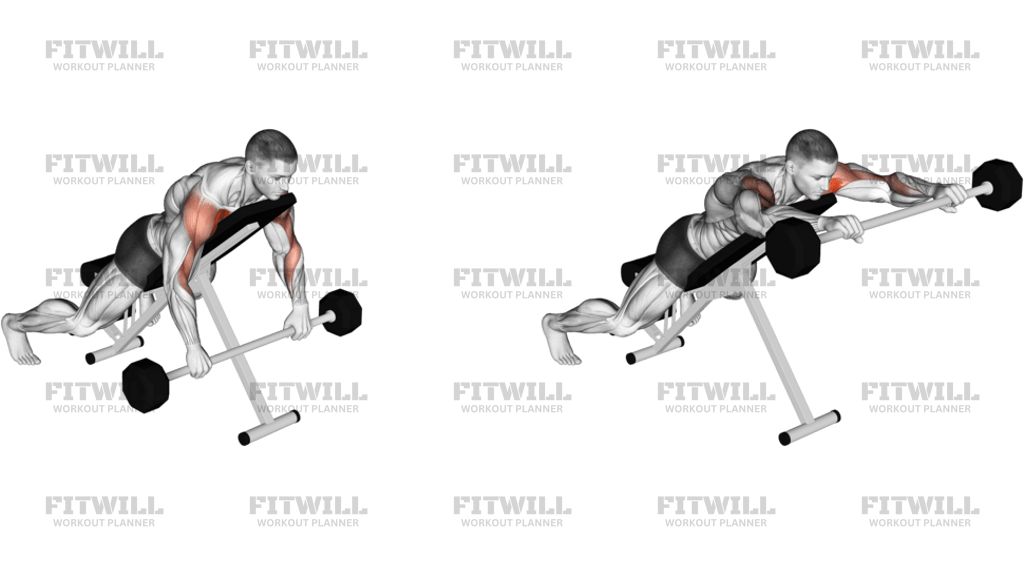
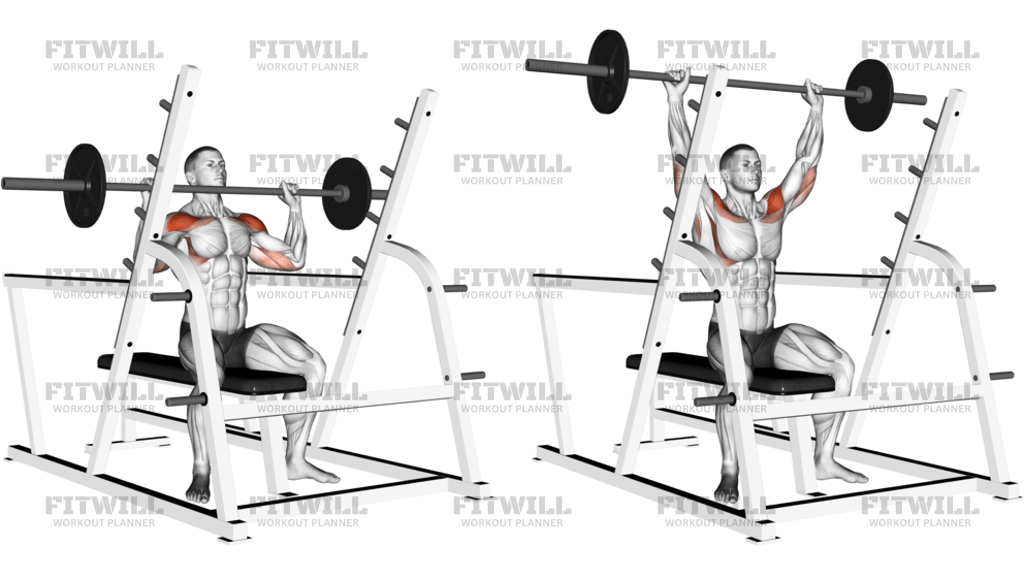
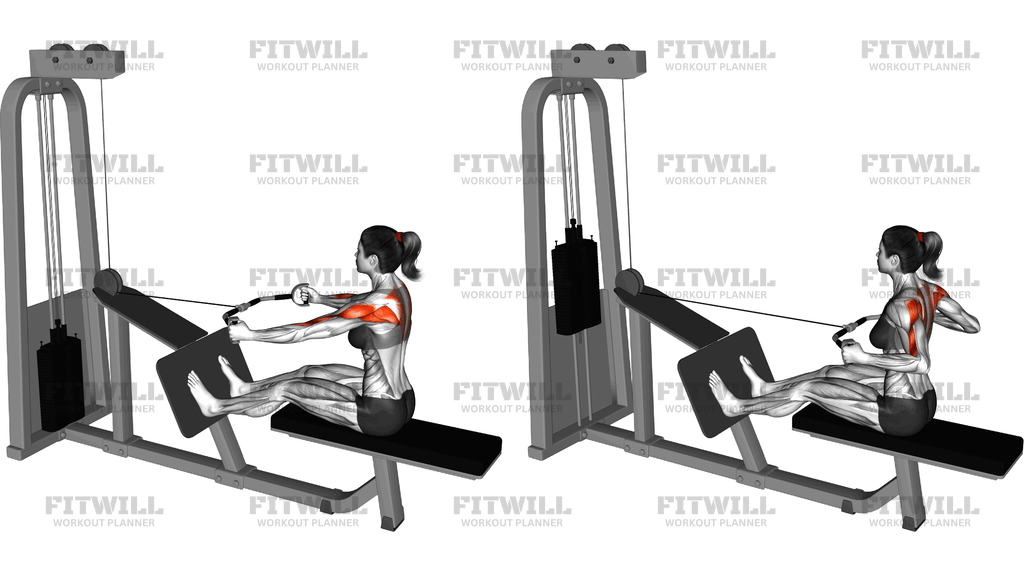
Landmine Kneeling Thruster Press
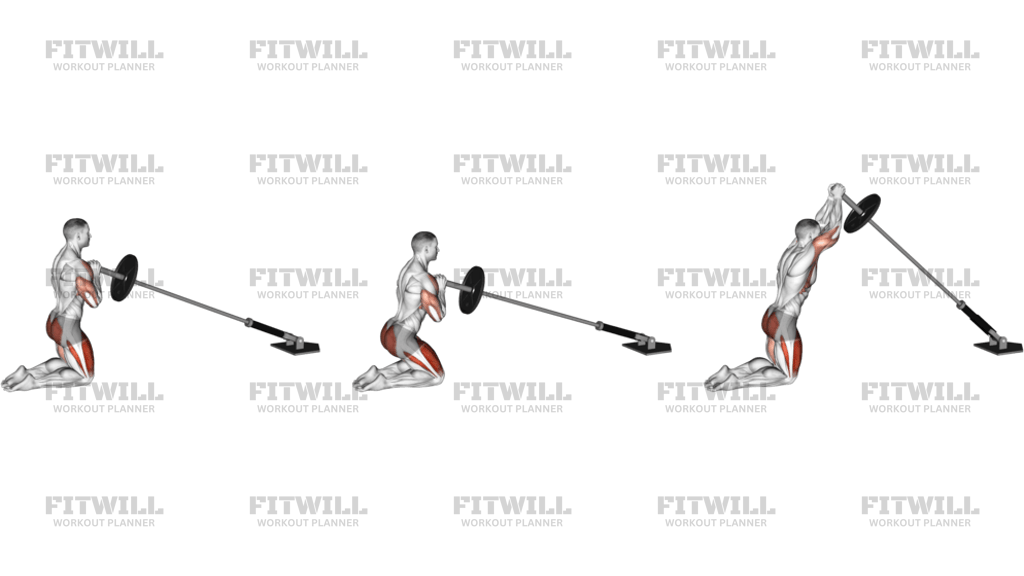
Landmine Kneeling Thruster Press is a two-handed pressing variation that uses an anchored barbell to create a smooth, shoulder-friendly arc from the upper chest to overhead. Because you are kneeling on both knees, the movement strips out leg drive and makes the upper body do the work, which is useful when you want strict shoulder pressing without turning the rep into a full-body heave.
The exercise places the main demand on the delts, with the triceps helping to finish the press and the upper back working to keep the shoulder girdle organized. In practical programming, Landmine Kneeling Thruster Press fits well as an accessory press for shoulder volume, a controlled strength builder, or a variation for lifters who prefer the angled landmine path over a straight overhead press. The diagonal bar path is often easier on the shoulders and wrists than a fixed vertical press, especially when mobility is limited.
A good rep starts with a stable kneeling position. Set the knees on a pad or soft floor, keep the hips stacked over the knees, and hold the loaded end of the bar close to the upper chest with the forearms angled up under the bar. From there, brace the abs, keep the ribs down, and press the bar up and slightly forward along the landmine arc rather than straight overhead.
At the top, the arms should finish long without the shoulders shrugging hard toward the ears. Lower the bar under control back to the same chest position and keep the torso tall so the rep stays honest instead of turning into a back lean. The goal is a smooth, repeatable path that looks the same on every rep, with breathing and posture staying steady instead of changing as fatigue builds.
Landmine Kneeling Thruster Press is especially useful when you want to train pressing mechanics with a lower skill barrier than a free overhead barbell press. It is also a good choice for home or gym setups where a landmine attachment is available and you want a straightforward, joint-friendly strength exercise. Use light to moderate loading, stop the set if you start losing the kneeling stack or the bar drifts off its natural arc, and keep the movement controlled enough that the shoulders do the work rather than momentum.
[ Workout Log & Planner ]
Put your next workout in Fitwill
Keep your plan and training log ready when you are.


Instructions
- Anchor one end of the barbell in a landmine base and kneel on both knees on a pad or soft floor facing the sleeve.
- Hold the loaded end with both hands close together at upper-chest height, with your elbows slightly in front of your ribs and your wrists stacked over your forearms.
- Set your hips over your knees, squeeze your glutes, and brace your abs so your torso stays tall before the first rep.
- Start with the bar resting near the upper chest or collarbone, not drifting out in front of you.
- Press the bar up and forward along the landmine arc until your arms are straight and the bar finishes slightly in front of your head.
- Keep your shoulders down as the bar rises so the press comes from the delts and triceps instead of a hard shrug.
- Lower the bar slowly back to the same chest position, letting the elbows bend under control and keeping the rib cage from flaring.
- Pause briefly in the start position, reset your brace, and repeat for the planned number of reps before carefully returning the bar to the floor or rack position.
Tips & Tricks
- Pad both knees well; if the floor is hard, your setup will get sloppy long before the shoulders do.
- Keep the bar path on the landmine arc. If you press straight up, the movement loses its shoulder-friendly angle.
- Hold the sleeve or the near plate with a neutral wrist so the load sits over the forearms instead of bending the wrists back.
- If your ribs flare at the top, lower the load and stop the press a little short of lockout until you can stay stacked.
- Think 'up and forward' rather than 'back and up' so the bar ends slightly in front of your face, not behind it.
- Do not let the elbows drift behind the body at the start; keep them just in front of the ribs for a cleaner drive.
- A small pause at the chest removes bouncing and makes each rep start from the same position.
- Use a load that lets you keep your hips over your knees without rocking backward on every press.
Frequently Asked Questions
What muscles does Landmine Kneeling Thruster Press work?
The main work goes to the delts, with the triceps helping to finish the press and the upper back helping stabilize the shoulder position.
Why do this kneeling instead of standing?
Kneeling removes leg drive and makes it easier to keep the press strict, so the shoulders have to move the load instead of the lower body helping.
How should the bar travel on Landmine Kneeling Thruster Press?
The bar should move in a forward arc from the upper chest to slightly in front of overhead, following the landmine angle rather than a straight vertical line.
Where should my hands be on the bar?
Keep both hands close together on the sleeve or near the loaded end, with the wrists stacked over the forearms and the elbows tucked slightly in front of the ribs.
Is Landmine Kneeling Thruster Press good for beginners?
Yes, it is usually beginner-friendly because the angled path is easier to control than a strict overhead barbell press. Start light and keep the kneeling position tall.
What is the most common mistake with this exercise?
Leaning back and turning the press into a low-back movement is the biggest mistake. Keep the hips stacked over the knees and let the bar move, not your torso.
Should I feel this in my upper back too?
Yes, some upper back and trap work is normal because those muscles help stabilize the shoulder blades, but the main effort should still stay on the shoulders.
How heavy should I go on Landmine Kneeling Thruster Press?
Use a load that lets you repeat the same chest position, bar path, and torso angle on every rep. If the bar slows because you are leaning back, it is too heavy.