Trap Bar Squat
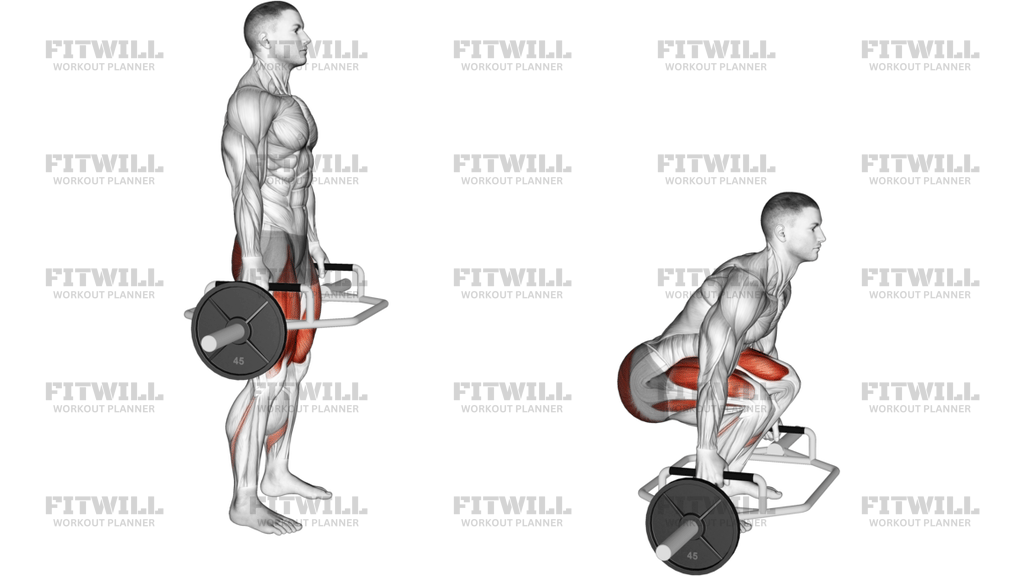
Trap Bar Squat is a lower-body strength exercise that uses a hex bar to let you squat with the load beside your body instead of across your back. That side-loaded setup usually makes it easier to stay upright, keep the chest open, and drive force through the legs without the shoulder and upper-back position demands of a back squat.
The movement is usually most useful when you want a squat pattern that is friendly to the joints, easy to learn, and strong for general leg development. The quads do a lot of work as the knees bend and extend, while the glutes, adductors, calves, and trunk help keep the pelvis and spine organized through the descent and stand-up.
The setup matters because the bar should stay balanced over the middle of the foot from the first rep. Stand inside the hex bar with your feet roughly shoulder-width apart, toes slightly turned out, and your hands on the neutral handles. A controlled hinge to the handles, a tight brace, and a stacked ribcage-over-pelvis position will make the squat feel stable instead of wobbly.
Each rep should look like a squat, not a rushed pull. Sit down between your hips and knees, keep the knees tracking in line with the toes, and lower only as far as you can while keeping the heels down and the low back neutral. On the way up, drive the floor away, keep the handles close to your sides, and finish tall without leaning back at the top.
Use Trap Bar Squat when you want strong leg work with a clear, repeatable pattern: as a main lower-body lift, as a beginner-friendly squat, or as a quad-dominant accessory when back loading is not ideal. It is especially useful when technique, comfort, and consistent depth matter more than forcing the heaviest possible load.
The biggest mistakes are letting the hips rise faster than the shoulders, collapsing the knees inward, rounding the lower back at the bottom, or turning the rep into a short hinge with very little knee bend. Keep the path smooth, the brace active, and the tempo controlled so every repetition starts and ends in the same clean position.
[ Workout Log & Planner ]
Put your next workout in Fitwill
Keep your plan and training log ready when you are.


Instructions
- Stand inside the hex bar with your feet about shoulder-width apart, toes slightly turned out, and the handles centered over the middle of your feet.
- Hinge at the hips and bend your knees to grasp the neutral handles, keeping your back flat and your chest long as you settle into position.
- Pull your shoulders down, brace your abs, and spread your weight across the whole foot before you begin the lift.
- Stand up to clear the bar, then take a breath and lock in a tall, stacked torso before each rep.
- Sit your hips down between your knees, letting the knees travel forward and outward in line with the toes.
- Lower under control until your thighs are as deep as your mobility allows without the heels lifting or the low back rounding.
- Drive through the midfoot and heels to stand, keeping the handles close to your sides and the chest from tipping forward.
- Finish tall with the hips and knees extended, exhale near the top, and reset your brace before the next rep.
- When the set is finished, guide the bar back to the floor with the same controlled path.
Tips & Tricks
- If your torso tips forward early, shorten your stance a little and think about sitting down instead of reaching the hips back.
- Keep the handles close to your thighs on the way up so the bar does not drift in front of your center of mass.
- Let the knees move forward; a trap-bar squat should still look like a squat, not a stiff-leg pull.
- A slightly higher handle position is useful when ankle mobility or low-back comfort limits your depth.
- Do not chase extra depth if your heels pop up or your pelvis tucks under at the bottom.
- Keep the elbows straight and relaxed so the arms stay as hooks rather than helping the lift.
- A 2-3 second lowering phase usually improves control and makes the quads do more of the work.
- If the knees cave in, cue them to track over the second and third toes on the way down and up.
- Use a load that lets you keep the same torso angle on every rep instead of grinding the first few and collapsing later.
Frequently Asked Questions
What muscles does Trap Bar Squat work most?
It mainly targets the quads and glutes, with the adductors, calves, and trunk helping stabilize the squat.
Can beginners perform this exercise?
Yes. The neutral handles and more upright torso usually make it easier to learn than a back squat.
Where should my feet and handles be set up?
Start with your feet about shoulder-width apart and the handles lined up over the midfoot so the bar stays centered as you squat.
How deep should I squat in the trap bar?
Go as deep as you can while keeping your heels down, knees tracking over your toes, and your low back neutral.
Is Trap Bar Squat different from a trap bar deadlift?
Yes. A squat keeps a more upright torso and more knee bend, while a deadlift usually starts with more hip hinge and less knee travel.
What should I watch for at the bottom of the rep?
Do not let the pelvis tuck under or the chest collapse; stop the descent before the position breaks.
Which handle height should I use?
Use the higher handles if you need a more comfortable start position or extra clearance, and the lower handles if you can keep the same squat mechanics.
What is the most common form mistake?
The biggest issue is letting the hips shoot up faster than the shoulders, which turns the squat into a partial pull.