Dumbbell Pullover
Dumbbell Pullover is a lying dumbbell movement performed on a flat bench, where you guide one dumbbell in a long arc from above the chest to behind the head and back again. It is often used as an accessory exercise for the chest, lats, and triceps, but the exact feel depends on how deep you lower the weight, how steady your ribcage stays, and how well you control the shoulder position. The movement rewards patience more than load, so the best repetitions look smooth from the first inch of the descent to the final press back over the chest.
The setup matters because the bench position creates the whole line of pull. Lie with your upper back and shoulders supported on the bench, feet planted, and your hips set so you can stay stable without turning the lift into a bridge. Hold the dumbbell with both hands around one end, stack it above your chest, and keep a small bend in the elbows before you start the arc. If the shoulders are loose at the bottom or the lower back overarches to chase range, the exercise usually turns into a different movement.
During the lowering phase, let the dumbbell travel backward in a controlled arc while the upper arms stay almost fixed. The shoulders should open enough to create a stretch, but not so much that the ribcage flares or the front of the shoulder feels pinched. On the way back up, pull the weight over the chest with a steady exhale and keep the dumbbell moving on the same path instead of straight up or toward the face. That arc is what makes Dumbbell Pullover feel like a pullover instead of a press or a triceps extension.
Dumbbell Pullover is useful when you want an accessory lift that builds upper-body strength without needing a barbell or machine. It fits well after pressing or pulling work, especially when you want extra time under tension for the lats and chest without a lot of joint noise or setup complexity. Beginners can learn it with a light dumbbell and a shorter range first, then extend the arc as shoulder control improves.
The safest sets are the ones that stay strict through the whole range. Keep your neck relaxed on the bench, keep the feet rooted, and stop the descent if the shoulders start drifting forward or the lower back starts taking over. A controlled dumbbell and a consistent path matter more here than big numbers, because Dumbbell Pullover is most effective when every rep looks nearly identical.
[ Workout Log & Planner ]
Put your next workout in Fitwill
Keep your plan and training log ready when you are.


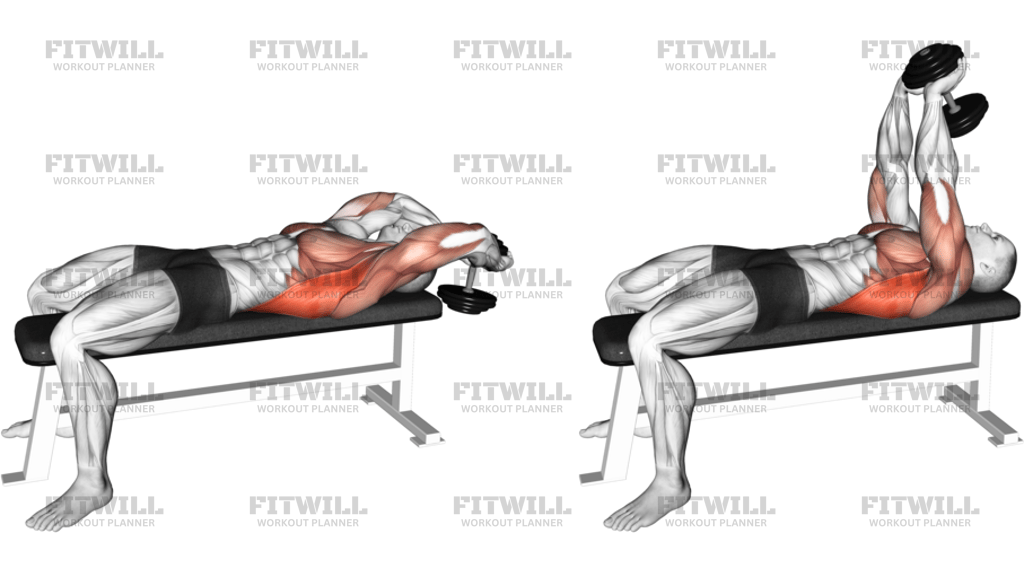
Instructions
- Lie on a flat bench with your upper back and shoulders supported, feet planted on the floor, and your hips settled so you do not have to bridge to stay in position.
- Hold one dumbbell with both hands around one end and stack it above the middle of your chest with your elbows softly bent.
- Pull your shoulders down and back on the bench, then brace your ribs so your chest does not flare as the dumbbell moves.
- Lower the dumbbell in a smooth arc behind your head, keeping the elbows at the same angle and the weight under control.
- Stop the descent when you feel a strong stretch through the chest and lats without the shoulders rolling forward or the lower back arching hard.
- Exhale as you drive the dumbbell back over your chest, following the same arc instead of pressing it straight up.
- Finish with the dumbbell above your chest, wrists stacked and elbows still slightly bent rather than locked out aggressively.
- Reset your shoulders and breathing before the next rep, then repeat for the planned number of repetitions.
Tips & Tricks
- Hold the dumbbell by one end with both palms so it stays steady as it travels overhead.
- Keep a slight elbow bend fixed the whole rep; turning it into a triceps extension changes the exercise.
- If your ribs pop up as the dumbbell goes behind your head, shorten the range before the shoulder stretch turns into a back arch.
- Think about sweeping the upper arms back toward the bench rather than dropping the weight straight down.
- A lighter load usually gives better chest and lat tension than a heavy dumbbell you have to muscle back up.
- Keep your feet flat so the bench does not become a leverage test and you do not slide during the lower phase.
- If the front of the shoulder feels pinched, stop a little higher and keep the arc smaller.
- Use a slower lowering phase than pressing phase so you can feel the stretch without losing position.
- Do not let the dumbbell drift toward your face; it should travel back over the chest on the same line each rep.
- Stop the set when your elbows start bending and straightening on their own, because that usually means the pullover has turned into a press.
Frequently Asked Questions
What muscles does Dumbbell Pullover work most?
It mainly trains the chest and lats, with the triceps, serratus, and shoulder stabilizers helping through the arc.
Is Dumbbell Pullover more of a chest exercise or a back exercise?
It can feel like both. A controlled bench pullover usually loads the chest and lats together, so the exact emphasis depends on your range and shoulder control.
How do I hold the dumbbell during Dumbbell Pullover?
Use both hands around one end of the dumbbell and keep your wrists stacked over the weight. That grip helps you control the long arc without the dumbbell wobbling.
How far should I lower the dumbbell behind my head?
Lower only until you feel a strong stretch without your ribs flaring or your shoulders rolling forward. A smaller range is fine if that is what keeps the bench position clean.
Can beginners do Dumbbell Pullover safely?
Yes, if they start with a light dumbbell and a shorter range of motion. The key is learning the arc and keeping the shoulders stable on the bench.
Why does my lower back arch so much during Dumbbell Pullover?
That usually means you are chasing too much range or too much load. Keep the ribs down, plant the feet, and stop the descent before your torso turns into a bridge.
What should I do if my shoulders feel pinched?
Shorten the bottom range and keep the elbows a little softer. If the pinch stays there even with a lighter load, this may not be the best variation for your shoulders.
Should my elbows bend and straighten during the rep?
No. Keep a small bend that stays almost the same from start to finish so the weight follows a pullover path instead of becoming a press.
Do I need a flat bench for Dumbbell Pullover?
A flat bench is the standard setup because it gives you the best support and the cleanest arc. A floor version limits range and changes the stretch.
When should I place Dumbbell Pullover in a workout?
It works well after your main presses or pulls as accessory work, when you can focus on control and shoulder position instead of chasing heavy loading.