Roll Triceps Side Lying On Floor
Roll Triceps Side Lying On Floor is a side-lying self-release drill for the back of the upper arm. You lie on the floor with a small roller or ball under the triceps, then shift your body weight to sweep from just above the elbow toward the back of the shoulder. The goal is not to force a big range of motion; it is to find tight spots in the muscle, control the pressure, and let the tissue soften with slow breathing.
This movement is most useful when the triceps feel dense before pressing, overhead work, dips, push-ups, or any session where the back of the upper arm needs to move freely. The floor gives you a stable base, and the side-lying position makes it easy to scale pressure by changing how much weight you place on the roller. That makes it a practical recovery or warm-up tool for people who want to calm down a cranky upper arm without overloading the elbow or shoulder.
The setup matters because the target area is narrow and easy to miss. Stack the body enough to stay balanced, keep the ribcage settled, and place the roller under the fleshy part of the triceps rather than directly on the elbow or shoulder joint. Small, controlled passes usually work better than long sweeps. If the arm or torso twists too much, the pressure shifts away from the triceps and the release turns into a sloppy shoulder roll.
During each rep, move slowly and breathe out when you reach a tender point. A short pause on a knot is useful if the sensation is strong but still tolerable; sharp pain, tingling, or joint pinching is not. Keep the neck relaxed and use the top hand, lower leg, or a slight shift of the torso to adjust pressure instead of bracing hard. When done well, the area should feel looser and easier to extend afterward, not irritated or beaten up.
[ Workout Log & Planner ]
Put your next workout in Fitwill
Keep your plan and training log ready when you are.


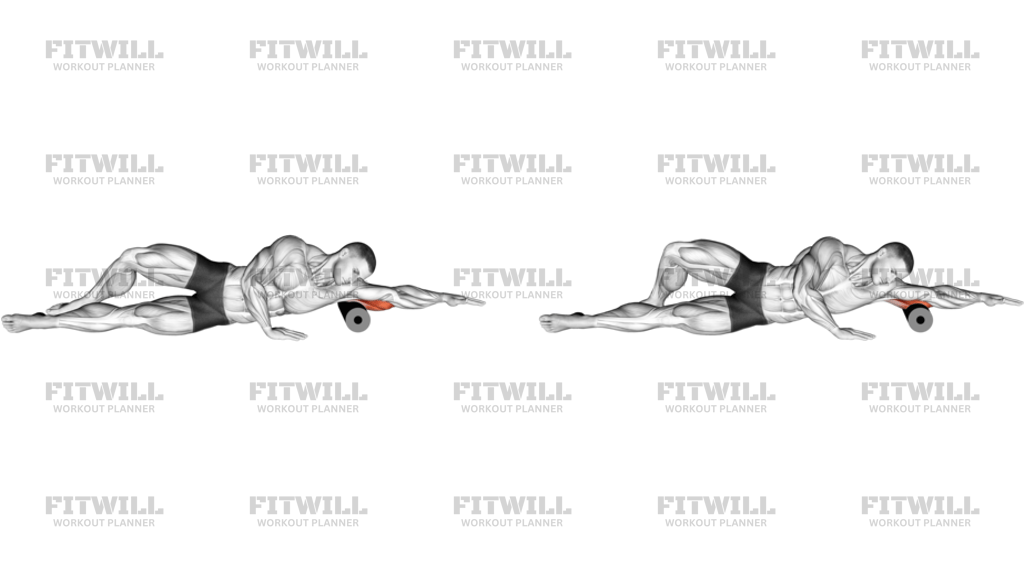
Instructions
- Lie on your side on the floor with a small roller or ball under the back of one upper arm, just above the elbow.
- Stack your legs and keep your ribcage settled so the working arm stays easy to control.
- Reach the working arm long along the floor or slightly overhead to open the triceps.
- Use your top hand and bottom leg to share body weight and set a pressure you can tolerate.
- Roll in short passes from the elbow area toward the back of the shoulder.
- Pause on any tender spot for a slow breath or two instead of forcing through it.
- Keep the neck and jaw relaxed while you search the muscle belly, not the elbow joint.
- Repeat the passes on the same side, then switch sides if needed.
Tips & Tricks
- Place the roller on the soft part of the triceps, not on the point of the elbow or the shoulder joint.
- Short 2-4 inch passes usually work better than trying to cover the whole arm at once.
- If the pressure is too high, shift a little more onto your top hand or top leg instead of fighting through it.
- A slight turn of the chest toward the floor increases pressure on the triceps; turning away reduces it.
- Keep the working arm relaxed so the tissue can actually slide over the roller.
- Slow exhales help you stay on a tender point long enough for the muscle to release.
- Stop if you feel tingling, numbness, or a sharp pinch in the elbow or shoulder.
- Use this as a reset before pressing rather than trying to chase soreness with aggressive pressure.
Frequently Asked Questions
What does Roll Triceps Side Lying On Floor target?
It mainly targets the triceps on the back of the upper arm, with some influence on nearby shoulder and upper-arm tissues.
Is this a strength exercise or a recovery drill?
It is a recovery and mobility drill. The goal is to reduce stiffness and improve tolerance in the triceps, not to build strength with load.
Where should the roller sit on my arm?
Place it on the meaty part of the triceps, usually just above the elbow and moving toward the back of the shoulder. Avoid pressing directly on the elbow tip or shoulder joint.
How much pressure should I use?
Use enough pressure to feel the tissue, but not so much that you brace, hold your breath, or grimace. You should be able to breathe slowly through the spot.
How long should I stay on a tender spot?
A short pause for one to three slow breaths is usually enough. If the area stays sharp or irritated, move on rather than forcing it.
Can I use this before push-ups, bench press, or overhead work?
Yes. It is often useful before pressing movements because it can make the back of the upper arm feel less bound up.
What if I feel it in my elbow instead of my triceps?
Shift the roller slightly farther into the muscle belly and reduce pressure. The sensation should stay in the soft tissue, not on the joint.
Can beginners do this exercise?
Yes. Beginners should use very light pressure and short passes so they can learn the right spot without overdoing it.